





Best practice

The term ‘best practice’ (sometimes used interchangeably with ‘good practice’) refers to the method or technique by which an activity is carried out and relates to certain standards that have been established in terms of quality, ethics, regulations, benchmarking, and so on.
Best practice is a desired result that is often developed through experience and research and is accepted as being a better option other alternatives. As such it becomes a standard way of carrying out tasks or complying with requirements. By committing to follow best practice, an individual or organisation is agreeing to use the widely-accepted and approved knowledge and technology available to ensure a good outcome.
Best practices can be based on the adoption of policy, self-assessment and/or benchmarking. Accredited management standards such as ISO 9000 are intended to facilitate best practice by helping organisations develop their approach to directing, controlling and coordinating quality.
In the construction industry, best practice is commonly defined by standards, which are published documents that are intended to define the common specifications, methods and procedures that are to be used. By establishing common standards, greater reliability and consistency is ensured in terms of the quality, compatibility and compliance of the particular product, service, material, and so on.
[edit] Related articles on Designing Buildings
- Architectural practice.
- BEIS Reforming Regulation Initiative.
- Benchmark
- Benchmarking.
- Building Trustworthy Indicator BTI.
- Centre for Construction Best Practice CCBP.
- Chartered institute.
- CIAT agrees to collaboration arrangement with CIB.
- Code of conduct.
- Constructing and renovating UEFA training facilities.
- Construction products regulations.
- Design-Build Institute of America DBIA.
- Design quality.
- Ethics in construction.
- Independent review of construction frameworks.
- Legislation.
- London Build 2020: Best Practice in Design and Build panel discussion.
- Professional.
- Professional conduct.
- Professional practice.
- Standards.
Featured articles
Check out some of the best features and news from Designing Buildings as well as key stories from around the web.
New and updated CLC building safety guidance.
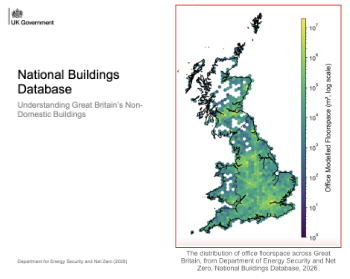
New UK National Buildings Database.
Building Safety Wiki Interviews

Chief executive of the British Woodworking Federation.
Planning condition discharge in England and Wales

A brief explanation from a building compliance expert, with further links.
Overheating guidance and tools for building designers

Guidance for dealing with element of building fabric control that have increasing importance.
Shading for housing, a design guide

From the Good Homes Alliance and British Blind and Shutter Association.
UK Standard Skills Classification (SSC)

A shared framework for describing skills needs.
Social media ban consultation comes to close

CIOB urges UK Government to consider social media’s role in careers guidance in ban debate.
The latest of eight Skills England apprenticeship units

The addition of battery manufacturing welcomed by ECA with a warning about the risks of fast-tracked apprenticeship units.
Building Control Independent Panel final report
A precis of a key report led by Dame Hackitt with full recommendations and link to the government response.
Building Safety recap April, 2026
A short and longer run-through of the month, with links to further information and sources.