





Architecture for London

Interview with Ben Ridley, Director, Architecture for London, 2020.
| How, when, why, did the practice form? |
Architecture for London was established by Ben Ridley in 2009. The studio has since grown to a team of 15. The studio has a diverse range of skills, and now includes an interior designer, structural engineer, landscape designer and specialist furniture maker.
We are a multi-disciplinary team with each member having a range of skills in design and technical realisation.
| What is your design philosophy? |
Our aim is to improve people’s lives by re-imagining the city in which we work, live and play. The studio is collaborative, innovative, informed and aspirational. We work at all scales, from bespoke private homes to commercial developments; urban renewal to masterplanning.
Environmental impact is a key consideration in our work. We take a research-based, fabric first approach to sustainability that carefully considers the embodied energy of materials and the energy performance of our buildings in use.

| Which architects have drawn inspiration from? |
One current favourite is Prewett Bizley and their Dundon Passivhaus project for proving that low energy buildings can be beautiful and contextual.
| Do you find planners are becoming more accommodating of modern architecture? |
Most planners we encounter have a positive attitude towards modern architecture. Many of our projects are working with historic buildings, often in conservation areas and some listed. We enjoy working in this historic context, augmenting it to suit a modern lifestyle rather than purely a modern aesthetic. There can be challenges in terms of outdated planning policy when it comes to upgrading historic buildings to meet our high standards for energy performance.
| Given the acute shortage of housing, how are we to build to satisfy the demand? |
As a London focused practice, we are advocates of the low energy expansion and retrofit of London’s existing housing stock.

| What three problems do you foresee occupying architects' minds in the next 5-10 years? |
Our existing housing stock presents a significant issue in achieving the UK’s new 'net zero' carbon target by 2050, which aims to limit global heating to 1.5 degrees. The buildings we refurbish now are not likely to be refurbished again before 2050, so they must achieve net-zero standards now. Each project that we work on is therefore critical.
| The architect used to be considered ‘leader of the building team’. That doesn’t seem to be the case these days, why do you think this is? |
Most major developments take substantial investment capital and are understandably driven by potential profits. Although our value is significant in increasing profits by means of design, the architect’s role is harder to quantify on a spreadsheet.
On smaller and domestic projects, the architect is still the core of the design team, negotiating between the client and the other consultants.
The architect has an overview of the project, from social considerations, resolving technical issues, including sustainability and energy use, and staying within budget and on programme.
| Would you recommend a young person train as an architect? |
Yes. An architectural degree is a broad, challenging and rewarding experience and can lead to a diverse range of careers. Students can leverage this to their benefit and shape their professional journey. Historically there has been a preoccupation with completing parts 1-3, however, shifts in the profession are allowing less rigidity.

You can find out more at: https://architectureforlondon.com/
[edit] Related articles on Designing Buildings Wiki
Featured articles
Check out some of the best features and news from Designing Buildings as well as key stories from around the web.
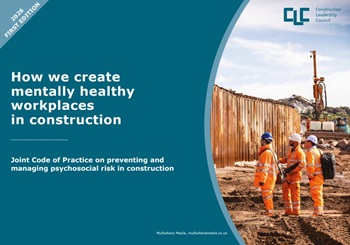
CLC publishes Mental Health Joint Code of Practice.

A quick introduction to its uses and risks.
Construction Management, 17 June

Government rolls out digital planning tool to all local authorities.

Your views needed - a strategy for the professions, trades and occupations.

Confronting competency, codes, capacity and costs.

The hidden risk in modern construction supply chains.
Construction Management, 10 June

24 months to 14: CITB launches accelerated apprenticeships.
Bridging the gap between clients and contractors

Concerns remain around contractor quality, capability, and delivery.
Construction Management, 10 June.

Heat pumps beat boilers in new home tests.
Building Safety Act implementation in Wales

CIAT to host industry panel on 26 June.
New and updated CLC building safety guidance.