






20 years of the Chartered Environmentalist

[edit] “If not now, when?” Marking 20 years of Chartered Environmentalists
Imagine if thousands of Architectural Technologists were to showcase their externally verified environmental credentials, becoming the catalysts needed for a sustainable built environment. “If not now, when?” is the message from the Society for the Environment (SocEnv) to those wanting to lead the way.
Friday 20th September 2024 marked 20 years since the first Chartered Environmentalist (CEnv) certificates were signed. SocEnv itself was launched in 2002, with the aim of championing competence in environmental practices across sectors. Structure was highly important to allow accessibility along the breadth of disciples needed in a community making a collective difference. This resulted in an umbrella body. They formed partnerships with professional bodies already providing vital services to their members, rather than creating a new one. These alliances strengthened the environmental agenda within the cross-sector professionalism world.
The first objective was to create a chartered designation to professionalise this work – and so, Chartered Environmentalist (CEnv) was born in 2004 via a Royal Charter. One of the key reasons for this objective was to provide a platform to spearhead change. 20 years on and change is needed more than ever with the climate, biodiversity and environmental emergencies in full swing.
The first cohort of 65 CEnvs officially received their accreditation on the 20th September 2004. They established the community that is still growing today: now over 8,000 strong and leading the way towards a more sustainable future.
CIAT joined SocEnv in June 2008, providing the opportunity for members to achieve the CEnv registration. As a CIAT member, you have the opportunity to join the CEnv community and showcase your commitment to environmental good practice. Personally and professionally, it is a real chance to stand out from the crowd. Though doing fantastic work,less than 1% of current CEnv registrants hold their certificate via the CIAT pathway.
How much influence do you think Architectural Technologists should have on decisions impacting the environment? The number one benefit current CEnvs observe is the increased level of influence it allows.
“As a CIAT Chartered Environmentalist, the qualification demonstrates my advanced expertise and commitment to environmental management and sustainability in the built environment,” said Andrew Hole FCIAT CEnv, Director at Penton Architects.“I find it a pleasure working in partnership with enlighten clients Housing Associations, Local Authorities and others who really care about their tenant fuel poverty when retrofitting their stock and reviewing the comprehensive solutions in dealing with the individual project objectives. The approach to open discussions with customers and tenants is always beneficial and brings so much to the debate.”
Reflecting on 20 years of CEnv registration, SocEnv Chief Executive, Dr Emma Wilcox CEnv FIMMM CMgr, said: “CEnv registration has changed the face of professionalism for a global challenge – protecting our environment. I have no doubt that CEnv – and, more recently, REnvP and REnvTech – has amplified influence, trust, commitment, and change. The CEnv community also bridges knowledge gaps to drive innovation and quicken the adoption of good practice across sectors. This is the ideal opportunity to thank all our registrants for their hard work.
“But we share a vision with our registrants and partners for a sustainable future, which we are yet to achieve. So, if you are thinking about becoming a CEnv, leading the way and, playing your part, I ask – if not now, when?”
Continuing the theme of reflections, twenty CEnvs have contributed to a snapshot video series to articulate what CEnv means to them in just ten seconds. Take a watch via socenv.org.uk/20-years-of-cenv
Demand is growing for individuals who have the knowledge and experience to help solve some of the big environmental challenges of our time – globally and locally. The CEnv award is a demonstration of knowledge,expertise, commitment, and professionalism across all sectors that environmental professionals practice within.
Tara Page, Chief Executive of CIAT, said, “We need as many CIAT Chartered Environmentalists as possible to lead the way and work with SocEnv to help cultivate a lasting positive impact on the environment. Those involved so far are doing amazing things – my thanks to them. I can only imagine the kind of impact we will have when even more of our members put their hat in the ring.”
If you’d like to become a CIAT CEnv member, please go to https://architecturaltechnology.com/membership/specialistregisters/chartered-environmentalist.html if you want to find out more about Cenvs visit https://socenv.org.uk/chartered-environmentalist/
This article appears in the AT Journal issue 152, Winter 2024 as '“If not now, when?” Marking 20 years of Chartered Environmentalists' and ws written by Phil Underwood,Engagement Manager,Society for the Environment.
--CIAT
[edit] Related articles on Designing Buildings
- 2023 Society for the Environment Awards.
- Appointing consultants.
- Campaigning for biodiversity.
- Chartered environmentalist.
- Chartered Institute of Architectural Technologists CIAT.
- Chartered Institute of Building.
- CIAT.
- Ecologist for building design and construction.
- Environment and sustainability frameworks, assessments and certifications in their historical context.
- Environmental consultant.
- Environmental engineering.
- Environmental plan.
- Environmental policy.
- Performance gap.
- Society for the Environment SocEnv.
- Sustainability.
- Sustainability in building design and construction.
- The sustainability of construction works.
- The Wildlife Trusts.
- Types of consultant.
- What to expect of sustainability professionals.
Featured articles and news
Costs and insolvencies mount for SMEs, despite growth

Construction sector under insolvency and wage bill pressure in part linked to National Insurance, says report.
The place for vitrified clay pipes in modern infrastructure

Why vitrified clay pipes are reclaiming their role in built projects.

Research by construction PR consultancy LMC published.
Roles and responsibilities of domestic clients

ACA Safety in Construction guide for domestic clients.
Fire door compliance in UK commercial buildings

Architect and manufacturer gives their low down.
Plumbing and heating for sustainability in new properties

Technical Engineer runs through changes in regulations, innovations in materials, and product systems.
Awareness of the Carbon Border Adjustment Mechanism
What CBAM is and what to do about it.
The new towns and strategic environmental assessments

12 locations of the New Towns Taskforce reduced to 7 within the new towns draft programme and open consultation.

Buildings that changed the future of architecture. Book review.
The Sustainability Pathfinder© Handbook
Built environment agency launches free Pathfinder© tool to help businesses progress sustainability strategies.
Government outcome to the late payment consultation, ECA reacts.
IHBC 2025 Gus Astley Student Award winners
Work on the role of hewing in UK historic conservation a win for Jack Parker of Oxford Brookes University.
Future Homes Building Standards and plug-in solar
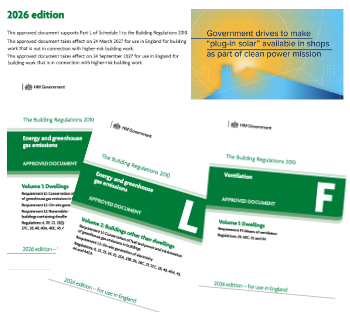
Parts F and L amendments, the availability of solar panels and industry responses.
How later living housing can help solve the housing crisis

Unlocking homes, unlocking lives.
Preparing safety case reports for HRBs under the BSA
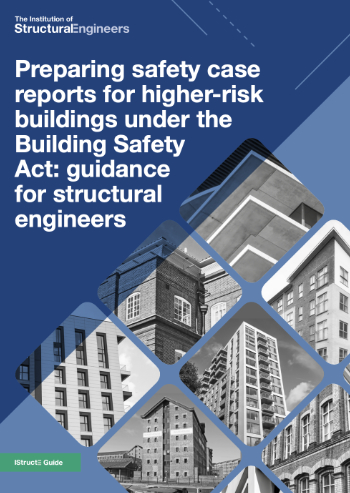
A new practical guide to preparing structural inputs for safety cases and safety case reports published by IStructE.
Male construction workers and prostate cancer

CIOB and Prostate Cancer UK encourage awareness of prostate cancer risks, and what to do about it.