





15 minute city

Contents |
[edit] Introduction
The 15 minute city is a concept for a community in which essential amenities and services are all located within a 15 minute walking or cycling radius. It is an anti-car, anti-fossil fuel approach to urban planning that includes accompanying measures to provide safe walking and cycling routes while supporting local businesses and communities.
[edit] History
Sometimes referred to as a ‘new chrono-urbanism’, the 15 minute city concept was introduced in June 2019 by Carlos Moreno of Pantheon Sorbonne University in Paris. Its focus is on time rather than space, emphasising the importance of ‘hyperproximity’ and how ease of access can contribute to quality of life.
The concept is in direct contrast to the urban planning paradigms that have dominated the last century, in which residential areas have tended to be separated from business, retail, industry and entertainment.
In 2020, the idea of the 15 minute city gained momentum. As more urban dwellers started to walk and cycle during the COVID-19 pandemic, cities looked towards economic recovery options that would support the healthy and sustainable ways of life that had been adopted in their communities.
In 2023 British Conservative Party MP Nick Fletcher called 15-minute cities an "international socialist concept" during a debate in the UK Parliament in February 2023.
[edit] Aspects of 15 minute cities
Improved access can also help make human-centric neighbourhoods more desirable. At the centre of Moreno’s concept are six essential components:
In order to support those components, communities must be able to offer services (such as healthcare), support data (through reliable technology networks) and mobility (through public transportation options) within a 15 minute radius. According to Moreno, this will result in a sustainable planet, a social environment and will allow the possibility of improved wellbeing throughout the community.
[edit] From concept to outcome
Moreno’s concepts have been picked up by Dan Luscher, who has introduced The 15-Minute City Project. He considers the significance of proximity, diversity, density and ubiquity in his approach to achieving the goals set out by Moreno.
He writes, “The 15-minute city concept works initially as a North Star," and acknowledges that “making concrete progress towards this North Star will measurably improve the lives of many people, not only people who currently live in cities but the hundreds of millions of people globally who will migrate to cities in the coming decades.”
According to Luscher, there are several critical elements, including:
- Broad public engagement and buy-in.
- Detailed measurement and analysis
- Engaging all types of actors.
- Cost-effectiveness.
[edit] Related articles on Designing Buildings
- Collaboration needed to deliver national and regional transport strategies.
- Compact living.
- Garden cities.
- London Cycle Network.
- England metro mayors work to deliver ambitious climate action.
- Neighbourhood planning.
- Post pandemic places report.
- The compact sustainable city.
- Three key ingredients for designing inclusive walking and cycling infrastructure.
- Town planning.
- Urban design.
[edit] External resources
Featured articles and news

We're expanding our collaborative mission by launching DB Intelligence, an exclusive market research advisory panel. Built environment professionals can now get paid to share their expertise on industry trends, products and services.
Panel members receive direct financial incentives for participating in research projects like short surveys, 1-2-1 interviews and focus groups. Register today to shape the future of the construction sector.
Building Control Independent Panel final report

A precis of a key report led by Dame Hackitt with full recommendations and link to the government response.
Guide to ISO 19650 for Architecture Firms (2026)
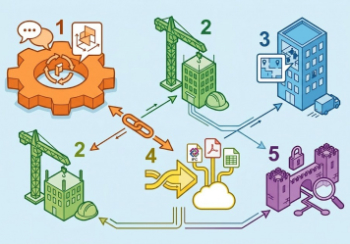
A user gives their low down.

A UK training and membership provider for mould remediation professionals.
Building Safety recap April, 2026

A short and longer run-through of the month, with links to further information and sources.

CIAT May 2026 briefing.

Independent NSI and BAFE study exploring how organisations are changing the way they buy fire safety services.

From medieval scribes to modern word art.

ECA welcomes crackdown on late payment and push for clean energy, whilst CIOB seek fixed cladding removal timeframes.
Cyber Security in the Built Environment

Protecting projects, data, and digital assets: A CIOB Academy TIS.
Managing competence in the built environment

ITFG publishes new industry guide on how to meet the ICC principles.
The UK's campaign to reduce noise pollution: Mythbusting, articles and topic guides.
Comments
[edit] To make a comment about this article, click 'Add a comment' above. Separate your comments from any existing comments by inserting a horizontal line.