





Why are domes popular?

The dome has a long history in the built environment, and has been a design feature of many different kinds of architecture around the world. Domes are prominent features of Persian, Roman, Byzantine, Islamic, Italian Renaissance design and so on.
In its simplest form, a dome is a hollow, approximately semi-spherical structural element. However, there are many variations on this basic shape. The ‘Building Construction Handbook’ describes domesas: ‘Double curvature shells which can be rotationally formed by any curved geometrical plane figure rotating about a central vertical axis.’ For more information, see Types of domes.
Other than the monumental and impressive aesthetics of domes, they have several characteristics that have made them such a popular architectural feature.
- Domes can be very efficient and cost-effective structures, as significantly less material may be required to construct them and they are often lighter in weight than other roof types.
- There is typically a minimum of 30% less surface area in a dome than other comparable structural shapes. This reduced surface area can increase the energy efficiency of domes, as they can require 30% less energy for heating and cooling.
- They are self-supporting, stabilised by the force of gravity acting on their weight to hold them in compression.
- They are able to span large areas and require no intermediary columns, creating a free space below.
- They are resistant to high wind conditions such as hurricanes because of the lack of corners, angles and flat surfaces. Instead, their curved shape allows wind to pass smoothly over their surface, creating minimal pressure or turbulence.
- Domes can have good acoustic qualities, making them a popular choice for buildings where it is necessary for sound to travel over large distances, such as public arena.
- Domes can be constructed from a variety of materials, from traditional masonry and concrete, to cast iron, timber and steel.
- Lightweight materials such as architectural fabrics and cable structures can be used to create ‘domes’; for the most part these are not true domes as their components have an anticlastic shape, however inflated fabric structures can be dome shaped.
- In terms of semiology, by reinforcing centrality and singularity, the form of the dome can establish the primacy of the circle of space directly below.
- Philosophically, they can reinforce the notion of a centralised and singular power system, whether absolute monarchy, monotheism, hegemonic dictatorship and so on.
- They have a visual simplicity, and internally can be virtually featureless, giving them an infinite quality that can be associated with the eternity or the heavens.
[edit] Find out more
[edit] Related articles on Designing Buildings Wiki
Featured articles and news
A carbon case for indigenous slate
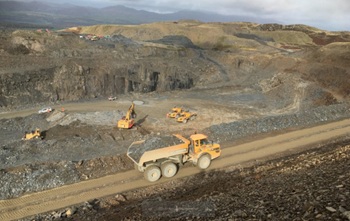
UK slate can offer clear embodied carbon advantages.
Costs and insolvencies mount for SMEs, despite growth

Construction sector under insolvency and wage bill pressure in part linked to National Insurance, says report.
The place for vitrified clay pipes in modern infrastructure
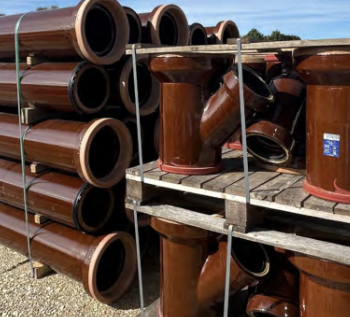
Why vitrified clay pipes are reclaiming their role in built projects.

Research by construction PR consultancy LMC published.
Roles and responsibilities of domestic clients

ACA Safety in Construction guide for domestic clients.
Fire door compliance in UK commercial buildings

Architect and manufacturer gives their low down.
Plumbing and heating for sustainability in new properties

Technical Engineer runs through changes in regulations, innovations in materials, and product systems.
Awareness of the Carbon Border Adjustment Mechanism
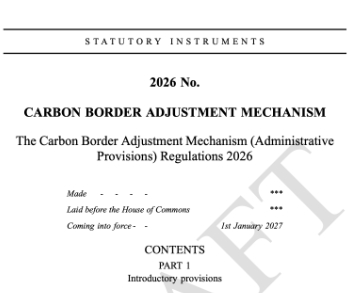
What CBAM is and what to do about it.
The new towns and strategic environmental assessments
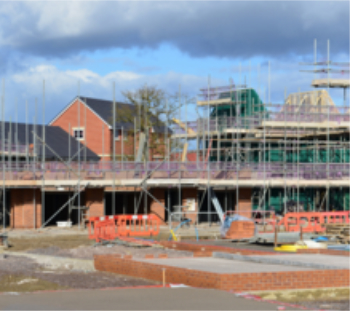
12 locations of the New Towns Taskforce reduced to 7 within the new towns draft programme and open consultation.
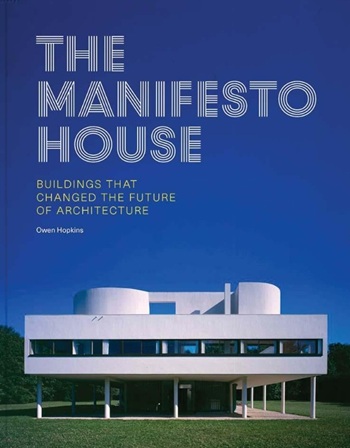
Buildings that changed the future of architecture. Book review.
The Sustainability Pathfinder© Handbook
Built environment agency launches free Pathfinder© tool to help businesses progress sustainability strategies.

Government outcome to the late payment consultation, ECA reacts.
IHBC 2025 Gus Astley Student Award winners
Work on the role of hewing in UK historic conservation a win for Jack Parker of Oxford Brookes University.