





Unprotected escape route
Approved document B, Fire Safety, Volume 2, Buildings other than dwellinghouses, defines an escape route as:
‘...that part of the means of escape from any point in a building to a final exit’ where a final exit is, ‘The termination of an escape route from a building giving direct access to a street, passageway, walkway or open space and sited to ensure the rapid dispersal of persons from the vicinity of a building so that they are no longer in danger from fire and/or smoke.’
Escape routes can be protected or unprotected, where an unprotected escape routes is:
The unprotected part of an escape route, ‘…which a person has to traverse before reaching either the safety of a final exit or the comparative safety of a protected escape route, i.e. a protected corridor or protected stairway. Unprotected escape routes should be limited in extent so that people do not have to travel excessive distances while exposed to the immediate danger of fire and smoke. Even with protected horizontal escape routes, the distance to a final exit or protected stairway needs to be limited because the structure does not give protection indefinitely.'
[edit] Related articles on Designing Buildings Wiki
- Approved documents.
- Automatic release mechanism.
- Building evacuation.
- Fire.
- Fire compartment.
- Fire detection and alarm systems.
- Fire door.
- Fire Door Inspection Scheme.
- Fire Prevention on Construction Sites.
- Fire protection engineering.
- Fire resistance.
- Firefighting route.
- Inner room.
- Joint fire code.
- Means of escape.
- Protected escape route.
- The Regulatory Reform (Fire Safety) Order 2005.
- Visual alarm devices - their effectiveness in warning of fire.
- Vomitory.
Featured articles and news

We're expanding our collaborative mission by launching DB Intelligence, an exclusive market research advisory panel. Built environment professionals can now get paid to share their expertise on industry trends, products and services.
Panel members receive direct financial incentives for participating in research projects like short surveys, 1-2-1 interviews and focus groups. Register today to shape the future of the construction sector.
Building Control Independent Panel final report

A precis of a key report led by Dame Hackitt with full recommendations and link to the government response.
Guide to ISO 19650 for Architecture Firms (2026)
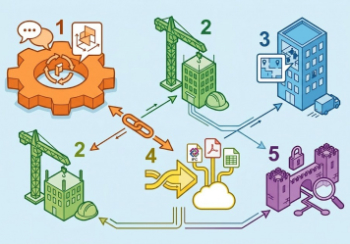
A user gives their low down.

A UK training and membership provider for mould remediation professionals.
Building Safety recap April, 2026
A short and longer run-through of the month, with links to further information and sources.
CIAT May 2026 briefing.

Independent NSI and BAFE study exploring how organisations are changing the way they buy fire safety services.
From medieval scribes to modern word art.

ECA welcomes crackdown on late payment and push for clean energy, whilst CIOB seek fixed cladding removal timeframes.
Cyber Security in the Built Environment
Protecting projects, data, and digital assets: A CIOB Academy TIS.
Managing competence in the built environment
ITFG publishes new industry guide on how to meet the ICC principles.
The UK's campaign to reduce noise pollution: Mythbusting, articles and topic guides.