





Trench fill foundation

Trench fill foundations are a type of shallow foundation that avoids bricklaying below ground by instead almost completely filling the trench excavation with concrete. Typically, concrete is poured to within 150 mm of the surface ground level. This type of foundation minimises the excavation required, as bricklayers are not required to access the trench to lay bricks or blocks. It can also help to reduce the width of the foundation where below ground brickwork would require a wider footing.

Trench fill is often used when soil is loose or in areas with a high water table, although in loose ground it can be difficult to predict the quantity of concrete required, and the quantity can be quite high if trenches meet or cross at right angles.
By getting ‘out of the ground’ relatively quickly, trench fill foundations can save on labour, time and temporary works.
Trench fill foundations can be taken deeper in areas with heavy clay or in the presence of trees, to a level where the subsoil moisture content is unaffected. In these situations, mesh reinforcement is often required. In addition, one or both trench faces may need to be lined with a compressible batt. This can also mitigate against the tendency in some situations for the trench strips to pick up longitudinal or lateral ground strains which may occur in the strata immediately around the foundation.
Another issue to consider is that the height of the concrete can create access problems for drainage and other services, as well as issues with landscaping and planting.
A variation on the trench fill foundation is the Rubble trench foundation.
[edit] Related articles on Designing Buildings
Featured articles
Check out some of the best features and news from Designing Buildings as well as key stories from around the web.
Building Safety Act implementation in Wales

CIAT to host industry panel on 26 June.

New and updated CLC building safety guidance.
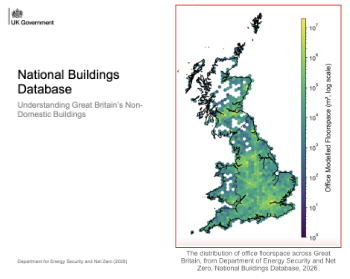
New UK National Buildings Database.
Building Safety Wiki Interviews

Chief executive of the British Woodworking Federation.
Planning condition discharge in England and Wales

A brief explanation from a building compliance expert, with further links.
Overheating guidance and tools for building designers

Guidance for dealing with element of building fabric control that have increasing importance.
Shading for housing, a design guide

From the Good Homes Alliance and British Blind and Shutter Association.
UK Standard Skills Classification (SSC)

A shared framework for describing skills needs.
Social media ban consultation comes to close

CIOB urges UK Government to consider social media’s role in careers guidance in ban debate.
The latest of eight Skills England apprenticeship units

The addition of battery manufacturing welcomed by ECA with a warning about the risks of fast-tracked apprenticeship units.
Building Control Independent Panel final report

A precis of a key report led by Dame Hackitt with full recommendations and link to the government response.