






Time management in the construction industry

|
Contents |
[edit] Introduction
Time management is the conscious organisation and management of time, a way of planning to ensure that the work undertaken achieves the desired goals in the time available. Effective time management allows people and teams to work smarter and more efficiently, possibly leading to more work being done in less time. But it does not necessarily mean they work harder.
Time management usually involves selection and prioritisation – choosing which tasks to do first can contribute to the overall daily (or hourly) goals and prioritising them in terms of those which need to be completed before the others.
As a discipline, time management is a core component of project management (in particular to project planning and scheduling). Within organisations, time management aims to identify, value and reduce the cost of wasted time.
Although regarded by many as a tool for business or work activities, time management can be applied as effectively to control and organise all aspects of an individual’s personal life. This can include work, social life, family, personal interests and commitments.
Setting goals and priorities is a key part of time management; without them efforts can lack direction and be wasteful of time.
[edit] Benefits of time management
- Better control of time – less time spent on non-priorities.
- Increased productivity
- Less stress
- More time available to do other things.
[edit] Key skills that can contribute to better time management
- Setting goals
- Prioritisation
- Motivation
- Focussing on the task at hand
- Planning
- Stress management
- Recording and monitoring
- Improving – getting better at what you do.
[edit] Time management theories and practices:
- Eisenhower Method
- Pareto analysis and the Pareto Principle.
- Managing emails.
[edit] Eisenhower Method
In business management, one of the more established time management techniques is the Eisenhower analysis which divides tasks into four categories:
- A – Urgent and important e.g car engine fire
- B – Important but not urgent e.g exercise
- C – Unimportant but urgent e.g some interruptions
- D – Unimportant and not urgent e.g salesman’s cold call.
Some proponents of this method of time management argue that B can be put into either A or C.
[edit] Pareto analysis
Pareto analysis is a statistical decision-making technique which identifies that a limited number of inputs (chosen from numerous options) will have a greater impact on outcomes. It is based on the Pareto Principle (referred to as the 80/20 Rule) first put forward by Alfredo Pareto in the 19th century. Basically, it stipulates that 80% of the outputs will result from 20% of the inputs.
As Pareto analysis can be applied to many areas of human endeavour, it can mean, for example that:
- 80% of results come from just 20% of the work.
- 80% of the peas in Pareto’s garden were produced by only 20% of the peapods he planted.
- 80% of a project’s benefits are delivered from 20% of the work completed.
- 80% of profits can come from 20% of the products made.
For further details of how it can be applied to construction, see Pareto analysis in construction.
[edit] Managing emails
Reading, absorbing and responding to emails can consume large amounts of time. One study found that one in three office workers suffers stress from emails. Making a decision when an email has been opened – scanned, not necessarily read in full – can contribute to good time management. One system employs the four Ds (the 4D method):
- Delete – it is thought that around half of emails received can be quickly deleted.
- Do – only if the email is urgent or can be quickly dealt with.
- Delegate – (where possible) if the email can be better processed by another person.
- Defer – set a time to look at emails that will take longer to deal with.
[edit] Related articles on Designing Buildings Wiki
- Acceleration.
- Benchmarking.
- Contingency theory.
- Critical path method.
- Gantt chart.
- Key performance indicators.
- Line of balance (LOB).
- Milestones.
- Pareto analysis in construction.
- Plan, Do, Check, Act (PDCA).
- Project crashing.
- Project manager.
- Project quality plan PQP.
- Quality in construction projects.
- Quality Management System.
- Resource leveling.
- Time-location chart.
- Time management of construction projects.
- Transition time.
- Value management.
- Work breakdown structure
Featured articles and news
Costs and insolvencies mount for SMEs, despite growth

Construction sector under insolvency and wage bill pressure in part linked to National Insurance, says report.
The place for vitrified clay pipes in modern infrastructure

Why vitrified clay pipes are reclaiming their role in built projects.

Research by construction PR consultancy LMC published.
Roles and responsibilities of domestic clients

ACA Safety in Construction guide for domestic clients.
Fire door compliance in UK commercial buildings

Architect and manufacturer gives their low down.
Plumbing and heating for sustainability in new properties

Technical Engineer runs through changes in regulations, innovations in materials, and product systems.
Awareness of the Carbon Border Adjustment Mechanism
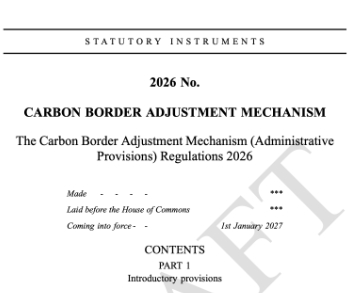
What CBAM is and what to do about it.
The new towns and strategic environmental assessments

12 locations of the New Towns Taskforce reduced to 7 within the new towns draft programme and open consultation.
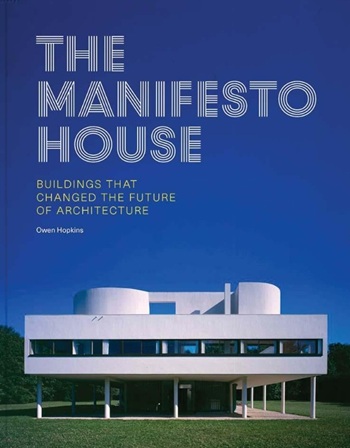
Buildings that changed the future of architecture. Book review.
The Sustainability Pathfinder© Handbook
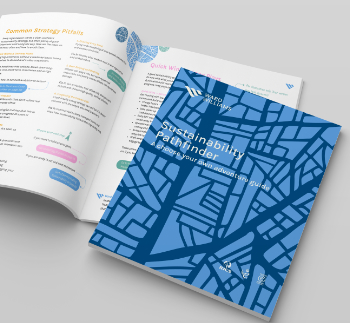
Built environment agency launches free Pathfinder© tool to help businesses progress sustainability strategies.

Government outcome to the late payment consultation, ECA reacts.
IHBC 2025 Gus Astley Student Award winners

Work on the role of hewing in UK historic conservation a win for Jack Parker of Oxford Brookes University.
Future Homes Building Standards and plug-in solar
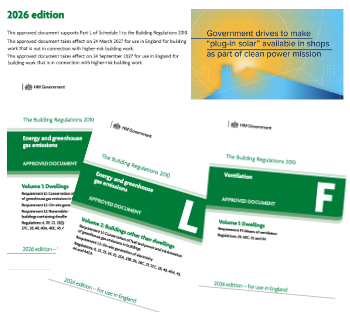
Parts F and L amendments, the availability of solar panels and industry responses.
How later living housing can help solve the housing crisis

Unlocking homes, unlocking lives.
Preparing safety case reports for HRBs under the BSA
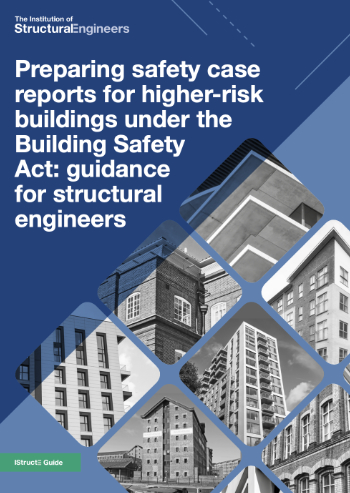
A new practical guide to preparing structural inputs for safety cases and safety case reports published by IStructE.
Male construction workers and prostate cancer

CIOB and Prostate Cancer UK encourage awareness of prostate cancer risks, and what to do about it.