






The Importance of Service Lifts

Contents |
Introduction
Installed in a wide variety of businesses and buildings, service lifts are suitable for almost every environment. Aiding in the facilitation of the transportation of goods, service lifts offer a more flexible solution than other lifts due to not being intended for human use.
Utilising electric traction for movement, service lifts have a reduced weight capacity. Vital for industries with requirements such as low headrooms and reduced pits, these lifts are capable of being installed in only a few days.
Without compromising safety and security, service lifts transport goods between multi-storey buildings in an efficient and timely way.
Some of the types of buildings that benefit from service lifts include the following:
Service lifts allow for space optimisation as they occupy less space than other lifts. Following building regulations and adapting to a business’ needs, service lifts help to improve the level of productivity.
Dumb Waiter Lifts
Also known as food lifts and micro-lifts, dumb waiter lifts are the preferred choice for transporting food between floors. Dating back to approximately 200 BC, dumb waiter lifts were used by the Romans to carry goods. In the 1840s, the mechanical version of the lift was invented by New Yorker inventor George W Cannon.
Previously human-powered, dumb waiter lifts evolved to electric-motorised versions in the 1920s due to the Industrial Revolution. With different building and regulation requirements in the 21st century, the necessity for state-of-the-art dumb waiter lifts has increased.
Trolley Lifts
Unlike dumb waiter lifts, trolley lifts are utilised for situations in which larger and heavier loads need to be transported. Commonly required in commercial buildings, retail, and hotels, trolley lifts can service as many floors as dumb waiter lifts. Although slightly slower, trolley lifts are easily installed and sturdy.
Whether leaf gated, single-hinged or locked variants, doors easily meet the varied requirements for loads and building sizes.
With minimal physical strain, trolley lifts reduce the physical stress of carrying and transporting heavy goods in multi-storey buildings.
Find Out More
Related articles on Designing Buildings Wiki
- Considerations When Installing a Commercial Lift.
- Considerations When Installing a Residential Lift.
- Escalator.
- Firefighting lift.
- Lifting device.
- Lifting platform.
- Lifts and Escalators: A Quality Perspective.
- Lifts and Their Special Operating Modes.
- Lifts for buildings.
- Lifts for office buildings.
- Smart elevators.
--Nathan Massey 14:38, 11 Jul 2017 (BST)
Featured articles and news

ECA, JIB and JTL back Fabian Society call to invest in skills for a stronger built environment workforce.

Women's Contributions to the Built Environment.
Calls for the delayed Circular Economy Strategy

Over 50 leading businesses, trade associations and professional bodies, including CIAT, and UKGBC sign open letter.
The future workforce: culture change and skill

Under the spotlight at UK Construction Week London.
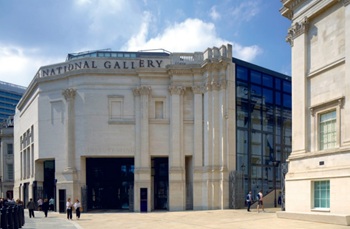
A landmark moment for postmodern heritage.
A safe energy transition – ECA launches a new Charter

Practical policy actions to speed up low carbon adoption while maintaining installation safety and competency.
Frank Duffy: Researcher and Practitioner

Reflections on achievements and relevance to the wider research and practice communities.
The 2026 Compliance Landscape: Fire doors

Why 'Business as Usual' is a Liability.
Cutting construction carbon footprint by caring for soil

Is construction neglecting one of the planet’s most powerful carbon stores and one of our greatest natural climate allies.
ARCHITECTURE: How's it progressing?
Archiblogger posing questions of a historical and contextual nature.
The roofscape of Hampstead Garden Suburb

Residents, architects and roofers need to understand detailing.
Homes, landlords. tenants and the new housing standards

What will it all mean?
The Architectural Technology podcast: Where it's AT

Catch-up on the latest episodes.
Edmundson Apprentice of the Year award 2026

Entries now open for this Electrical Contractors' Association award.

Traditional blue-grey slate from one of the oldest and largest UK slate quarries down in Cornwall.

There are plenty of sources with the potential to be redeveloped.
Change of use legislation breaths new life into buildings

A run down on Class MA of the General Permitted Development Order.
Solar generation in the historic environment

Success requires understanding each site in detail.