





Standard Assessment Procedure SAP
Note: The Home Energy Model, or HEM, is to be introduced in the UK to replace the Standard Assessment Procedure (SAP), which is currently used to demonstrate that new homes comply with Part L of the Building Regulations and to produce EPC's. HEM is still under development and is intended to be implemented alongside the Future Homes Standard in 2025.
For more information see: Home Energy Model.
The Standard Assessment Procedure for the Energy Rating of Dwellings (SAP) was developed by BRE based on the BRE Domestic Energy Model (BREDEM) and was published by BRE and the Department of the Environment in 1992. In 1994 it was first cited in Part L of the building regulations and it has now been adopted by the UK Government as the methodology for calculating the energy performance of dwellings.
SAP provides a framework for calculating the energy performance of self-contained dwellings and individual flats (excluding common areas):
- Energy consumption per unit floor area.
- Energy cost rating adjusted for floor area (the SAP rating) expressed on a scale of 1 to 100, where a lower rating indicates higher running costs.
- CO2 emissions adjusted for floor area (Environmental Impact rating or EI rating) expressed on a scale of 1 to 100, where a lower rating indicates higher running costs.
- The Dwelling Emission Rate (DER) which is a similar indicator to the Environmental Impact rating, but where CO2 emissions are expressed in kg/m²/year.
- The Target Fabric Energy Efficiency (TFEE) which is the minimum energy performance requirement for a new dwelling expresses as the amount of energy demand in units of kilowatt-hours per square metre of floor area per year (kWh/(m^2.year).
These calculations are based on:
- Construction materials and thermal insulation of the building fabric.
- Air leakage and ventilation equipment.
- Efficiency and control of heating systems.
- Solar gains.
- Choice of fuel for space and water heating, ventilation and lighting.
- Space cooling.
- Renewable energy technologies.
SAP calculations are required to demonstration compliance with part L of the building regulations for new dwellings, new buildings converted to dwellings and some extensions and refurbishment work. Calculations should be carried out using a computer program approved for SAP calculations by BRE on behalf of the government.
The Dwelling Emission Rate (DER) is calculated based on the proposed design and specification for the dwelling. This is compared with a Target Emission Rate (TER), also calculated using SAP, but based on a notional dwelling of similar size and shape to the proposed dwelling. The TER sets the minimum acceptable standard of performance. The DER must not exceed the TER.
The Target Fabric Energy Efficency TFEE is the minimum energy performance requirement for a new dwelling. The Dwelling Fabric Energy Efficiency (DFEE) rate is the actual energy performance of the new dwelling. The DFEE must not exceed the TFEE. See Target fabric energy efficiency rate for more information.
A 'design' SAP report must be submitted as part of a building regulations application before construction begins. An 'as-built' SAP report must be submitted once the construction is complete, based on the actual design and specification that has been constructed, and taking into account air-leakage tests. An Energy Performance Certificate (EPC) must also be prepared.
The future development of SAP is likely to include consideration of feed in tariffs (FIT) and inclusion of on-site and off-site measures to mitigate carbon emissions to satisfy the government's target for zero-carbon homes by 2016.
SAP 10.2, in conjunction with the 2019 edition of BRE 443, were adopted for Building Regulations purposes in England from June 2022. Ref https://www.bregroup.com/sap/sap10/
[edit] Related articles on Designing buildings
- 2013 changes to the approved documents for part L of the building regulations.
- Air permeability testing.
- Air tightness.
- Applying Fabric First principles: Complying with UK energy efficiency requirements FB 80.
- Approved building energy calculation software.
- Approved documents.
- Building Regulations.
- Building Research Establishment.
- Changes in SAP 10.
- Co-heating test.
- Conventions for U-value calculations (2006 edition) BR 443.
- Dynamic Simulation Model.
- Emission rates.
- Energy efficiency of traditional buildings.
- Energy Performance Certificates.
- Energy Performance of Buildings Directive.
- Home Energy Model.
- IHBC responds to Energy Company Obligation ECO4 and PAS 2035.
- National Calculation Method.
- Passivhaus vs SAP.
- Simplified Building Energy Model.
- Target fabric energy efficiency rate.
- Thermal dynamic analysis.
- U-value conventions in practice: Worked examples using BR 443.
[edit] External references
Featured articles
Check out some of the best features and news from Designing Buildings as well as key stories from around the web.

Your guide to The Construction Reset at UKCW Birmingham.

Accommodating the Victorian and Edwardian working woman. Book review.
Rethinking passive fire protection in design

PFP demands the same level of design rigour as structure or services.

38% of Gen Zs feel safe when a fire door is wedged open.
Stunning images from around the world

Shortlist for CIOB’s Art of Building photography competition.

Guidance for conversion of traditional pre-1919 stone buildings.
Industrial heritage in the Ruhr

A marked difference to the fate of industrial landscapes in the UK.
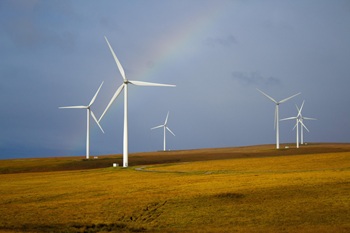
Communities will be able to build their own clean energy.
Why diversity and inclusion matters for SMEs

CIOB’s D&I Charter shows how practical changes can support long-term growth.
Cut electricity bills to power growth

Coalition sends joint letter to the Chancellor.

Gasholders: a history in pictures. Book review.
Recognition, influence and growth

SocEnv identifies three strategic pillars in new strategy to 2045.
Comments
[edit] To make a comment about this article, click 'Add a comment' above. Separate your comments from any existing comments by inserting a horizontal line.
Corrected - EPC stands for Energy Performance Certificate not Environmental Performance Certificate