




Refurbishment
Refurbishment is the process of improvement by cleaning, decorating and re-equipping. It may also include elements of retrofitting with the aim of making a building more energy efficient and sustainable.
As a broad term, refurbishment is often used interchangeably with renovation or restoration (which is to do with restoring a building to its former condition). In general, refurbishment can encompass such works as ‘cosmetic’ renovations (such as painting and decorating), upgrading, major repair work, alterations, conversions, extensions and modernisations.
The lifecycle of a building can be significantly extended by effective refurbishment, as such it is a key component in achieving a circular economy. As every building is unique, not only structurally, technically and typologically, but also in local context, the correct approach to refurbishment should be assessed according to the particular conditions. Designers should seek to understand the actual uses of existing buildings and communicate with diverse stakeholders from the initial project phase to the end of the refurbishment.
It derives from Latin words re (again) and furbish (to polish) and describes making improvements to the current condition of a building and improving its current use or appearance. The scope of interventions reaches from ‘improving the environmental and operating costs’ to ‘repair work, renovations and alterations, and structural rehabilitation’ of existing buildings [2]. Therefore, the term may also cover additions which are made to improve the performance (e.g. in-use energy efficiency and operating costs) of existing buildings [1]. As a whole, refurbishment covers a wide range of interventions including (but often going beyond) maintenance, repair work, and alteration. Retrofitting, renovation and rehabilitation are sub-categories of refurbishment. [2,3]
NB Redefining value, The manufacturing revolution, Remanufacturing, refurbishment, repair and direct reuse in the circular economy, published by the United Nations Environment Programme in 2018, suggests that refurbishment: ‘Refers to the modification of an object that is a waste or a product that takes place within maintenance or intermediate maintenance operations to increase or restore performance and/ or functionality or to meet applicable technical standards or regulatory requirements, with the result of making a fully functional product to be used for a purpose that is at least the one that was originally intended. The restoration of functionality, but not value, enables a partial new service life for the product.’
[edit] References
- Schwartz, Y., Raslan, R., Mumovic, D. (2016). Implementing multi objective genetic algorithm for life cycle carbon footprint and life cycle cost minimisation: A building refurbishment case study. Energy 97, 58-68. http://dx.doi.org/10.1016/j.energy.2015.11.056
- Shahi, S., Esfahani, M., Bachmann, C., & Haas, C. (2020). A definition framework for building adaptation projects. Sustainable Cities and Society 63(102345). https://doi.org/10.1016/j.scs.2020.102345
- Plevoets, B. & van Cleempoel, K. (2019). Adaptive reuse of the built heritage: concepts and cases of an emerging discipline. https://doi.org/10.4324/9781315161440
[edit] Related articles on Designing Buildings
- Alteration work.
- CIBSE Case Study Angel Building Refurbishment.
- CIBSE Case Study Thamesmead Estate Refurbishment.
- Circular Construction in Regenerative Cities (CIRCuIT).
- Comprehensive refurbishment.
- Decoration.
- Energy efficiency retrofit training videos.
- Flexbury Church.
- Licence to alter.
- Making good.
- National Refurbishment Centre.
- Point Cloud modeling considerations for M&E in refurbishment projects.
- Pre-demolition and pre-refurbishment audits.
- Remedial works.
- Renovation.
- Renovation v refurbishment v retrofit.
- Restoration.
- Retrofit.
- Upgrade.
[edit] External references
- An introduction to refurbishment for structural engineers. Part 1: Identifying opportunities at the feasibility stage
- An introduction to refurbishment for structural engineers. Part 2: Maximising the opportunities at the design stage
- Understanding existing buildings – five studies to complete before design work starts
- Vertical extensions: technical challenges and carbon impact
- The principles of reusing existing buildings
IHBC NewsBlog
IHBC sponsors Gardens Trust event 23-4 Sept 2026
.jpeg)
'Learning from the Past, Shaping the Future’ takes place in Milton Keynes
Renovations to Frank Lloyd Wright's Fallingwater complete
.jpg)
World Heritage Preserved project opens house for tours again
Shakespeare Birthplace Trust places Hall's Croft on HAR Register
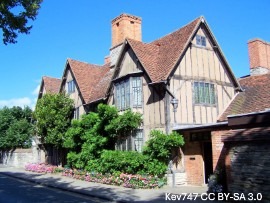
Stratford-upon-Avon home of Shakespeare's daughter is 'At Risk'
Lady Grange’s House repaired on St Kilda
.jpg)
National Trust for Scotland repairs stone cleit with link to famous island resident
Griff Rhys Jones on BBC Radio 4 Today programme
,_Green_Lane,_Derby.jpg)
The Victorian Society’s President unveiled its latest Top Ten Endangered Buildings 2026.
Need a MATE? Book your place now.

IHBC offers free webinars on applying for IHBC accreditation (Full & Associate).
UK Stained Glass Repository finds windows new homes
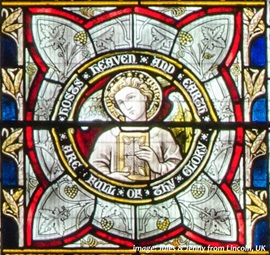
How are stained glass windows are rescued, stored and repurposed?
APPGEBE report sets high aims for quality
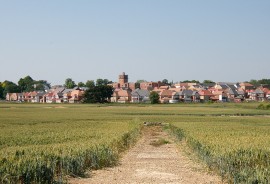
'Government must not sacrifice quality in drive to build 1.5m homes'
New measures protect Historic Shipwrecks from heritage crime

Underwater cultural heritage benefits from new HE guidance
How could the City of London skyline look in 6 years' time?

Visualisation shows approved planning applications as completed buildings
National Trust for Scotland calls for VAT cuts
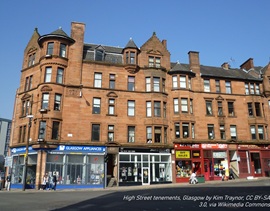
Heritage neglect is encouraged by current policies
IHBC's 'Context' Issue 186 features Industrial Heritage
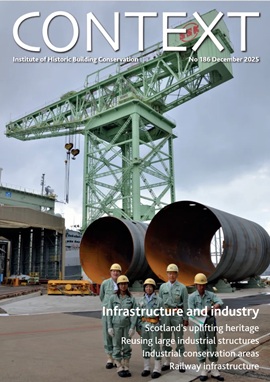
IHBC's members' journal reports on the challenges of conserving infrastructure
Book now for IHBC Annual School 2026
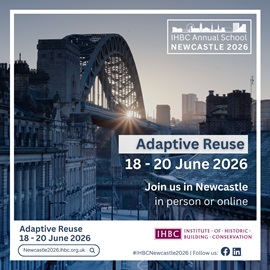
IHBC Annual School is taking place 18-20 June 2026 in Newcastle
RICHeS Research Infrastructure offers ‘Full Access Fund Call’

RICHeS offers a ‘Help’ webinar on 11 March
Latest IHBC Issue of Context features Roofing
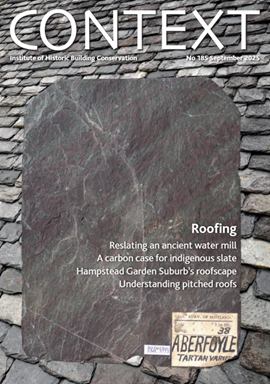
Articles range from slate to pitched roofs, and carbon impact to solar generation to roofscapes
Three reasons not to demolish Edinburgh’s Argyle House

Should 'Edinburgh's ugliest building' be saved?
IHBC’s 2025 Parliamentary Briefing...from Crafts in Crisis to Rubbish Retrofit
IHBC launches research-led ‘5 Commitments to Help Heritage Skills in Conservation’
How RDSAP 10.2 impacts EPC assessments in traditional buildings

Energy performance certificates (EPCs) tell us how energy efficient our buildings are, but the way these certificates are generated has changed.