





COSHH
Many processes involve the use of substances that could cause harm. The Control of Substances Hazardous to Health Regulations 2002 (COSHH) require employers to prevent or reduce workers' exposure to substances including:
- Chemicals, and products containing chemicals.
- Fumes, gases, vapours and mists.
- Dusts.
- Nanotechnology
- Biological agents and germs.
It does not include lead, asbestos or radioactive substances, which are controlled by other legislation.
There are a wide range of situations where workers might be exposed to substances hazardous to health:
- Dusty or fume-laden air in welding, quarries or woodworking.
- Metalworking fluids.
- Flowers, bulbs, fruit and vegetables.
- Wet working such as catering and cleaning.
- Wet cement in construction.
- Benzene in crude oil.
- Using substances such as paint, ink, glue, lubricants, detergent and beauty products.
See HSE: Control of Substances Hazardous to Health Essentials guidance publications for guidance on different types of substances that might be encountered. This includes guidance on silica, welding and metalworking, plant and machinery and does in fact include guidance about asbestos.
Workers might be be exposed by:
- Inhalation.
- Ingestion.
- Contact with the skin.
- Contact with the eyes.
- Skin puncture.
Controlling hazardous substances involves:
- Identifying potential health hazards.
- Undertaking risk assessments to determine how to prevent harm. If an employer has five or more employees they must record risk assessments, but it is sensible to do this even if there are fewer than five employees.
- Providing control measures, ensuring that they are in good working order and that they are used.
- Providing, replacing and paying for personal protective equipment (PPE).
- Where appropriate, providing monitoring to show compliance with Workplace Exposure Limits (WELs) or Biological Monitoring Guidance Values (BMGV) or to show that control equipment or personal protective equipment is working properly.
- Where appropriate, providing health surveillance.
- Emergency planning.
- Providing information, instruction and training so that employees understand; what the hazards and risks are, if there is an exposure limit, the results of any monitoring of exposure or health surveillance and what to do if there is an accident or emergency.
In the first instance, preventative measures should be taken to; avoid the substance or process, substitute it with something safer, or use the substance in a safer form. If exposure cannot be prevented, then it must be controlled to ensure that the risk of harm is ‘as low as is reasonably practicable' (ALARP).
Where proposed work has a high risk, a ‘permit to work’ may be introduced to ensure that only authorised people carry out the work, within a specified time frame and in a specific way, which may be set out in a method statement.
[edit] Related articles on Designing Buildings
- CDM.
- Competent person.
- Construction dust.
- Construction health risks.
- Contaminated land.
- Deleterious materials.
- Design risk management.
- Designing to reduce the chemical, biological and radiological vulnerability of new buildings (IP 7/15).
- Disposal.
- Hazardous substances.
- Health and safety file.
- Health and safety.
- Health and Safety Executive.
- Injuries on construction sites.
- Mastic asphalt flooring.
- Method statement.
- Occupational health.
- Personal protective equipment.
- Planning (Hazardous Substances) Act 1990.
- Pollution.
- Pre-construction information.
- Principal contractor.
- Registration, evaluation, authorisation and restriction of chemicals REACH.
- Reporting accidents and injuries on construction sites.
- Risk assessment.
- Site waste management plan.
- Volatile organic compounds.
- Workplace exposure limits.
- Work at height regulations.
[edit] External references
- The Control of Substances Hazardous to Health Regulations Legislation.
- HSE: COSHH.
- HSE: Control of Substances Hazardous to Health Essentials guidance publications.
- European Regulation (EC) No 1272/2008 on classification, labelling and packaging of substances and mixtures (CLP Regulations).
- Registration, Evaluation, Authorisation & Restriction of Chemicals (REACH)
Featured articles
Check out some of the best features and news from Designing Buildings as well as key stories from around the web.

Accommodating the Victorian and Edwardian working woman. Book review.
Rethinking passive fire protection in design

PFP demands the same level of design rigour as structure or services.
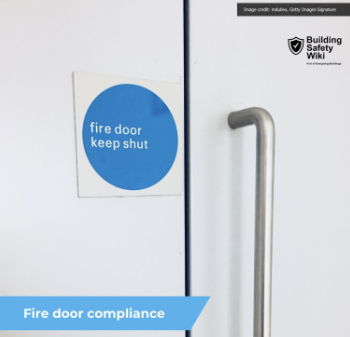
38% of Gen Zs feel safe when a fire door is wedged open.
Stunning images from around the world

Shortlist for CIOB’s Art of Building photography competition.

Guidance for conversion of traditional pre-1919 stone buildings.
Industrial heritage in the Ruhr
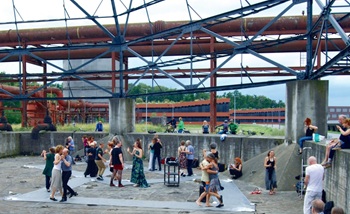
A marked difference to the fate of industrial landscapes in the UK.

Communities will be able to build their own clean energy.
Why diversity and inclusion matters for SMEs

CIOB’s D&I Charter shows how practical changes can support long-term growth.
Cut electricity bills to power growth

Coalition sends joint letter to the Chancellor.

Gasholders: a history in pictures. Book review.
Recognition, influence and growth

SocEnv identifies three strategic pillars in new strategy to 2045.
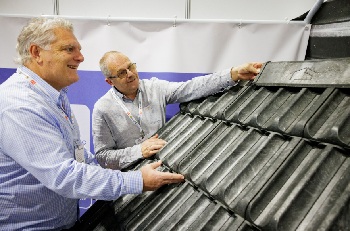
Discover the future of roofing, cladding and insulation.
Comments