





Smart airports
Airport operations and business models have evolved dramatically over the last two decades to support the explosive growth of the global airline industry. Regulatory reforms and deregulation have ushered in a new aviation era. Emerging countries are showing dramatic traffic growth, diversity, and choice of airlines.
Due to rising competition in the airline sector, airports are becoming more responsive toward the needs of passengers. This is leading to a focus on innovation and cost reduction along with increased value and choice.
The penetration of smartphones and tablets is playing a key role in changing the outlook of global smart airports, with mobile check-in facilities giving customer service differentiation and cost reduction.
Smart airport infrastructure includes; endpoint devices, communication systems, passenger, cargo and baggage ground handling control, air traffic control, security systems and others.
In 2015, the security systems segment dominated the market due to a range of government initiatives following the rise in terrorist attacks and other security concerns.
Among the smart airport solutions, landside solutions held the largest share of the market. However, terminal side solutions are expected to expand at the fastest rate in the future due to the increasing focus on lifecycle services and digital video surveillance and management solutions.
Among the smart airport applications, the core applications segment had the largest share of the overall spending on smart airport applications. This is due to an increase in the use of mobile devices to check flight updates, baggage status, and other information. In order to provide such information through mobile notification services, airports, as well as airline operators will have to invest significant sums in core applications. This segment is expected to remain dominant during due to the high demand for integration of applications to track, manage, and share accurate, up-to-date information in real-time with all the stakeholders of an airport ecosystem.
Smart airport services include; smart transport and parking, smart retail, hospitality, and entertainment, smart workplaces, smart airport processes, and smart business-to-business services. Among these, smart business-to-business services for airports was the largest segment of global smart airport services in terms of revenue in 2015. This is due to the rising demand for continuously updating passengers with real-time travel services such as route switching and valet parking.
The global smart airport market is dominated by key players including IBM Corporation, Cisco, and Siemens AG, while other players such as Raytheon, Amadeus IT Group, and QinetiQ are identified as emerging players in the market. Players such as Honeywell and SITA are amongst the promising players in the smart airport market with a strong position and relatively median growth as compared to the market leaders. Leading players are currently focusing on integrating products to create a new customer base. As a part of this strategy, they are engaging in strategic partnerships and acquisitions.
[edit] Related articles on Designing Buildings Wiki
- Big data.
- Engineering Smart Cities.
- European connected and smart home market.
- Internet of things.
- Open data.
- Open data - how can it aid the development of the construction industry?
- Parking reservation systems.
- PAS 180:2014 Smart cities – Vocabulary.
- PAS 181:2014 Smart city Framework.
- PAS 182 Smart city data concept model.
- Smart buildings.
- Smart city.
- Smart cities design timeframe.
- Smart construction.
- Smart meter.
- Smart technology.
- The smart buildings market.
Featured articles
Check out some of the best features and news from Designing Buildings as well as key stories from around the web.

New and updated CLC building safety guidance.
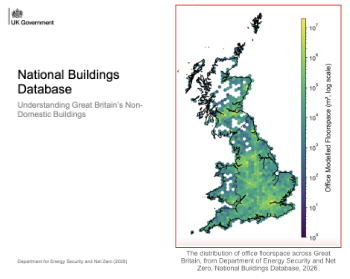
New UK National Buildings Database.
Building Safety Wiki Interviews

Chief executive of the British Woodworking Federation.
Planning condition discharge in England and Wales

A brief explanation from a building compliance expert, with further links.
Overheating guidance and tools for building designers

Guidance for dealing with element of building fabric control that have increasing importance.
Shading for housing, a design guide

From the Good Homes Alliance and British Blind and Shutter Association.
UK Standard Skills Classification (SSC)

A shared framework for describing skills needs.
Social media ban consultation comes to close

CIOB urges UK Government to consider social media’s role in careers guidance in ban debate.
The latest of eight Skills England apprenticeship units

The addition of battery manufacturing welcomed by ECA with a warning about the risks of fast-tracked apprenticeship units.
Building Control Independent Panel final report

A precis of a key report led by Dame Hackitt with full recommendations and link to the government response.
Building Safety recap April, 2026

A short and longer run-through of the month, with links to further information and sources.