





Portland cement
Portland cement (PC (CEM I)) is used to make almost all concrete. It is also the principal cement used in most masonry mortars and renders. The most commonly used type of Portland cement is Ordinary Portland Cement (OPC), but there are other varieties available, such as white Portland cement.
Cement is a substance used for binding and hardening other materials. Water and cement set and harden through a chemical reaction known as 'hydration'. The process of hardening is described as 'curing', and it requires particular conditions of temperature and humidity.
Mixed with water, sand and rock, portland cement forms concrete.
The Leeds-based bricklayer Joseph Aspdin was the first person to make Portland cement in the early-19th century, by burning powdered limestone and clay in a kitchen stove.
The 'dry' method is the most common way of manufacturing Portland cement. The process begins with the quarrying of the principal raw materials – limestone, clay, chalk or marl, which may be combined with shale, blast furnace slag, silica sand, iron ore, and so on.
The quarried material is then crushed, first to reduce it to a maximum size of approximately 6 inches, and then to about 3 inches or less using secondary crushers or hammer mills. The crushed rock is then ground, mixed and fed into large rotary kilns, which heat it to approximately 2,700ºF (1,500 Celsius). Coolers are used to bring down the temperature of the clinker, before cement plants grind and mix it together with small amounts of gypsum and limestone. Once this is done, it can be packaged and sold for use in construction.
An alternative, though less common manufacturing technique is the wet method. It is similar to the dry method except that before being fed into the kiln the raw materials are ground with water.
As the production of Portland cement involves quarrying and the use of large amounts of energy to power the kilns, it is not considered to be a 'sustainable' material.
[edit] Related articles on Designing Buildings
- Aggregate.
- Alkali-activated binders for precast and ready-mixed concrete products: New supply chains, business models and environmental benefits.
- Alkali-silica reaction (ASR).
- Binding agent.
- Cement.
- Cement-free precast product.
- Cement in Saudi Arabia.
- Cement mortar.
- Concrete.
- Concrete masonry unit CMU.
- Ferro-cement.
- Fibre cement.
- High alumina cement.
- Lime mortar.
- Limestone calcined clay cement LC3.
- Mortar.
- Mortar analysis for specifiers.
- Mundic.
- Plaster.
- Portland stone.
- Screed.
- Shotcrete technology.
- Stucco.
- Thomas Edison's concrete cottages.
- Types of cement.
- Types of concrete.
Featured articles
Check out some of the best features and news from Designing Buildings as well as key stories from around the web.
Bridging the gap between clients and contractors

Concerns remain around contractor quality, capability, and delivery.
Construction Management, 10 June.
Heat pumps beat boilers in new home tests.
Building Safety Act implementation in Wales

CIAT to host industry panel on 26 June.
New and updated CLC building safety guidance.
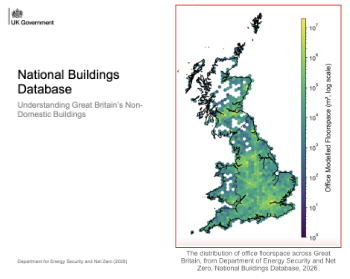
New UK National Buildings Database.
Building Safety Wiki Interviews

Chief executive of the British Woodworking Federation.
Planning condition discharge in England and Wales

A brief explanation from a building compliance expert, with further links.
Overheating guidance and tools for building designers

Guidance for dealing with element of building fabric control that have increasing importance.
Shading for housing, a design guide

From the Good Homes Alliance and British Blind and Shutter Association.
UK Standard Skills Classification (SSC)

A shared framework for describing skills needs.
Social media ban consultation comes to close

CIOB urges UK Government to consider social media’s role in careers guidance in ban debate.