





Manual handling
Manual handling refers to the use of individual’s physicality to lift, lower, carry, push or pull an item.
The Manual Handling Operations Regulations 1992 (MHOR), amended in 2002, define manual handling as:
| ‘...any transporting or supporting of a load (including the lifting, putting down, pushing, pulling, carrying or moving thereof) by hand or bodily force’. |
Incorrect manual handling is a common factor in work-related injuries. This can be because of:
- The weight of the item being handled.
- The repetitive nature of the movement
- The distance the item is being moved
- Where the item is being moved to and from.
- The posture of the individual. Any twisting, bending, stretching or other awkward position may exacerbate problems.
Musculoskeletal disorders (MSDs) are injuries or damage caused to joints or other tissues in the upper/lower limbs or the back, often as a result of manual handling. Statistics have shown that MSDs account for more than a third of all work-related illnesses reported each year.
The Manual Handling Operations Regulations place obligations on employers to manage the risks of manual handling to their employees, including:
- Avoiding hazardous manual handling operations as far as is reasonably practicable. This may involve the use of alternative equipment such as a forklift truck, pallet jack, trolley or other lifting device.
- Assessing the risk of injury from manual handling operations that cannot be carried out with alternative equipment.
- Reducing the risk as far as is reasonably practicable, perhaps by altering the load, changing the working environment, and so on.
- Follow systems of work in place for their safety.
- Use equipment provided for their safety properly.
- Cooperate with their employer on health and safety matters.
- Inform their employer if they identify hazardous handling activities.
- Take care to make sure their activities do not put others at risk.
If it is necessary and safe to manually lift items, it is important to:
- Get a good hold.
- Start in a good posture.
- Keep the load close to the waist.
- Not flex the back any further while lifting.
- Avoid twisting the back or leaning sideways.
- Keep the head up.
- Move smoothly.
- Not lift or handle more than can be easily managed.
Manual handling activities can be assessed and graded according to risk using a Manual handling assessment chart.
[edit] Find out more
[edit] Related articles on Designing Buildings Wiki
- Construction health risks.
- Environmental health.
- Ergonomics in construction.
- Hand-arm vibration syndrome.
- Health and safety for building design and construction.
- Injuries on construction sites.
- Lifting device.
- Manual handling assessment chart.
- Reporting accidents and injuries on construction sites.
- Risk assessment.
- Safety management.
- Site records and registers.
[edit] External references
Featured articles and news
Edmundson Apprentice of the Year award 2026

Entries now open for this Electrical Contractors' Association award.

Traditional blue-grey slate from one of the oldest and largest UK slate quarries down in Cornwall.

There are plenty of sources with the potential to be redeveloped.
Change of use legislation breaths new life into buildings

A run down on Class MA of the General Permitted Development Order.
Solar generation in the historic environment

Success requires understanding each site in detail.
Level 6 Design, Construction and Management BSc

CIOB launches first-ever degree programme to develop the next generation of construction leaders.

Open for business as of April, with its 2026 prospectus and new pipeline of housing schemes.
The operational value of workforce health

Keeping projects moving. Incorporating unplanned absence and the importance of health, in operations.
A carbon case for indigenous slate
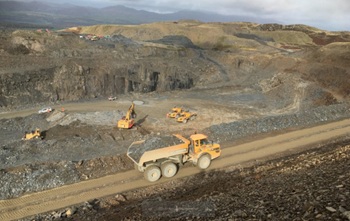
UK slate can offer clear embodied carbon advantages.
Costs and insolvencies mount for SMEs, despite growth

Construction sector under insolvency and wage bill pressure in part linked to National Insurance, says report.
The place for vitrified clay pipes in modern infrastructure
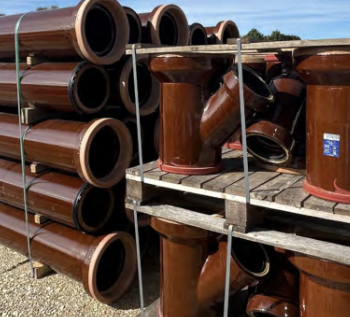
Why vitrified clay pipes are reclaiming their role in built projects.

Research by construction PR consultancy LMC published.
Roles and responsibilities of domestic clients

ACA Safety in Construction guide for domestic clients.
Fire door compliance in UK commercial buildings

Architect and manufacturer gives their low down.