





How To Select The Right Gas Analyser For Your Business
Gas analysers are incredibly important pieces of equipment in a variety of industries. By measuring the gases in the air, they are able to detect problems and alert people as quickly as possible to ensure that workers and anyone in the surrounding area is kept safe.
There are different types of gas analysers available, so to explain further, CEM Solutions, specialists in continuous emissions monitoring, explore the options to help you decide which one is right for your business.
Contents |
[edit] First, you need to identify what type of gas needs to be measured
The first thing to think about is the type of gas that you are required to measure, as different analysers will be set up to detect specific gases. They may include:
- Carbon Dioxide (CO)
- Methane (CH)
- Carbon Monoxide (CO)
- Volatile Organic Compounds (VOCs)
- Hydrogen Sulphide (HS)
- Nitrogen Oxide (NO or NO)
- Oxygen (O)
- Ammonia (NH)
Once you’ve identified the type of gas, you can then consider which type of gas analyser will be most suitable for your environment and monitoring requirements, for example:
Infrared analysers detect gases such as carbon dioxide and methane by measuring the absorption of infrared light.
Photoionisation detectors (PID) are extremely effective for detecting volatile organic compounds (VOCs) and some toxic gases at low concentrations, whilst paramagnetic analysers are better suited for measuring oxygen concentrations in both process and ambient environments.
There are also thermal conductivity detectors (TCDs) that can measure binary gas mixtures and are often used in applications that require hydrogen, helium, or argon analysis.
However, electrochemical sensors are better at detecting toxic gases like carbon monoxide or hydrogen sulphide by using a chemical reaction that can produce a measurable electrical signal to determine gas concentration.
Tunable Diode Laser Absorption Spectroscopy (TDLAS) analysers are useful for selective measurements of gases like ammonia and methane, particularly where high precision and fast response times are needed.
You may also want to consider the function of the equipment, i.e., whether it’s a handheld gas analyser, or a fixed gas analyser. This is usually determined by the type of gas you need to monitor, and how hazardous the environment may be.
[edit] The required levels of sensitivity
In addition to the type of gas you are looking to monitor, you also need to think about the measurement range and sensitivity of your analyser. Some applications might require the detection of low concentrations of gas, while others will require measurement over a wide range of concentrations.
High sensitivity analysers like TDLAS analysers are essential if you are looking for trace amounts of gas in things like leak detection, greenhouse gas monitoring or safety applications.
Depending on your application, other options such as electrochemical sensors for low-level toxic gases or photoacoustic spectroscopy analysers for trace gas monitoring may also offer suitable sensitivity and accuracy.
Gas chromatography (GC) systems with thermal conductivity or flame ionisation detectors also allow sensitive multi-gas measurements.
You should also think about the lower detection limit and upper detection limit of the analyser, as these specifications will determine the range in which the analyser can provide reliable measurements.
[edit] The chosen environment
The environment in which the analyser is to be used is also an important factor. Harsh environments with high temperatures, humidity and dust will need an analyser with a rugged design and non-contact measurement capabilities.
Many industrial environments use a combination of analyser types, including electrochemical, paramagnetic and infrared analysers, which can be housed in rugged explosion-proof enclosures.
Gas chromatographs are preferred in applications requiring the separation and analysis of complex gas mixtures, such as in refining or petrochemical processes, whilst portable multi-gas detectors, often equipped with multiple sensor technologies, are ideal for remote or field operations.
[edit] Response times
If you are in an environment where conditions can change rapidly, you need to think carefully about the response time of your chosen gas analyser. In a combustion control environment, speed is of the essence in order to maintain optimal combustion efficiency and minimise any emissions.
Confined spaces will also require fast response times to detect any dangerous gas levels and initiate corrective actions. The response time is usually measured in terms of the time required for the analyser to reach a certain percentage of the final value after a change in gas concentration. Shorter response times are usually preferred for dynamic processes.
While TDLAS is known for fast response, other technologies such as electrochemical sensors and NDIR also provide quick and reliable readings depending on the setup. For complex multi-component analysis, gas chromatography may have longer response times but can also provide more detailed insight into gas composition.
When selecting a gas analyser, you need to carefully consider all of the factors, including the type of gas that needs to be measured and the sensitivity, response time, and application environment. This will help you narrow down the most appropriate gas analyser for your business and ensure a safe environment for everyone.
Featured articles and news
The roofscape of Hampstead Garden Suburb

Residents, architects and roofers need to understand detailing.
Homes, landlords. tenants and the new housing standards

What will it all mean?
The Architectural Technology podcast: Where it's AT

Catch-up on the latest episodes.
Edmundson Apprentice of the Year award 2026

Entries now open for this Electrical Contractors' Association award.

Traditional blue-grey slate from one of the oldest and largest UK slate quarries down in Cornwall.

There are plenty of sources with the potential to be redeveloped.
Change of use legislation breaths new life into buildings

A run down on Class MA of the General Permitted Development Order.
Solar generation in the historic environment
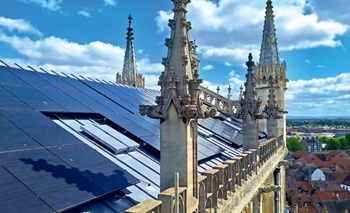
Success requires understanding each site in detail.
Level 6 Design, Construction and Management BSc

CIOB launches first-ever degree programme to develop the next generation of construction leaders.

Open for business as of April, with its 2026 prospectus and new pipeline of housing schemes.
The operational value of workforce health
Keeping projects moving. Incorporating unplanned absence and the importance of health, in operations.
A carbon case for indigenous slate
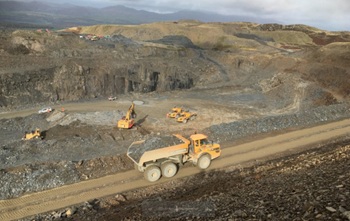
UK slate can offer clear embodied carbon advantages.
Costs and insolvencies mount for SMEs, despite growth

Construction sector under insolvency and wage bill pressure in part linked to National Insurance, says report.
The place for vitrified clay pipes in modern infrastructure
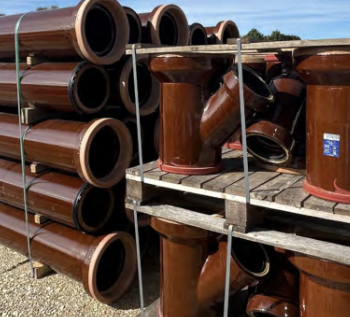
Why vitrified clay pipes are reclaiming their role in built projects.

Research by construction PR consultancy LMC published.
Roles and responsibilities of domestic clients

ACA Safety in Construction guide for domestic clients.