






Health and productivity in sustainable buildings
In June 2015, the Construction Marketing Group (CMG) published, a white paper, 'Health and Productivity in Sustainable Buildings', part of a research project on sustainable buildings in Poland. The project was initiated by --Buro Happold Engineering and builds on a report 'Health, Wellbeing and Productivity in Offices' published by the World Green Building Council (WGBC) in 2014.

The purpose of the White Paper was to '…encourage businesses to investigate the real impact their buildings have on their people.'
It aims to raise business awareness of the positive impact of sustainable buildings and the possible financial benefits. It is intended for investors, business leaders, tenants and real estate agents.
The project consisted of two phases.
The first phase analysed market perceptions of sustainable buildings. The second phase attempted to answer the following questions:
- Why and how should businesses measure the impact of their buildings on their people?
- What common approach should we apply in the local market?
- How does the global framework presented by the World Green Building Council apply to the Polish market?
The main conclusions of the paper were that:
- Sustainable buildings are not only more energy efficient but are also able to improve the wellbeing and efficiency of the people working in them.
- It is necessary and feasible for businesses to measure the impact of their buildings on their employees. Most of the data needed will have already been collected or will be relatively easy to access. What needs to be addressed, is how buildings influence people's health, wellbeing at work and subsequent productivity.
- The overall organisational measurement framework proposed by the WGBC and analysed as part of the project can be adopted as a regular approach for the Polish market.
- Multiple studies show that sustainable design is key to success. Investors need to ensure that elements such as indoor air quality, light quality, acoustic comfort, spatial configuration, biophilia (the tendency for people to seek connections with nature), views and access to amenities are adequately addressed.
Ian Booth, partner at Buro Happold said, “This is a ground breaking moment for the Polish market and the first time that such a large group of experts from numerous organisations has been engaged in verifying a global methodology regarding the influence buildings have on their users. Members of the technical committee analysed and defined the issue, underlining the fact that there is a global solution that can be successfully applied to the Polish market.”
Katarzyna Chwalbiska-Kusek, marketing and business development manager, Buro Happold said, “On average, we spend 90% of our time indoors, so interior environments have a great influence on both our health and wellbeing. Modern, sustainable offices are equipped with numerous solutions reducing negative effects, for example, by applying better ventilation systems, ensuring better access to natural daylight and creating relaxation zones. Our aim is to encourage the market to conduct integrated research that will help reflect the real influence of sustainable buildings on employees' health and productivity.”
[edit] Related articles on Designing Buildings Wiki
- Access and inclusion in the built environment: policy and guidance.
- Access consultant.
- Accessible London.
- Biophilic design.
- Biophilic design and sustainability.
- Biophilic design - health and wellbeing in buildings.
- Biophilic design - why it matters.
- Changing lifestyles.
- Cycling and walking plan.
- Equality act.
- Inclusive design.
- Light pollution.
- Smart cities.
- Sustainability
- Sustainable materials.
- Wellbeing
Featured articles and news
Costs and insolvencies mount for SMEs, despite growth

Construction sector under insolvency and wage bill pressure in part linked to National Insurance, says report.
The place for vitrified clay pipes in modern infrastructure
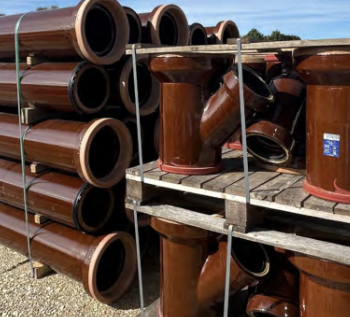
Why vitrified clay pipes are reclaiming their role in built projects.
Research by construction PR consultancy LMC published.
Roles and responsibilities of domestic clients
ACA Safety in Construction guide for domestic clients.
Fire door compliance in UK commercial buildings

Architect and manufacturer gives their low down.
Plumbing and heating for sustainability in new properties
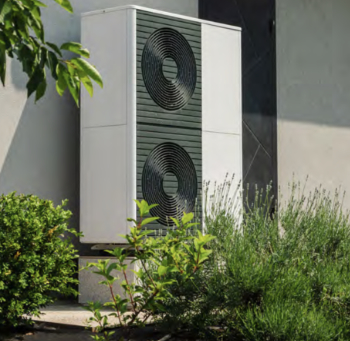
Technical Engineer runs through changes in regulations, innovations in materials, and product systems.
Awareness of the Carbon Border Adjustment Mechanism
What CBAM is and what to do about it.
The new towns and strategic environmental assessments
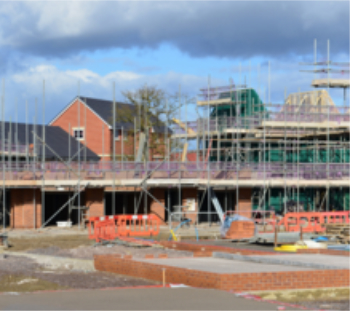
12 locations of the New Towns Taskforce reduced to 7 within the new towns draft programme and open consultation.
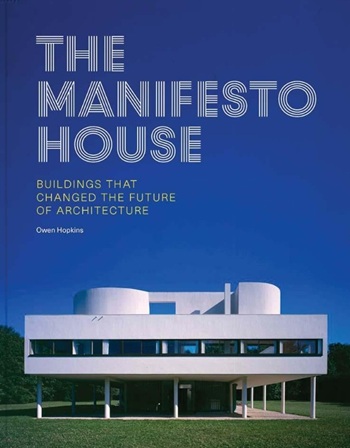
Buildings that changed the future of architecture. Book review.
The Sustainability Pathfinder© Handbook
Built environment agency launches free Pathfinder© tool to help businesses progress sustainability strategies.
Government outcome to the late payment consultation, ECA reacts.
IHBC 2025 Gus Astley Student Award winners
Work on the role of hewing in UK historic conservation a win for Jack Parker of Oxford Brookes University.
Future Homes Building Standards and plug-in solar
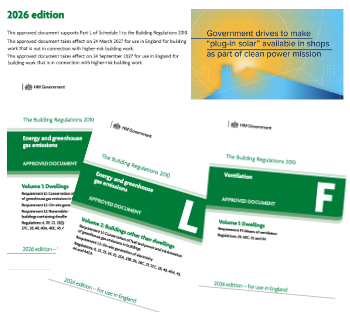
Parts F and L amendments, the availability of solar panels and industry responses.
How later living housing can help solve the housing crisis
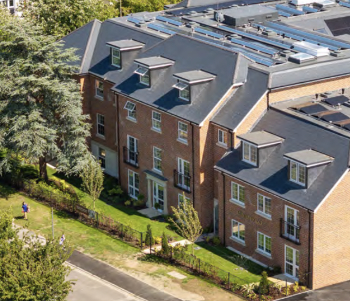
Unlocking homes, unlocking lives.
Preparing safety case reports for HRBs under the BSA
A new practical guide to preparing structural inputs for safety cases and safety case reports published by IStructE.
Male construction workers and prostate cancer
CIOB and Prostate Cancer UK encourage awareness of prostate cancer risks, and what to do about it.