





Gas Safe
Gas safety is imperative in the installation and servicing of gas appliances as poorly fitted and serviced appliances can cause leaks, fires, explosions and carbon monoxide poisoning.
‘Gas Safe’ is the term given to operatives and businesses that qualify as competent for the Gas Safe Register, the UK’s official gas registration body, administered by Capita Group on behalf of HSE. Since 2009, when the Gas Safe Register replaced the Council for Registered Gas Installers (CORGI), it has been a legal requirement for gas engineers to be registered.
Gas work is taken to mean:
- Installation, repair or servicing of a gas boiler.
- Installation, or repair of a gas fire, gas cooker or hob.
Gas appliance users may only undertake activities in relation to a gas appliance as set out in the manufacturer’s user instructions. They should not carry out any work that involves disturbing the gas carrying components or that could affect the combustion process.
Other competent tradespersons can undertake work involving the replacement of a water carrying component housed within the boiler’s decorative casing, providing it can be undertaken without having to break a combustion chamber seal or disturbing a gas carrying component.
Gas engineers are required to carry a Gas Safe Register ID card that should be checked before being hired for gas work on domestic or commercial premises to verify they are qualified to carry out that specific work. The card gives assurance that they are competent and qualified to work safely and legally with gas. There are a range of qualifications that allow them to carry out specific types of gas work.
The details on the front of the card include:
- Personal photograph.
- Issue and expiry date.
- Unique licence number.
- Security hologram.
- Business for which the engineer works.
The details on the back of the card include:
- The list of qualifications that enable the engineer to carry out specific types of gas work.
- The date of the qualifications.
After completing the installation or servicing of a gas appliance, the engineer will provide a report (sometimes referred to as a gas safety certificate) detailing the checks that have been carried out and advice as to when the appliance will require servicing again.
If requested, landlords must be able to provide tenants with an up-to-date gas safety record which demonstrate that an annual check has been carried out.
[edit] Related articles on Designing Buildings Wiki
- Asbestos in construction.
- Carbon monoxide.
- Carbon monoxide detector.
- Carbon monoxide Requirement J3.
- Fire authority.
- Health and Safety.
- HSE.
- Kitemark.
- Liquefied petroleum gas (LPG).
- Maintenance.
- Mains gas.
- Risk assessment for construction.
- Smoke detector.
- Third party accreditation.
[edit] External references
Featured articles and news

We're expanding our collaborative mission by launching DB Intelligence, an exclusive market research advisory panel. Built environment professionals can now get paid to share their expertise on industry trends, products and services.
Panel members receive direct financial incentives for participating in research projects like short surveys, 1-2-1 interviews and focus groups. Register today to shape the future of the construction sector.
Building Safety Wiki Interviews

Chief executive of the British Woodworking Federation.
Planning condition discharge in England and Wales

A brief exoplanation from a building compliance expert, with further links.
Overheating guidance and tools for building designers

Guidance for dealing with element of building fabric control that have increasing importance.
Shading for housing, a design guide

From the Good Homes Alliance and British Blind and Shutter Association.
UK Standard Skills Classification (SSC)

A shared framework for describing skills needs.
Social media ban consultation comes to close

CIOB urges UK Government to consider social media’s role in careers guidance in ban debate.
The latest of eight Skills England apprenticeship units

The addition of battery manufacturing welcomed by ECA with a warning about the risks of fast-tracked apprenticeship units.
Building Control Independent Panel final report
A precis of a key report led by Dame Hackitt with full recommendations and link to the government response.
Building Safety recap April, 2026
A short and longer run-through of the month, with links to further information and sources.

CIAT May 2026 briefing.

From medieval scribes to modern word art.
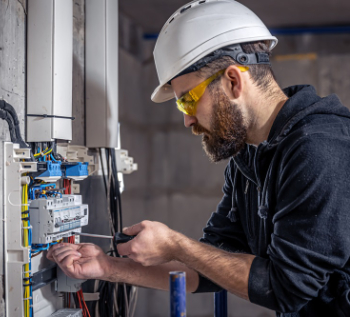
ECA welcomes crackdown on late payment and push for clean energy, whilst CIOB seek fixed cladding removal timeframes.
Cyber Security in the Built Environment
Protecting projects, data, and digital assets: A CIOB Academy TIS.
Managing competence in the built environment
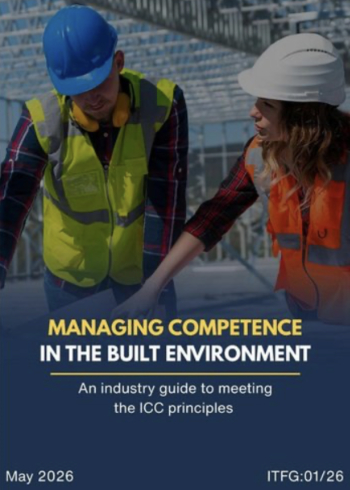
ITFG publishes new industry guide on how to meet the ICC principles.