





Functional unit of buildings
The New Rules of Measurement (NRM) are published by the Royal Institute of Chartered Surveyors (RICS). They provide a standard set of measurement rules for estimating, cost planning, procurement and whole-life costing for construction projects.
According to NRM1: Order of cost estimating and cost planning for capital building work, a functional unit is: ‘…a unit of measurement used to represent the prime use of a building or part of a building (e.g. per bed space, per house and per m2 of retail area). It also includes all associated circulation space.'
NRM1 defines the functional unit method as: ‘…a rough budget-setting technique which consists of selecting a suitable standard functional unit of use for the project, and multiplying the projected number of units by an appropriate cost per functional unit.’
BRE's Environmental impact of biomaterials and biomass defines a functional unit as: '...a qualitative description of function specifically defined for the product/service under study and any alternative product/services to which it is compared. The use of a functional unit means that the alternative designs under study are, in theory, compared fairly. For example, a comparison of external walls may be based on every external wall design in the study achieving a U-value of 0.3 W/m²K and compliance with building regulations.'
Embodied Carbon, The Inventory of Carbon and Energy (ICE), By Prof. Geoffrey Hammond and Craig Jones, Ed. Fiona Lowrie and Peter Tse, published by BSRIA in 2011, defines a functional unit as: ‘A reference unit of study normally used for comparative purposes, e.g. “1 m2 of carpet over a lifetime of 10 years”. A fair functional unit is necessary for such assessments.’
PAS 2080:2023 Carbon management in buildings and infrastructure, second edition, published by The British Standards Institution in March 2023, defines the functional unit as the: ‘…quantified performance of a product or system for use as a reference unit. NOTE The functional unit takes into account a function, a quantity, a duration, and a quality of the asset, network or system being assessed. Refer to the Guidance document for PAS 2080 for further explanation and examples of functional units.’
[edit] Related articles on Designing Buildings
Featured articles and news
The future workforce: culture change and skill

Under the spotlight at UK Construction Week London.
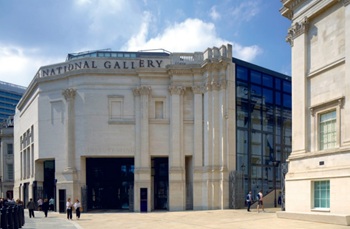
A landmark moment for postmodern heritage.
A safe energy transition – ECA launches a new Charter

Practical policy actions to speed up low carbon adoption while maintaining installation safety and competency.
Frank Duffy: Researcher and Practitioner

Reflections on achievements and relevance to the wider research and practice communities.
The 2026 Compliance Landscape: Fire doors
Why 'Business as Usual' is a Liability.
Cutting construction carbon footprint by caring for soil

Is construction neglecting one of the planet’s most powerful carbon stores and one of our greatest natural climate allies.
ARCHITECTURE: How's it progressing?

Archiblogger posing questions of a historical and contextual nature.
The roofscape of Hampstead Garden Suburb

Residents, architects and roofers need to understand detailing.
Homes, landlords. tenants and the new housing standards

What will it all mean?
The Architectural Technology podcast: Where it's AT

Catch-up on the latest episodes.
Edmundson Apprentice of the Year award 2026

Entries now open for this Electrical Contractors' Association award.

Traditional blue-grey slate from one of the oldest and largest UK slate quarries down in Cornwall.

There are plenty of sources with the potential to be redeveloped.
Change of use legislation breaths new life into buildings

A run down on Class MA of the General Permitted Development Order.
Solar generation in the historic environment

Success requires understanding each site in detail.