






Flood insurance

|
The twin effects of climate change and development on flood plains have become increasingly problematical for home owners and property insurers. Greater amounts of rainfall generally and more and more exceptional weather incidents have resulted in the insurance industry facing ever-rising flood-related insurance claims. In the UK, summer 2012 was the wettest for a century, in June alone flood claims were running at around £17 million per day, while in November 2019, floods in Yorkshire and Derbyshire caused widespread misery and damage to property.
All this means that properties in flood-prone areas are increasingly expensive to insure. Some are completely uninsurable.
Since 2000, in response to the increasing risk of flood damage to vulnerable properties, there has been an agreement in place between Government and the insurance industry (represented by the Association of British Insurers) whereby insurers would continue to offer insurance cover on vulnerable properties in return for guaranteed levels of public spending on flood defences.
However, this agreement ended in 2013 and was superceded by a new agreement which took effect in 2015, under which all homeowners, not just those affected by flooding, pay a fixed annual sum to help cover the cost of flood damage. This helps reduce insurance costs of those directly affected. In fact, homeowners have, for some time, been paying this amount, but the arrangement is now being formalised.
Insurers may continue to offer renewal terms on vulnerable properties, although the premiums will still be high when compared to low-risk properties. The premium differential for equivalent properties in high and low risk areas can be as much as four times.
If a property is in a high flood-risk area, there is no guarantee that insurance will either be available, or available at reasonable cost and the new agreement does not change these facts. Information on flood risk is available via the Environment Agency.
[edit] Related articles on Designing Buildings
- BREEAM Flood risk management.
- BS 851188.
- Environment Agency.
- Factors affecting property insurance premiums.
- Flood.
- Flood and Water Management Act.
- Flood Re.
- Flood risk.
- Flood risk management plan.
- Future Water, The Government’s water strategy for England.
- Insurance.
- Joint names policy.
- Planning for floods.
- Pitt review.
- Rainwater harvesting.
- River engineering.
- Sustainable urban drainage systems.
- Thames barrier.
- Water engineering.
[edit] External references
--Martinc
Featured articles
Check out some of the best features and news from Designing Buildings as well as key stories from around the web.
Bridging the gap between clients and contractors

Concerns remain around contractor quality, capability, and delivery.
Construction Management, 10 June.

Heat pumps beat boilers in new home tests.
Building Safety Act implementation in Wales

CIAT to host industry panel on 26 June.

New and updated CLC building safety guidance.
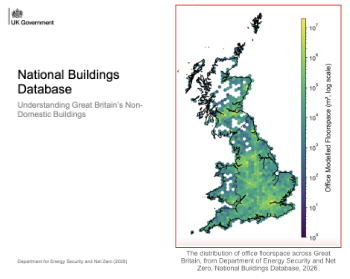
New UK National Buildings Database.
Building Safety Wiki Interviews

Chief executive of the British Woodworking Federation.
Planning condition discharge in England and Wales

A brief explanation from a building compliance expert, with further links.
Overheating guidance and tools for building designers

Guidance for dealing with element of building fabric control that have increasing importance.
Shading for housing, a design guide

From the Good Homes Alliance and British Blind and Shutter Association.
UK Standard Skills Classification (SSC)

A shared framework for describing skills needs.
Social media ban consultation comes to close

CIOB urges UK Government to consider social media’s role in careers guidance in ban debate.
Comments
To start a discussion about this article, click 'Add a comment' above and add your thoughts to this discussion page.