






Ethics and the engineer

|
| The University of Leeds launched a consultative 10-year ethics plan for engineers last year. Jim Baxter explains its importance and urges all civil engineers to contribute by 25 January 2020. |
Contents |
[edit] Introduction
Since the Royal Academy of Engineering and the Engineering Council first published their Statement of Ethical Principles for the engineering profession in 2005 (Engineering Council and Royal Academy of Engineering, 2005), the profession has made significant progress in understanding and embedding the values underlying its work.
The statement broke new ground by demonstrating that there is a shared set of values which define ethical engineering work in all sectors. There have been significant efforts to embed these principles, for example by including ethics in the Engineering Council’s UK Standard for Professional Competence (Engineering Council, 2014), against which candidates for registration are assessed, and by requiring accredited engineering degrees to include coverage of the ‘social, ethical and environmental context’ of engineering work.
[edit] Fragmented profession
In the UK, only 222,000 people are professionally registered with a professional engineering institution (Engineering Council, 2019) whereas there are up to 5.5 million people working as engineers (IET, ICE and IMechE, 2016). If an engineer is not professionally registered, they are outside the orbit of professional regulation, have no formal requirement to have gained a prescribed set of knowledge or skills, or to keep that knowledge and those skills up to date through continuing professional development.
It is not just an empty question of nomenclature: the structures of professionalism are the means by which the public are assured that those whose work can affect people’s lives profoundly are competent, and have their interests – not just the interests of their direct clients, but the wider public interest – at heart.
The impact – good and bad – that the work of engineers in all disciplines has on the public is clear and is only going to increase in the coming decades. Technology advances rapidly and penetrates every area of people’s lives. At the same time, the public’s capacity to understand that technology, how it works and what it does, diminishes. More than ever, they need to know that those who work with technology are competent and responsible.
[edit] Focusing on ethics
[In 2019] the Inter-Disciplinary Ethics Applied Centre at the University of Leeds launched a ten-year plan to root ethics at the heart of the profession, and for it to become a tool, like the many others that engineers have at their disposal, to guide and inform day-to-day decisions. The plan was written following consultation with the leaders of the profession, including the Royal Academy of Engineering, the Engineering Council, Engineers Without Borders and the Engineering Professors’ Council.
Called Engineering Ethics 2028 (University of Leeds, 2019), the plan is not just about driving up professional registration; it also contains ideas on improving engineers’ ethical competence, encouraging them to engage with the public on the issues raised by their work, and to take much better account of sustainability and particularly climate change.
The work is considered essential, not because it will improve the status of the profession, but because it will result in an ethical profession that works consistently for the public good.
[edit] The plan is open for consultation by organisations and individuals until 25 January 2020 and all civil engineers are urged to contribute.
[edit] About this article
This article was written by ice.org.uk Jim Baxter and is based on his briefing article in the 172 CE4 issue of the ICE Civil Engineering journal. The article also appeared on the ICE website in January 2020 under the title 'How ethical are you?' and can be accessed HERE.
Other articles by the ICE on Designing Buildings Wiki can be accessed HERE.
[edit] Related articles on Designing Buildings Wiki
- Australian ethical labour sourcing standard.
- Blacklisting.
- Building a fairer system: Tackling modern day slavery.
- Building Site to Boardroom (BS2B).
- Citigroup Center.
- Code of conduct.
- Construction 2025.
- Corporate social responsibility in construction.
- Diversity in the construction industry.
- Ethical sourcing.
- Fair payment practices.
- Gangmaster.
- International Ethics Standards Coalition.
- Modern slavery.
- Modern Slavery Act and sustainable supply chains.
- Modern slavery and the supply chain.
- Modern slavery toolkit.
- Practice.
- Why infrastructure transparency matters.
Featured articles
Check out some of the best features and news from Designing Buildings as well as key stories from around the web.
Bridging the gap between clients and contractors

Concerns remain around contractor quality, capability, and delivery.
Construction Management, 10 June.

Heat pumps beat boilers in new home tests.
Building Safety Act implementation in Wales
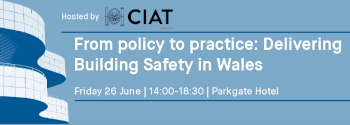
CIAT to host industry panel on 26 June.
New and updated CLC building safety guidance.
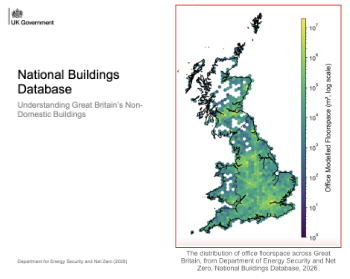
New UK National Buildings Database.
Building Safety Wiki Interviews

Chief executive of the British Woodworking Federation.
Planning condition discharge in England and Wales

A brief explanation from a building compliance expert, with further links.
Overheating guidance and tools for building designers

Guidance for dealing with element of building fabric control that have increasing importance.
Shading for housing, a design guide

From the Good Homes Alliance and British Blind and Shutter Association.
UK Standard Skills Classification (SSC)

A shared framework for describing skills needs.
Social media ban consultation comes to close

CIOB urges UK Government to consider social media’s role in careers guidance in ban debate.