





Environmental Impact Assessments Market
Environmental Impact Assessments Market Set for Explosive Growth: Key Drivers, Trends, and Opportunities Revealed by Dataintelo
The Environmental Impact Assessments (EIA) market is undergoing a remarkable transformation, fuelled by escalating regulatory demands, heightened public environmental awareness, and the global drive for sustainable development. As governments and industries prioritise environmental stewardship, the demand for comprehensive EIAs to evaluate the consequences of development projects has soared. The Environmental Impact Assessments market is poised for exponential growth, with market values and trends signalling a robust future.
In recent years, the global Environmental Impact Assessments market reached a significant valuation and is projected to surge substantially, reflecting a strong compound annual growth rate (CAGR). This growth trajectory underscores the market’s pivotal role in shaping sustainable infrastructure and responsible project development.
Contents |
[edit] Key Market Drivers
Stringent Regulatory Frameworks:
Governments worldwide are implementing rigorous environmental regulations, compelling organisations to conduct thorough EIAs before initiating projects. This legislative push ensures that environmental considerations remain central to development planning, driving market demand.
Rising Public Awareness:
Growing concern over climate change, pollution, and ecosystem degradation has led to increased public scrutiny of development projects. Stakeholders now demand transparency and accountability, further propelling the need for robust EIAs.
[edit] Market Restraints
Complex and Lengthy Assessment Processes:
The EIA process can be time-consuming and resource-intensive, often extending project timelines and increasing costs. The absence of standardised methodologies across regions can also lead to inconsistencies, challenging the credibility and acceptance of findings.
Potential Conflicts of Interest:
When assessments are conducted by consultants hired by project developers, there is a risk of biased outcomes. Ensuring impartiality and transparency remains a critical challenge for the industry.
Evolving Environmental Complexities:
The increasing complexity of environmental issues, such as biodiversity loss and climate change, requires EIAs to adopt multifaceted approaches. This can strain resources and necessitate ongoing training and capacity building for professionals.
[edit] Opportunities Shaping the Future
Technological Advancements:
Innovations in remote sensing, GIS mapping, artificial intelligence, and cloud computing are revolutionising the EIA process. These technologies enable faster data collection, improved analysis, and more accurate impact predictions, streamlining decision-making and reducing costs.
Public-Private Partnerships:
The surge in infrastructure development through public-private collaborations presents significant opportunities for the EIA market. Such projects often require stringent environmental scrutiny, expanding the scope for EIA services.
Climate Change Adaptation:
As climate adaptation strategies become integral to policy and planning, EIAs are increasingly being used to assess and mitigate climate-related risks, opening new avenues for market growth.
[edit] Market Trends to Watch
AI-driven analysis is enhancing the accuracy and efficiency of environmental assessments, enabling predictive modelling and scenario analysis.
- Cloud-Based Solutions:
Cloud computing is facilitating real-time data sharing and collaboration amongst stakeholders, improving transparency and workflow efficiency.
- Innovative Data Collection:
Advanced sensors and IoT devices are providing granular environmental data, supporting more detailed and dynamic assessments.
[edit] Attractive Market Highlights
- Market size is expected to grow substantially in the coming years, with a strong CAGR.
- Key drivers: regulatory mandates, public awareness, and sustainable development goals.
- Major opportunities: AI integration, cloud-based platforms, and climate adaptation strategies.
- Restraints: lengthy assessment timelines and risk of biased reporting.
- Trends: advanced data analytics, GIS mapping, and public-private partnerships.
As the Environmental Impact Assessments market continues its upward trajectory, organisations that embrace technological innovation and prioritise transparency will be best positioned to capitalise on emerging opportunities. Dataintelo’s comprehensive market research provides the insights needed to navigate this dynamic landscape and drive sustainable growth.
[edit] External links
https://dataintelo.com/report/environmental-impact-assessments-market
Featured articles and news
A safe energy transition – ECA launches a new Charter
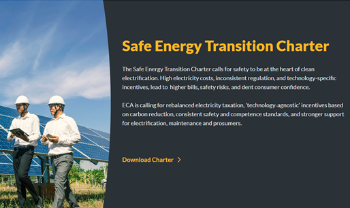
Practical policy actions to speed up low carbon adoption while maintaining installation safety and competency.
Frank Duffy: Researcher and Practitioner

Reflections on achievements and relevance to the wider research and practice communities.
The 2026 Compliance Landscape: Fire doors

Why 'Business as Usual' is a Liability.
Cutting construction carbon footprint by caring for soil

Is construction neglecting one of the planet’s most powerful carbon stores and one of our greatest natural climate allies.
ARCHITECTURE: How's it progressing?

Archiblogger posing questions of a historical and contextual nature.
The roofscape of Hampstead Garden Suburb

Residents, architects and roofers need to understand detailing.
Homes, landlords. tenants and the new housing standards

What will it all mean?
The Architectural Technology podcast: Where it's AT

Catch-up on the latest episodes.
Edmundson Apprentice of the Year award 2026
Entries now open for this Electrical Contractors' Association award.

Traditional blue-grey slate from one of the oldest and largest UK slate quarries down in Cornwall.
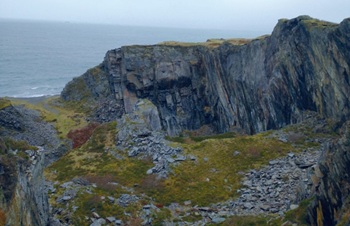
There are plenty of sources with the potential to be redeveloped.
Change of use legislation breaths new life into buildings

A run down on Class MA of the General Permitted Development Order.
Solar generation in the historic environment
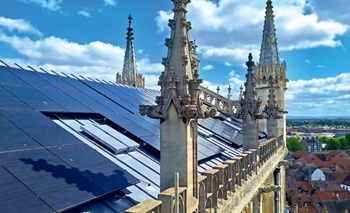
Success requires understanding each site in detail.
Level 6 Design, Construction and Management BSc

CIOB launches first-ever degree programme to develop the next generation of construction leaders.

Open for business as of April, with its 2026 prospectus and new pipeline of housing schemes.
The operational value of workforce health

Keeping projects moving. Incorporating unplanned absence and the importance of health, in operations.