





Economic operators
An Economic Operators (EO) in terms of construction products is "the manufacturer or other person with obligations in relation to placing a product on the market, including the authorised representatives, importers, distributors (including merchants), and fulfilment service providers This definition of ‘economic operators’ does not include online marketplaces." Government published Construction Products Reform White Paper 26 February, 2026.
In the UK Economic Operators (EOs) is someone who, in the course of their business, is involved in activities covered by customs legislation as as such may be required to hae an Economic Operator Registration and Identification (EORI) number, which is a unique identifier for an EO.
EORI numbers replaced Trader Unique Reference Numbers (TURNs) on 1 July 2009 in accordance with EU legislation at the time. When the United Kingdom left the EU from 1 January 2021 the XI prefix was introduced for Northern Ireland and the GB prefix (previously used for all UK EORIs) was restricted to Great Britain. The GB prefixed EORI is applicable to customs activities in England, Scotland and Wales and falls under UK legislation. For the purposes of the GB EORI, EU legislation (the Union Customs Code) has been retained as per the Customs Safety and Security Procedures (EU Exit) Regulations 2019.
The XI prefixed EORI is applicable to customs activities in Northern Ireland and falls under EU legislation. It can also be used in the 27 EU member states. EORI numbers issued by individual EU member states will have their own prefix for example France is ‘FR’. A business must not have an XI and an EU-27 EORI.
A GB EORI has 12 digits and the prefix ‘GB’ for example, GB123456789000. An XI EORI number will contain the same numbers as the GB EORI but will have the prefix ‘XI.’ One does not need to be VAT registered to get an EORI. However, if VAT registered in the UK, the first 9 digits that make up the EORI number will be the same as your VAT number.
An EU EORI number may vary between member states but will have up to 15 characters made up of letters and numbers and the prefix of the country, such as ‘DK’ or ‘FR’.
EOs must be registered for an EORI number before they start activities covered by customs legislation, for example, before they start their import or export operations. The EORI number is assigned free of charge by HMRC. An EORI number does not have an expiry date and will remain live until it is no longer required.
For further information see HM Revenue & Customs guidance Economic Operators Registration and Identification (EORI)´ published 24 January 2025.
[edit] Related articles on Designing Buildings
- Construction materials.
- Construction organisations and strategy.
- Corporate finance.
- Construction Products Reform Green Paper and Consultation.
- Digital Product Passports DPP.
- Economic development and construction.
- Examining the 2021 construction materials shortage.
- Funding options for building developments.
- Hire, reclaim and reuse scheme combats construction waste.
- How does the state of the economy influence the construction industry?
- Industrial plant and construction operations.
- Investment.
- Life cycle assessment.
- Material handling.
- Materials on site.
- Microeconomics.
- Modular buildings.
- Prefabrication.
- Property development finance.
- Procurement route.
- Product-life extension: product-life factor.
- Off-site goods and materials.
- Recyclable construction materials.
- Reduce, reuse, recycle.
- Reuse of building products and materials – barriers and opportunities.
- The Carbon Project: infrastructure and the circular economy.
- Steel re-use.
- Sustainability..
- Vendor.
- Working capital.
Featured articles and news
A safe energy transition – ECA launches a new Charter
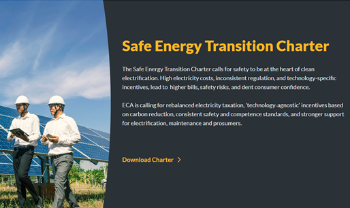
Practical policy actions to speed up low carbon adoption while maintaining installation safety and competency.
Frank Duffy: Researcher and Practitioner
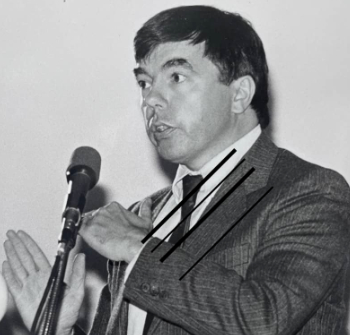
Reflections on achievements and relevance to the wider research and practice communities.
The 2026 Compliance Landscape: Fire doors

Why 'Business as Usual' is a Liability.
Cutting construction carbon footprint by caring for soil

Is construction neglecting one of the planet’s most powerful carbon stores and one of our greatest natural climate allies.
ARCHITECTURE: How's it progressing?
Archiblogger posing questions of a historical and contextual nature.
The roofscape of Hampstead Garden Suburb

Residents, architects and roofers need to understand detailing.
Homes, landlords. tenants and the new housing standards

What will it all mean?
The Architectural Technology podcast: Where it's AT

Catch-up on the latest episodes.
Edmundson Apprentice of the Year award 2026

Entries now open for this Electrical Contractors' Association award.

Traditional blue-grey slate from one of the oldest and largest UK slate quarries down in Cornwall.

There are plenty of sources with the potential to be redeveloped.
Change of use legislation breaths new life into buildings

A run down on Class MA of the General Permitted Development Order.
Solar generation in the historic environment

Success requires understanding each site in detail.
Level 6 Design, Construction and Management BSc
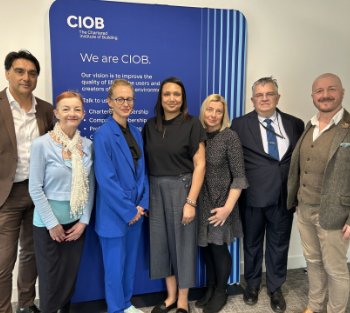
CIOB launches first-ever degree programme to develop the next generation of construction leaders.

Open for business as of April, with its 2026 prospectus and new pipeline of housing schemes.
The operational value of workforce health

Keeping projects moving. Incorporating unplanned absence and the importance of health, in operations.