






Demographics - how a changing population is transforming the built environment

|
Contents |
[edit] Introduction
In 2019, BSRIA launched a white paper on Megatrends: Demographics. Given that demographics look at the size, structure, movement and rates of change of human populations, this topic is likely to have an impact on almost all industries and disciplines, nowhere more so than for building services.
Numbers matter – which is why economists, commentators and lobbyists devote more attention to China and India than they do to, say, Chile or Ireland. Large-scale changes in population are also likely to have social, cultural, economic and political implications. Challenges raised by a growing population are very different to those faced by a shrinking one. Similarly, a country or region with an old or ageing population will have different needs to a predominantly young one.
The Megatrends: Demographics white paper summarises some of these key trends – specifically on the built environment and building services.
[edit] Key points
[edit] Consequences of population growth or decline for building services:
The most obvious direct impact of population growth or decline will be in the demand for buildings which directly serve the needs of that population. As well as housing, this includes health and education amenities and transport and utility infrastructure.
[edit] Consequences of an ageing population for building services:
An ageing population is likely to affect building services in two ways:
- the supply side, which affects the types of people who are available to work in the building services industry and the type of work they can do.
- demand for different types of buildings and building services.
Smart building technology has a key role to play in addressing both of these needs.
Henry Lawson, BSRIA’s senior market research consultant, BSRIA World Market Intelligence division, commented:
“The proportion of the UK’s population aged 65 and above has roughly doubled over the past 80 years and the share of people aged over 85 has risen even faster.
“We should expect an increase in buildings that cater for an older population, including retirement homes, sheltered accommodation, communal establishments and nursing homes.
“BSRIA has been researching smart home solutions since 2010. It has found an increasing focus on solutions to help those who are elderly, in poor health or disabled to remain in their own home for longer. This can be anything from monitors and alarms to ‘companion’ robots.
“To create a future that works, our buildings and the way they are designed, built and operated are going to need to change at least as much as the people who will be inside them.”
[edit] Setting the scene on gender equality and inequality
- The past 130 years or so have seen a dramatic increase in the percentage of women employed in the workforce in most developed countries;
- Trends, such as the increasing enrolment of girls and women in education, have contributed to the “explosive growth” of universities, including in the UK, and
- While 50 years ago women constituted a minority of the then much smaller number of undergraduates, today they make up the majority.
[edit] About this article
This article was provided by BSRIA – a non-profit distributing, member-based association, providing specialist services in construction and building services. It first appeared on its website in April 2019 and can be accessed here.
You can access the white paper here: https://www.bsria.com/uk/product/JBxYqr/megatrends_demographics_wp_102019_a15d25e1/
[edit] Related articles on Designing Buildings Wiki
- Accessibility in the built environment.
- Access and inclusion in the built environment: policy and guidance.
- Accessible London.
- Anthropometrics in architectural design.
- Big data.
- Engineering smart cities.
- Equality act.
- Equal opportunities policy.
- Evacuating vulnerable and dependent people from buildings in an emergency FB 52.
- Healthy planning policy and monitoring in Southwark and Lambeth.
- Inclusive design.
- Lifetime homes.
- Lifetime Homes Design Guide (EP 100).
- Lifetime neighbourhoods.
- Older people.
- People with disabilities.
- Project teams for the future built environment.
- Smart cities design timeframe.
- Wheelchair platform stairlifts.
--BSRIA
Featured articles and news
Guide to ISO 19650 for Architecture Firms (2026)
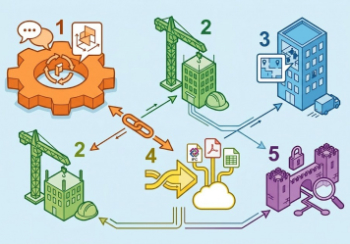
A user gives their low down.

A UK training and membership provider for mould remediation professionals.
Building Safety recap April, 2026

A short and longer run-through of the month, with links to further information and sources.

CIAT May 2026 briefing.

Independent NSI and BAFE study exploring how organisations are changing the way they buy fire safety services.

From medieval scribes to modern word art.

ECA welcomes crackdown on late payment and push for clean energy, whilst CIOB seek fixed cladding removal timeframes.
Cyber Security in the Built Environment

Protecting projects, data, and digital assets: A CIOB Academy TIS.
Managing competence in the built environment

ITFG publishes new industry guide on how to meet the ICC principles.

The UK's campaign to reduce noise pollution: Mythbusting, articles and topic guides.
Setting Expectations on Competence Management
Industry Competence Committee.
New Scottish and Welsh governments
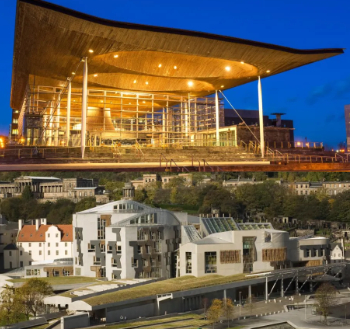
CIOB stresses importance of construction after new parliament elections.
The sad story of Derby Hippodrome

An historic building left to decay.

ECA, JIB and JTL back Fabian Society call to invest in skills for a stronger built environment workforce.

Women's Contributions to the Built Environment.
Calls for the delayed Circular Economy Strategy

Over 50 leading businesses, trade associations and professional bodies, including CIAT, and UKGBC sign open letter.
The future workforce: culture change and skill

Under the spotlight at UK Construction Week London.
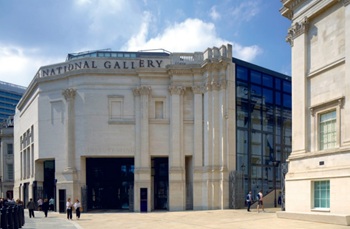
A landmark moment for postmodern heritage.