





Contractor's proposals for building design and construction
The phrase 'contractor's proposals' (CP) generally refers to documentation prepared by tenderers for design and build projects or on a traditional contract where the tenderer is to design discrete parts of the works. They are prepared in response to employer's requirements which provide a description of the client's requirements, including the specification for the building, the scope of services required and an allocation of risk for unknown items.
The contractor's proposals set out their proposals for designing and constructing the project, along with their price.
The level of detail in the employer's requirements and the extent of design required from the tenderer is variable. Employers requirements can range from a very simple specification to a fully developed performance specification and concept design.
The procurement process may follow either a single-stage or two-stage processes. A single-stage tender process is suitable where the information presented in the employer's requirements is sufficiently well developed for the tenderer to be able to calculate a realistic price. This can be the case either if a concept design has already been prepared by consultants working for the client, or if the building is very straight-forward, in which case much of the design work might be carried out by the tenderer during the tender process.
A two-stage tender process is suitable where the employer's requirements are not sufficiently well developed for the tenderer to be able to calculate a realistic price. In this case, the tender may include a fee for designing the building along with a schedule of rates that can be used to establish the construction price for the second-stage tender.
The format and content of contractor's proposals should be as described in the employer's requirement's, but they might include:
- Design drawings or a building information model.
- Specifications.
- Schedules.
- Method statements.
- A BIM execution plan if building information modelling is being used.
- A programme.
- The tender price and contract sum analysis.
- Details of inconsistencies between the contractor's proposals and the employer's requirements.
- Any proposed provisional sums.
- Proposed sub-contractors (the contractor may only sub-contract parts of the works with the consent of the client, although this consent cannot be unreasonably withheld).
- Details of insurances.
- Curriculum vitae of staff along with a summary of their relevant experience on similar projects.
- An initial construction phase plan.
Once the client has received the contractor's proposals, there is likely to be period of negotiation during which any inconsistencies between the contractor's proposals and the employer's requirements are discussed and either the contractor's proposals or the employer's requirements are amended to ensure agreement between them. This is a very important part of the tender process as it is not always entirely clear which document prevails after the contract has been entered into.
NB The RIBA Plan of Work 2013 defines the contractor's proposals as: 'Proposals presented by a contractor to the client in response to a tender that includes the Employer’s Requirements. The Contractor’s Proposals may match the Employer’s Requirements, although certain aspects may be varied based on value engineered solutions and additional information may be submitted to clarify what is included in the tender. The Contractor’s Proposals form an integral component of the Building Contract documentation.'
[edit] Related articles on Designing Buildings
- BIM execution plan.
- Construction phase plan.
- Contract sum analysis.
- Contractor.
- Design and build.
- Design Build Finance Transfer (DBFT).
- Employer's agent.
- Employer's information requirements.
- Employer's requirements.
- Method statement.
- Novation.
- Procurement route.
- Programme.
- Proposals.
- Provisional sum.
- Specification.
- Supply chain capability summary (BIM).
- Tender.
- Two stage tender.
Featured articles
Check out some of the best features and news from Designing Buildings as well as key stories from around the web.

A quick introduction to its uses and risks.
Construction Management, 17 June

Government rolls out digital planning tool to all local authorities.

Your views needed - a strategy for the professions, trades and occupations.

Confronting competency, codes, capacity and costs.

The hidden risk in modern construction supply chains.
Construction Management, 10 June

24 months to 14: CITB launches accelerated apprenticeships.
Bridging the gap between clients and contractors

Concerns remain around contractor quality, capability, and delivery.
Construction Management, 10 June.

Heat pumps beat boilers in new home tests.
Building Safety Act implementation in Wales

CIAT to host industry panel on 26 June.
New and updated CLC building safety guidance.
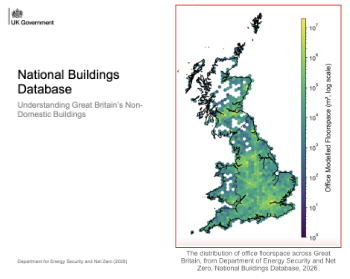
New UK National Buildings Database.
Comments