





Cellular glass insulation
Cellular glass insulation, also referred to as foamed glass insulation (and sometimes porous glass), is a high-strength and light-weight insulating material comprised of crushed or granulated glass mixed with carbon or limestone as a chemical foaming agent under high temperatures of up to 1000 oC. The heating process oxidises the carbon to create tiny closed internal bubbles; these prevent capillary action of moisture and, as such, is moisture-proof, aswell as fireproof, non-toxic, anti-corrosive, and long-lasting.
The first patent for foam glass was submitted in 1932 by Saint-Gobain of France, using calcium carbonate as a foaming agent. The scientist professor I.I.Kitaygorodskiy in the same year also presented a paper describing foam glass at a conference in Moscow and subsequently, experimental products were developed in the Soviet Union. In 1942
Pittsburgh Corning launched their new glass product called foamglas, which was then introduced into the Eurpean market 15 years later. Today, the manufacturers have an EPD for the product, which indicates that up to 60% of the material contains recycled content.
The product has many uses in buildings, but because of its high compressive strength, it is a popular option to create thermal breaks where strength is also required, such as in foundations, floors, walkways, terraces, podium roofs, balconies, vehicle parking areas, and under services. It can also be used as a cladding material, but its relative cost compared to other insulative materials on the market means it is usually used in certain higher-performance specification areas.
[edit] Related articles on Designing Buildings
- Acoustic insulation.
- Aerogel insulation for buildings.
- Celotex RS5000 PIR insulation.
- Double glazing v triple glazing.
- Emissivity.
- ETFE.
- Expanding foam.
- External wall insulation.
- Floor insulation.
- Flue insulation and air tightness requirements.
- Glass block flooring.
- Glass block wall.
- Glass fibre.
- Icynene spray foam insulation.
- Insulating concrete form.
- Insulation envelope.
- Insulation for ground floors.
- Phenolic foam insulation.
- Solid Wall Insulation: Unlocking demand and driving up standards.
- Sound insulation in buildings.
- Thermal insulation for buildings.
- Transparent insulation.
- Types of insulation.
- Types of rigid foam nsulation.
- Understanding Insulation and the Part It Plays in Building Regulations.
- Wall insulation and moisture risk.
- Wood and insulation.
Featured articles
Check out some of the best features and news from Designing Buildings as well as key stories from around the web.
Bridging the gap between clients and contractors

Concerns remain around contractor quality, capability, and delivery.
Construction Management, 10 June.
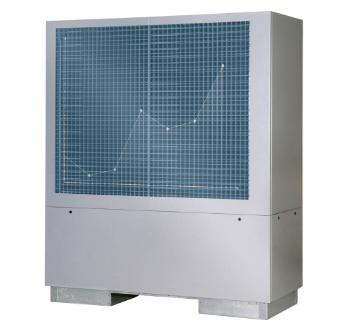
Heat pumps beat boilers in new home tests.
Building Safety Act implementation in Wales

CIAT to host industry panel on 26 June.

New and updated CLC building safety guidance.
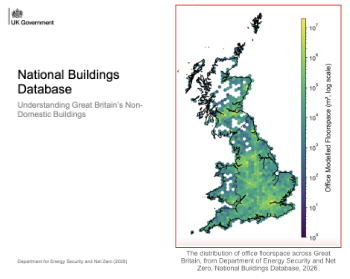
New UK National Buildings Database.
Building Safety Wiki Interviews

Chief executive of the British Woodworking Federation.
Planning condition discharge in England and Wales

A brief explanation from a building compliance expert, with further links.
Overheating guidance and tools for building designers

Guidance for dealing with element of building fabric control that have increasing importance.
Shading for housing, a design guide

From the Good Homes Alliance and British Blind and Shutter Association.
UK Standard Skills Classification (SSC)

A shared framework for describing skills needs.
Social media ban consultation comes to close

CIOB urges UK Government to consider social media’s role in careers guidance in ban debate.