





Breaking point
Breaking point can have a number of different inferences depending on context. In general its meaning is a point between failure (and in some cases success) or collapse and maintaining integrity. It can be used contextually with many different references such as a material, an object, a structure, a programme, a business, a statistical data set or a person both physically and mentally, after which something might become critical, dramatically change behaviour or collapse under the variety of stresses. Many of these interpretation of breaking point might be found in the construction industry breaking point. The term breakpoint normally refers to some thing else, which is a pause, stop or break from something and is often used in systems programming or data management.
Contents |
[edit] Material breaking point
A material breaking point, might also be called its fracture point. It describes a solid material’s elastic limit, where it passes the maximum stress per unit area (the yield point) to enter the plastic range, becoming permanently deformed or fractured; it starts to break. The fracture in terms of a material can be described as a ductile fracture or a brittle fracture beyond which it is failing (soft failure as opposed to perhaps hard failure). In materials that point of failure, irreversible, by whichever characteristics might be described as the breaking point.
[edit] Structural breaking point
A structural breaking point, in a similar ways might describe a fracture point, the elastic limit, or yield point to enter the plastic range, becoming permanently deformed or fractured; or breaking. In structure it also refers to that point of failure which is irreversible, but may more commonly be referring to the actually point of complete failure and collapse. It might refer to an element of a building or a structure that fails, where a timber beam goes beyond, the yield, soft or ductile failure and/ or brittle fracture points to break and collapse, often causing damage and in some cases human harm.
[edit] System breaking point
In the design of buildings the breaking point of systems might refer to where variables such as the number of people or temperatures are higher than the design specifications and the point beyond which systems supporting a space or building may not be able to function correctly, for example fro building services and use or fire and safety. For example the capacity of the football stadium was at breaking point. In the same way system breaking points can also refer to natural systems on the local or global scale, the point at which systems are overloaded and start to change behaviour and not function as before. On a global scale these breaking points are often referred to as tipping points.
[edit] Mental breaking point
Mental breaking point can refer to the point at which a person cannot cope with certain stresses or pressures for home or work life. Mental health and wellbeing can be a significant issue in the construction industry both onsite and office based.
[edit] Business breaking point
In business, also construction business the breaking point is often used to describe a point at which a business might fail or succeed, normally financially. Also referred to as the break even point, which is the point where the finances are neither at a loss (in the red) or at profit (in the black.)
[edit] Related articles on Designing Buildings
- Cash flow.
- Commercial management.
- Company.
- Concept structural design.
- Elements of structure in buildings.
- Elasticity.
- How nature can be used to improve wellbeing.
- Investment.
- Keeping your mind on the job.
- Mental health first aid.
- Mental health in the construction industry.
- Overheads.
- Structural principles.
- Types of structural load.
Featured articles
Check out some of the best features and news from Designing Buildings as well as key stories from around the web.
Construction Management, 10 June

24 months to 14: CITB launches accelerated apprenticeships.
Bridging the gap between clients and contractors

Concerns remain around contractor quality, capability, and delivery.
Construction Management, 10 June.
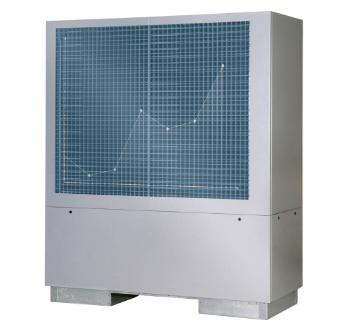
Heat pumps beat boilers in new home tests.
Building Safety Act implementation in Wales
CIAT to host industry panel on 26 June.
New and updated CLC building safety guidance.
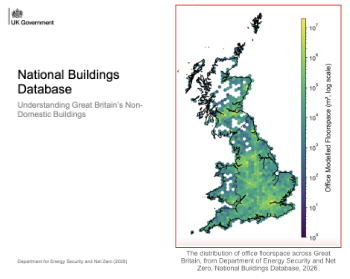
New UK National Buildings Database.
Building Safety Wiki Interviews

Chief executive of the British Woodworking Federation.
Planning condition discharge in England and Wales

A brief explanation from a building compliance expert, with further links.
Overheating guidance and tools for building designers

Guidance for dealing with element of building fabric control that have increasing importance.
Shading for housing, a design guide

From the Good Homes Alliance and British Blind and Shutter Association.
UK Standard Skills Classification (SSC)

A shared framework for describing skills needs.