






Urban heat island
The Urban Heat Island (UHI) effect is the term given to localised higher temperatures that are experienced in urban environments compared with the temperatures of surrounding green spaces (Akbari and Konopacki 2005).
The Urban Heat Island effect is primarily caused by the replacement of natural surfaces with hard impervious surfaces that are generally dark and absorb large amounts of solar radiation. Urban hard surfaces are significant in the built environment in the form of roads, paved areas, and roof tops (Getter, Rowe et al. 2007).
It is estimated that pavements and roofs account for 60% of urban surfaces, roofs 20-25% and pavements approximately 40% (Akbari, Menon et al. 2009). Presently these surfaces have relatively low albedo values (the fraction of incoming radiation reflected by a body) and high thermal conductivities, typically absorbing and re-radiating around 90% of the total incident solar radiation (Wolf and Lundholm 2008). This contributes to an Urban Heat Island effect that can result in a rise in summer temperatures of 4-7°C (CIBSE 2007; Wolf and Lundholm 2008) in comparison with adjacent vegetated areas.
This has a significant impact on thermal comfort in city environments. During a summer heatwave in the UK employers lost an estimated £168 million per day in productivity in one week (Roberts 2008).
In addition to this, heat islands are an energy efficiency concern due to increased air conditioning requirements which raise energy consumption, peak electricity demand and energy prices (Synnefa, Santamouris et al. 2007). Typically, electricity use in cities increases 2-4% for every temperature increase of one degree Celsius (Akbari, Pomerantz et al. 2001) . These costs are likely to increase further if global temperatures rise and increasing urbanisation makes the Urban Heat Island effect more significant.
Hotter urban environments will lead to an increase in the use of air conditioning. It follows that there will be a further increase in city temperatures from the dumping of heat from buildings heating ventilation and air conditioning (HVAC) systems and so more air cooling will be required (Takakura, Kitade et al. 2000). In other words, this process could be described as a vicious circle or negative reinforcing loop. There will also be an impact from increased emissions from cooling if this cooling is provided by fossil fuel based electricity. This will lead to an increased rate of global warming.
Successfully modelling the Urban Heat Island effect is an ongoing process. In the UK this research is looking at the effect in London and is been investigated by University College London (UCL). Their work under the LUCID project is looking at how to develop a Local Urban Climate Model and apply it to the Intelligent Design of Cities.
See also: Cool roofs.
NB The SuDS Manual (C753), published by CIRIA in 2015 refers to the reduction of the urban heat island effect as 'urban cooling'.
This article was originally created by --Buro Happold.
[edit] Related articles on Designing Buildings Wiki
- Albedo.
- Cool roofs.
- Emissivity.
- Green roofs.
- Green space.
- Overheating.
- Preventing overheating.
- Solar reflectance index.
- Smart cities.
- Solar shading.
- Sustainability.
- The benefits of urban trees.
- Thermal comfort.
- Thermal optical properties.
- Types of cool roofs.
[edit] External references
- The LUCID project.
- Akbari, H. and S. Konopacki (2005). "Calculating energy-saving potentials of heat-island reduction strategies." Energy Policy 33(6): 721-756.
- Akbari, H., S. Menon, et al. (2009). "Global cooling: increasing world-wide urban albedos to offset CO2." Climatic Change 94(3): 275-286.
- Akbari, H., M. Pomerantz, et al. (2001). "Cool surfaces and shade trees to reduce energy use and improve air quality in urban areas." Solar Energy 70(3): 295-310.
- CIBSE (2007). Green roofs. Plymouth.
- Erlandsson, M. and M. Borg (2003). Generic LCA-methodology applicable for buildings, constructions and operation services--today practice and development needs. 38: 919-938.
- Utilising green and bluespace to mitigate urban heat island intensity, Gunawardena et al., 2017.
- Getter, K. L., D. B. Rowe, et al. (2007). "Quantifying the effect of slope on extensive green roof stormwater retention." Ecological Engineering 31(4): 225-231.
- Roberts, S. (2008). "Effects of climate change on the built environment." Energy Policy.
- Synnefa, A., M. Santamouris, et al. (2007). "Estimating the effect of using cool coatings on energy loads and thermal comfort in residential buildings in various climatic conditions." Energy and Buildings 39(11): 1167-1174.
- Takakura, T., S. Kitade, et al. (2000). "Cooling effect of greenery cover over a building." Energy and Buildings 31(1): 1-6.
- Simulation pathway for estimating heat island influence on urban/suburban building space-conditioning loads and response to facade material changes. Gunawardena et al., 2019.
- Wolf, D. and J. T. Lundholm (2008). "Water uptake in green roof microcosms: Effects of plant species and water availability." Ecological Engineering 33(2): 179-186.
Featured articles
Check out some of the best features and news from Designing Buildings as well as key stories from around the web.

Accommodating the Victorian and Edwardian working woman. Book review.
Rethinking passive fire protection in design

PFP demands the same level of design rigour as structure or services.

38% of Gen Zs feel safe when a fire door is wedged open.
Stunning images from around the world

Shortlist for CIOB’s Art of Building photography competition.

Guidance for conversion of traditional pre-1919 stone buildings.
Industrial heritage in the Ruhr

A marked difference to the fate of industrial landscapes in the UK.
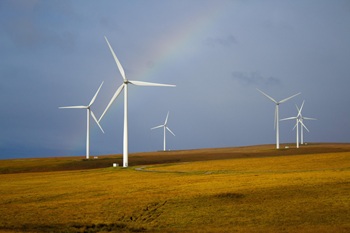
Communities will be able to build their own clean energy.
Why diversity and inclusion matters for SMEs

CIOB’s D&I Charter shows how practical changes can support long-term growth.
Cut electricity bills to power growth
Coalition sends joint letter to the Chancellor.

Gasholders: a history in pictures. Book review.
Recognition, influence and growth

SocEnv identifies three strategic pillars in new strategy to 2045.
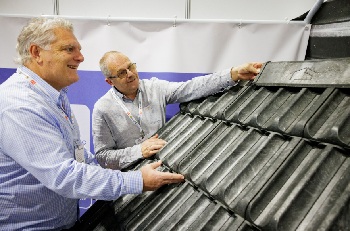
Discover the future of roofing, cladding and insulation.
Comments
To start a discussion about this article, click 'Add a comment' above and add your thoughts to this discussion page.