






What manufacturers need to know for CE certification of machinery
Contents |
[edit] Introduction
CE certification can be used for validating that machinery is safe for sale in the EU/EEA. All machinery and related equipment must be CE marked to be legal for sale in the EU/EEA.
[edit] What products are covered by CE certification?
The CE certification process covers all new machinery and related items. Machinery is considered to be new if it is new to the EU market. That means second-hand machinery can be considered new if it has not already been CE certified. For example, if machinery is created for use outside the EU but then imported into the EU, it will be considered new.
Machinery will also be considered new if it is substantially altered after having a CE mark granted. The question of what counts as substantially altered can be a matter of opinion. The safest approach, therefore, is simply to recertify.
The definition of machinery is an assembly of linked parts for a specific application in which at least one part moves and is powered (rather than manual). This includes:
- Machinery including partly completed machinery
- Removable mechanical transmissions devices
- Interchangeable equipment
- Safety components
- Lifting accessories including chains, ropes, and webbing
[edit] Who is responsible for CE certification?
Whoever introduces the machinery to the EU market is responsible for its CE certification. That’s usually the manufacturer. In some cases, however, it may be an importer/distributor. In a very few cases, it may even be an installer.
For example, if an installer converts a manual item to an electric one (e.g., a gate), the installer will make it a new item of machinery. Effectively, they are acting as a manufacturer. They would therefore need to CE certify it before they could legally charge for it (i.e., put it on the market).
[edit] What is the process of CE certification?
The core of the CE certification process is a risk assessment. The end result of this risk assessment must be to demonstrate that the product meets the requirements of applicable harmonised standards.
Most of the time this will be the Essential Health and Safety requirements of Annex I of the Machinery Directive. There are, however, different requirements for ‘high risk’ equipment and for partly completed machinery. High-risk equipment categories are listed in Annex IV of the Machinery Directive.
The benchmark for the assessment process is the ISO 12100 standard. Essentially, a manufacturer needs to demonstrate that they have assessed the safety of the product throughout its entire lifecycle. It also needs to demonstrate that you have used best practices throughout the design and manufacture of the product. In some cases, manufacturers will be required to submit the product to third parties to have compliance independently verified.
Once the assessment process is completed, the manufacturer must compile the technical file. This must be provided in the language(s) of the country where the product is intended to be used. They must also draft the EC Declaration of Conformity and affix the CE mark.
The CE mark should be affixed to the main machine plate in such a way that it cannot be removed. It should be clearly visible and legible. This means that the letters should be at least 5mm tall unless that is not practical due to the product size.
[edit] The importance of the technical file
The technical file is essentially a record of the methodology used to assess the product and hence the justification for asserting that it is safe. It must be kept for a minimum of 10 years after production has ceased.
Manufacturers should note that the technical file is, effectively, a form of insurance for them. In other words, if issues are discovered with the product, manufacturers will only escape censure (and sanctions) if they can demonstrate that these issues could not have been reasonably foreseen and prevented.
--Conformance 15:44, 28 Sep 2022 (BST)
[edit] Related Articles on Designing Buildings
Featured articles
Check out some of the best features and news from Designing Buildings as well as key stories from around the web.
Mayors are to be given planning call in powers

Mayors across England will be able to make the most important planning decisions.

The Master Builder: William Butterfield and his times. Book review.

Why construction can't afford to ignore the skills gap.
Building Safety Regulator, 19 August

Gill Kernick appointed Independent Chair of Residents’ Panel.
Connecting knowledge, technology and conservation
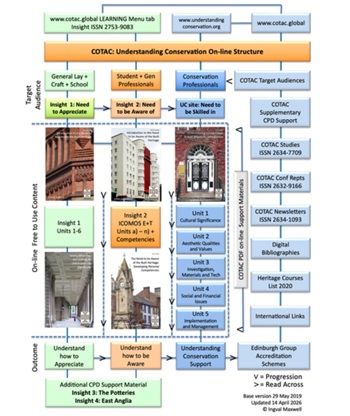
Building competence for the future of built heritage.
Building Regulations and Building Safety Act
CIOB publishes free advice for non-domestic clients.
Building Safety Newsletter from MHCLG.
An extraordinary record of steel engineering worldwide.

Households living near new pylons to save on bills.

ECA warns growth must not outpace grid capacity or skills.
The role of the client and decision making

CIOB response to built environment professions call for evidence.
Construction's sustainability reporting revolution

Tracking upfront embodied carbon with digital tools.