





Trompe l'oeil (part 2)

|
| Would you walk over this bridge? |
In architecture, trompe l’oeil (Brit. pronunciation tromp-loy) describes visual effects designed to intentionally create an optical illusion. The term comes from the French meaning ‘to deceive the eye’. The aim of such effects is to make things seem what they are not, for example, to make things appear bigger, longer, shorter, more expansive, and so on. The viewer may or may not be aware that what they are observing is a deception.
Such techniques can be used to satisfy aesthetic requirements or address a design’s limitations, (such as making a very small space appear less claustrophobic or, in interior decorating, painting a mural or applying wallpaper to give the viewer the impression of a window with a pleasant view. Sometimes architects and artists use trompe l’oeil to inject light-heartedness into an otherwise serious composition.
Artists throughout history have used trompe l’oeil. It was used to trick the observer into believing that what is depicted on a two-dimensional surface is actually three dimensional. Many cities have striking modern murals that achieve this effect, although the ‘reality’ may depend on where the viewer stands.
[edit] A few case studies

|
| The entasis on the upper parts of the Doric columns (left) is just about discernible. |
Architects may use trompe l’oeil to correct a natural phenomenon. The ancient Greeks, for example, added entasis to the columns of the Parthenon and other temples to correct the natural ‘appearance’ (to the naked eye) of columns buckling or bowing – which was considered an illusion of weakness. By splaying the columns almost imperceptibly inwards at their upper reaches (in other words decreasing the column diameter) the result is a column with convex sides, that gives, paradoxically, an illusion of straightness and so of ‘solidity’ and ‘strength’.
Later, in the Baroque period, the 17th century architect and sculptor Gian Lorenzo Bernini who designed the colonnades on either side of St Peter’s Square, Rome, created a design of immense proportions (1656-1667). To give the visitor the effect of an embrace in the “maternal arms of the Mother Church”, the colonnades on either side of the square are splayed outwards in the direction of the basilica. On approaching the basilica, the visitor does not perceive the usual natural perspective of lines converging to a vanishing point. Instead, the diverging colonnades look to be parallel, an optical illusion that makes the basilica appear closer to the viewer than it actually is. Leaving the basilica, the effect is reversed as the exaggerated perspective of the converging colonnades results in significant foreshortening.
Another optical effect of note is that when standing in the middle of the square, the observer perceives the colonnades on either side (284 columns in total) to be just one column deep; in reality, they are four-columns deep.
In 17th and 18th century Britain, one of the applications of trompe l’oeil was for reasons of aesthetics, economy and practicality: the use of polished plaster on walls and columns gave a highly-realistic impression of marble or travertine, creating an illusion of depth and texture, without requiring the stonemason’s craft – and at a fraction of the cost. Polished plaster was first used by the ancient Egyptians and extensively in Venetian palaces of the Renaissance and Baroque periods. It is still in use today throughout the world.
See also: Trompe l’oeil part 1
[edit] Related articles on Designing Buildings Wiki
Featured articles
Check out some of the best features and news from Designing Buildings as well as key stories from around the web.

ECA welcomes plans to strengthen subcontractor quality control.
Combining mid-career qualifications with experience broadens career opportunities.

Why being a mentor can help your career.

Channel 4 broadcaster to host 125th anniversary ceremony.
Listed structures on the rail network
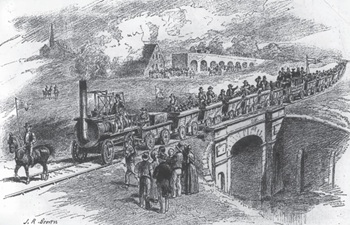
Heritage interests and operational requirements must be balanced.
Historic England publishes research into embodied carbon when retrofitting traditional buildings.
New Prime Minister delivers on ECA call for cut in electricity costs.

CIOB reacts to the announcement of Andy Burnham as Prime Minister.

Heritage and conservation science workforce survey - Have your say.
England's Suburbs 1820-2020. Book review.

New, more proportionate and targeted approach for higher-risk building assessments.
Government brings British Steel into public ownership.