





Trench support
Contents |
[edit] Introduction
A trench is defined as an excavation when its length greatly exceeds its depth. Shallow trenches are usually considered to be less than 6 m deep and deep trenches greater than 6 m. Depending on the dimensions of a trench, excavation can either be carried out by hand or using a mechanical digger. Trenches are commonly required to allow services, pipelines or foundations to be laid.
Water ingress into the trench is often a major issue and ground water table locations and soil strata should be investigated before any extensive excavation takes place.
Over short periods of time for relatively shallow depths most soil types will stand almost vertically without any problems. However, trenches other than those which are relatively shallow may require a trench support scheme.
[edit] Timber supports
Historically, trenching involved using timber to support horizontal and vertical soil loads and this technique is still used today. Timber trenching is generally used for low risk, narrow trenches, shafts or headings. The timber solutions require good workmanship and are reasonably labour-intensive, however they are versatile and the equipment required is easy to handle and transport.
[edit] Trench boxes
Trench boxes are suitable for low-risk situations in stable, dry ground and can be placed in pre-excavated trenches or installed using the ‘dig and push’ technique. The system requires at least two struts at each panel for stability which must be considered when access is required for construction work or piping.
For more information, see Trench box.
[edit] Trench sheets
Trench sheets are the most adaptable of the systems available, and are most commonly used to retain poorer soil. They can support deeper trenches with larger surcharges and provide a continuous support. They require multiple levels of strut support and the slenderness of the sheets can often limit the depth of the trench as they are installed by light machinery and could buckle under large vertical loads.
[edit] Related articles on Designing Buildings
- Backfilling.
- CDM.
- Crane supports.
- Demolition.
- Excavation.
- Facade retention.
- Falsework.
- Formwork.
- Health and Safety.
- Scaffolding.
- Shoring.
- Strut.
- Temporary works.
- Trench box.
- Trenching equipment.
- Tunnelling.
[edit] External references
- BS5975:2008 + A1: 2001 Code of Practice for Temporary Works Procedures and the Permissible Stress Design of Falsework (BSI 2011).
Featured articles
Check out some of the best features and news from Designing Buildings as well as key stories from around the web.
Bridging the gap between clients and contractors

Concerns remain around contractor quality, capability, and delivery.
Construction Management, 10 June.
Heat pumps beat boilers in new home tests.
Building Safety Act implementation in Wales

CIAT to host industry panel on 26 June.

New and updated CLC building safety guidance.
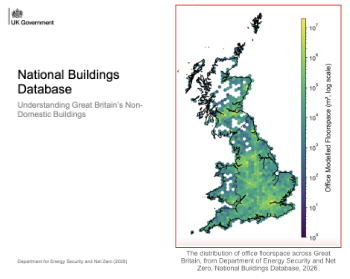
New UK National Buildings Database.
Building Safety Wiki Interviews

Chief executive of the British Woodworking Federation.
Planning condition discharge in England and Wales

A brief explanation from a building compliance expert, with further links.
Overheating guidance and tools for building designers

Guidance for dealing with element of building fabric control that have increasing importance.
Shading for housing, a design guide

From the Good Homes Alliance and British Blind and Shutter Association.
UK Standard Skills Classification (SSC)

A shared framework for describing skills needs.
Social media ban consultation comes to close

CIOB urges UK Government to consider social media’s role in careers guidance in ban debate.