





Top 7 Mistakes Found in Fire Door Inspections
Fire doors are vital. They stop fire and smoke from spreading. But many fail. Some fail because of damage. Others fail because no one checked them properly.
This article breaks down the most common mistakes seen during fire door inspections. It’s not a checklist. It’s a reality check.
[edit] 1. Gaps Around the Door
Too much space around the door frame is a problem. If gaps are wide, smoke slips through.
[edit] Threshold and side gaps
Sides should have no more than a 4mm gap. The bottom? No more than 8mm. But many doors have larger gaps.
Doors swell, shrink or get misaligned. Installers don’t always follow specs. Gaps are often uneven. That’s a fail.
[edit] Lack of appropriate seals
Every fire door should have intumescent seals. These swell in heat to block smoke and flames.
Sometimes they’re missing. Sometimes damaged. Sometimes the wrong type.
Without proper seals, the door might look fine but won’t perform when needed.
[edit] 2. Damaged or Incompatible Door Components
A fire door isn’t just the door leaf. Hinges, handles, closers, seals and glazing all matter.
[edit] Non-fire-rated hardware
Many use the wrong hardware. Regular handles or hinges won’t hold during a fire.
Only fire-rated gear can withstand heat. If the label's missing or unclear, it fails.
[edit] Broken or missing parts
Doors often have loose screws. Handles fall off. Closers don’t shut properly.
Glass panels crack. Frames warp. These small faults stack up. They reduce protection fast.
[edit] 3. No Fire Door Signage
Fire doors must be marked. If not, people prop them open or treat them like regular doors.
Signs like “Fire Door Keep Shut” are essential. Yet many doors lack them. Or the signs peel off. Or someone removed them.
It’s a small thing. But it tells people how to use the door. No sign? No compliance.
[edit] 4. Incorrect Installation
A door is only as good as its installation. Fit it wrong and it won’t work.
Doors must sit flush. Hinges should be tight. Gaps must be even. But often they’re not.
Installers rush. They cut corners. Or they’re just not trained.
Even a certified door will fail if badly fitted. That’s the harsh truth.
[edit] 5. Wedging Open or Obstructing the Door
Fire doors only work when shut. Yet people love to wedge them open.
This is one of the most common failures. Below are typical ways doors get blocked or left open:
- Doorstops or rubber wedges
- Chairs or bins propping them
- Rope or string tied to handles
- Closers removed or disabled
Sometimes it’s for airflow. Sometimes convenience. Either way, it’s dangerous.
Once open, the door can’t stop fire or smoke. That defeats its entire purpose.
[edit] 6. Lack of Routine Maintenance or Inspection
Faults build up over time. Without checks, they go unnoticed.
Taking a fire door inspection course can help facility managers spot what others miss. Screws loosen. Seals crack. Closers stop working.
No maintenance plan? Problems stay hidden. And the door fails when it matters most.
[edit] 7. Untrained or Unqualified Inspectors
Some people doing the checks shouldn’t be doing them at all. They lack training. They miss details. They tick boxes without knowing what to look for.
A proper fire door check isn’t just about looking at the door. It’s about knowing how fire doors work. What should be there. What shouldn’t.
[edit] Missed signs of failure
They might ignore small gaps. Forget to test the closer. Skip over broken seals.
Without the right training, these things go unnoticed. That makes the inspection useless.
Worse, it gives a false sense of safety. Everyone thinks the door’s fine. It’s not.
[edit] Bigger safety risks
An untrained inspector can’t connect the dots. They don’t link the faults to the wider risk.
That’s when things get serious. One missed door can mean the difference between containment and chaos.
This ties into wider duties like a fire risk assessment. If the assessor isn't trained in spotting door faults, the whole assessment could miss major fire safety issues.
[edit] Not Just A Door: It’s a Barrier Between Life and Death
Fire doors aren’t just wood and hinges. They’re part of the escape route. They hold back smoke so people can get out. They protect stairwells, corridors and exits.
If they fail, people get trapped. Smoke spreads. Fire moves faster.
Every mistake in inspection adds to that risk. A gap. A missing sign. A loose hinge. Each one matters.
[edit] Closing the Gaps (Literally and Figuratively)
Too many fire doors fail inspection. Not because they’re bad. But because no one maintained them. Or someone installed them wrong. Or the inspection was careless.
Fixing this isn’t complex. It just takes effort:
- Train the right people
- Inspect doors regularly
- Replace worn parts
- Never wedge doors open
- Keep signage clear
Most problems are avoidable. But only if people care enough to look closely. Fire doors save lives. But only if they’re working when the fire starts. So treat them like what they are — lifesaving tools. Not just another door in the building.
Featured articles and news
A safe energy transition – ECA launches a new Charter

Practical policy actions to speed up low carbon adoption while maintaining installation safety and competency.
Frank Duffy: Researcher and Practitioner

Reflections on achievements and relevance to the wider research and practice communities.
The 2026 Compliance Landscape: Fire doors

Why 'Business as Usual' is a Liability.
Cutting construction carbon footprint by caring for soil

Is construction neglecting one of the planet’s most powerful carbon stores and one of our greatest natural climate allies.
ARCHITECTURE: How's it progressing?
Archiblogger posing questions of a historical and contextual nature.
The roofscape of Hampstead Garden Suburb

Residents, architects and roofers need to understand detailing.
Homes, landlords. tenants and the new housing standards

What will it all mean?
The Architectural Technology podcast: Where it's AT

Catch-up on the latest episodes.
Edmundson Apprentice of the Year award 2026

Entries now open for this Electrical Contractors' Association award.
Traditional blue-grey slate from one of the oldest and largest UK slate quarries down in Cornwall.

There are plenty of sources with the potential to be redeveloped.
Change of use legislation breaths new life into buildings

A run down on Class MA of the General Permitted Development Order.
Solar generation in the historic environment
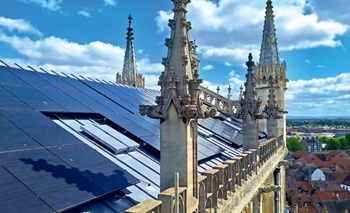
Success requires understanding each site in detail.
Level 6 Design, Construction and Management BSc

CIOB launches first-ever degree programme to develop the next generation of construction leaders.

Open for business as of April, with its 2026 prospectus and new pipeline of housing schemes.
The operational value of workforce health

Keeping projects moving. Incorporating unplanned absence and the importance of health, in operations.