






The effect of trees on Rights of Light

|
Contents |
[edit] Outline
Not having access to natural daylight is damaging to our circadian rhythm and is linked to many conditions including vitamin D deficiency and Seasonal Affective Disorder (SAD). That is why daylight, sunlight and rights of light (RoL) assessments are undertaken – to assess whether that access is going to be compromised.
Often when we think of what can obstruct light, we think of other buildings. But what if trees are a problem? When autumn turns to winter and daylight hours decrease, does a tree shedding its leaves make any difference to the daylight shining through a window?
[edit] Biophilia benefits
Trees are a beautiful part of our environment, and a natural solution for locking in carbon and improving air quality. But are trees situated next to buildings doing harm by blocking out daylight?
It is a difficult balance. The principles behind biophilic design promote a green, leafy and human-centred approach which brings many health and wellbeing benefits. Hence the huge rise in plants and trees being installed in and around offices across the world. But the need for new buildings to cater for our ever-expanding population is one that cannot be ignored.
We need to think about this more carefully and be prepared to work through some complex decisions. After all, issues around daylight, sunlight and RoL do not have a history of being straightforward.
Daylight and sunlight are usually treated as a planning matter or condition, while RoL is a completely separate process. RoL covers common law matters. This means a scenario could arise where a development proposal has planning consent but can still injure a neighbouring owner’s easement to natural light over and above their own land. Hence proposed buildings may have a RoL assessment.
[edit] Guidance for tree inclusion in RoL assessments
Guidance is available for including trees as part of an assessment. The BRE paper ‘Site layout planning for daylight and sunlight: a guide to good practice’ points out the difference in shade between a deciduous tree and an evergreen - referring to evergreens as casting shade ‘more like that of a building or wall.’ It also explains that most deciduous trees are ignored when assessing new buildings as it is normally the crown of the tree that causes the most issue and, as daylight is scarcest in the winter, deciduous trees will have shed their leaves at that time, likely causing less of an obstruction.
But it is important to note that trees come in different shapes and sizes: some can be very large with some species such as English Oak blocking up to 80% of light in full leaf during the summer months and 55% when bare during the winter months. RoL calculations would assume the winter month figures - this is where transmittance tests are used to try and assess the dappled light and the effect this will have on the building in question.
Would previous cases have resulted in a different outcome if trees had been considered within the RoL assessment? Take the high-profile case of HKRUK II (CHC) Ltd v Marcus Alexander Heaney [2010]. Images of the site in Leeds showed a band of silver maple trees on the servient owner’s land. Could it have been argued that they masked the majority of the ROL effect of the additional sixth and seventh floors?
[edit] Considering both sides of the argument
While there is some legislation on the issue, it is mostly related to evergreen hedges under the Anti-Social Behaviour Act 2003, relevant to just residential properties. Dr Peter Defoe, a former building surveyor and researcher, published a white paper, ‘Consideration of Trees in Rights to Light’, in June 2018, which explores whether more consideration should be given to trees in a RoL assessment.
Dr Defoe covers both sides of the argument. Trees and hedges are after all unpredictable and each one is unique. While average growth rates can give some indication of the likely impact of a tree or hedge, they are living things and do not take much notice of growth charts. He also explains how cases involving trees are mostly anecdotal. As most RoL cases are settled outside of court, it is hard for others to learn from those cases, or even to see whether or not trees were an issue. On balance, Dr Defoe recommends including trees in an assessment, particularly where there is a stand of trees.
Interestingly, modern technology may well change how assessing trees works in the future. Point cloud surveys could be key to providing an accurate model, predicting the impact of a tree over time.
But whether surveyors will go to these lengths is hard to predict – it is not really happening now.
[edit] About this article
This article was written by Trident Building Consultancy and was posted here in August 2019.
[edit] Related articles on Designing Buildings Wiki
Featured articles
Check out some of the best features and news from Designing Buildings as well as key stories from around the web.
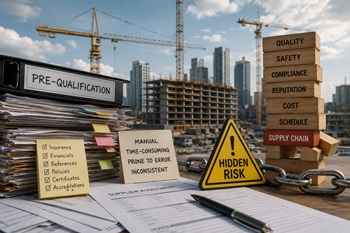
The hidden risk in modern construction supply chains.
Construction Management, 10 June

24 months to 14: CITB launches accelerated apprenticeships.
Bridging the gap between clients and contractors
Concerns remain around contractor quality, capability, and delivery.
Construction Management, 10 June.
Heat pumps beat boilers in new home tests.
Building Safety Act implementation in Wales
CIAT to host industry panel on 26 June.

New and updated CLC building safety guidance.
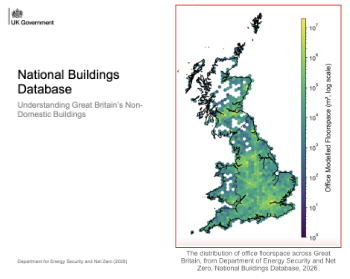
New UK National Buildings Database.
Building Safety Wiki Interviews

Chief executive of the British Woodworking Federation.
Planning condition discharge in England and Wales

A brief explanation from a building compliance expert, with further links.
Overheating guidance and tools for building designers

Guidance for dealing with element of building fabric control that have increasing importance.
Shading for housing, a design guide

From the Good Homes Alliance and British Blind and Shutter Association.