





Digital technology boost to construction industry
The UK’s ‘Digital Leaders’ could unlock up to £92 bn-worth of economic growth and hire 70,000 more people by gaining access to the best digital technology available.
This is the claim presented by a new cross-industry report from Oxford Economics for Virgin Media Business that analysed 1,000 companies employing 470,000 people. It found that the UK economy could see an increase of 2.5% in GDP (£92bn) and create more than a million new jobs over the next two years.

The report suggests that construction is at the forefront in terms of how much could potentially be gained. Their analysis revealed that construction firms that have embraced digital technology have grown their revenue by 5.9% and are optimistic about being able to drive growth further still.
Volker Buscher, director of digital at Arup said, "Engineering and construction is traditionally perceived as a manual industry but digital technology is reshaping the sector. We use five dimensional modelling techniques to visualise buildings and structures before they are built, looking not only at a 3D design but also predicting economic and environmental impact.
All of these areas require skills in data analysis, coding and project management, making Arup Digital one of the fasting growing areas of our business."
It may not be all positive development however, as the further adoption of digital technology is projected to result in job losses of some 24,000, a trend reflected across the other industries surveyed such as retail services and manufacturing. Despite this, 39% of construction firms said they do not expect any jobs to become obsolete from increasing their digital use and the overall finding of the report was that expected job losses are outweighed by the number of new hires that are anticipated.
“Companies tend to be somewhat over-optimistic when forecasting, but this figure nevertheless demonstrates a level of confidence in the potential of digital to create jobs,” the research said.
The report also found that SMEs with fewer than 250 employees have the most to gain from investing in digital technologies and are in a strong position to catch up with larger companies.
[edit] Find out more
[edit] Related articles on Designing Buildings
- Bluetooth.
- Building Automation and Control System BACS.
- Building management systems.
- Digital 21st century - Ramboll.
- Engineering Smart Cities.
- Ethernet.
- European connected and smart home market.
- In-building wireless.
- Internet of things.
- Internet of things market.
- Local area network.
- Masterplanning.
- Mean lean green.
- Open data.
- Open data - how can it aid the development of the construction industry?
- PAS 180:2014 Smart cities – Vocabulary.
- PAS 181:2014 Smart city Framework. Guide to establishing strategies for smart.
- PAS 182 Smart city data concept model.
- Power over ethernet.
- Smart buildings.
- Smart cities design timeframe.
- Smart cities.
- Smart construction.
- Smart home.
- Smart technology.
- Sustainability.
- TenderSpace.
- The smart buildings market.
- WiFi.
Featured articles
Check out some of the best features and news from Designing Buildings as well as key stories from around the web.
Undervaluing our industrial past

Heritage value changes as taste for building styles changes.
Changing expectations around competence and compliance

New information sheet from CIAT.
Grenfell investigation files passed to CPS

Angela Rayner apologises on behalf of the British state.

Electrical contractors need to understand the practical implications.

The real barrier to getting more value from digital technology.

Your guide to The Construction Reset at UKCW Birmingham.

Accommodating the Victorian and Edwardian working woman. Book review.
Rethinking passive fire protection in design

PFP demands the same level of design rigour as structure or services.

38% of Gen Zs feel safe when a fire door is wedged open.
Stunning images from around the world

Shortlist for CIOB’s Art of Building photography competition.

Guidance for conversion of traditional pre-1919 stone buildings.
Industrial heritage in the Ruhr
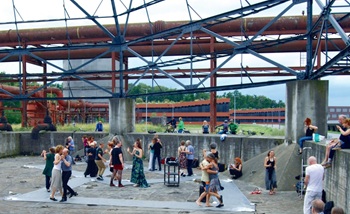
A marked difference to the fate of industrial landscapes in the UK.
Comments
Do you mean £9bn or £92bn of economic growth? Big difference there...
£92bn - error corrected. Well spotted.