






Tackling mental health issues in construction

Contents |
[edit] Introduction
Workers in the construction industry are far more likely to commit suicide than those in any other sector.
Suicide is one of the 10 leading causes of death worldwide. According to the World Health Organisation, around 800,000 people take their own life every year – which is one every 40 (WHO, 2017).
According to the UK’s Mental Health Task Force (2016): 'Mental health problems represent the largest single cause of disability in the UK. The cost to the economy is estimated at £105bn a year – roughly the cost of the entire NHS.'
According to the Centre for Mental Health (2017), 91 million days are lost each year due to mental health problems. The cost to UK employers is estimated at nearly £26bn every year – or £1,035 per employee. The centre suggests simple steps to improve mental health in the workplace that should enable employers to save 30% or more of these costs – at least £8bn a year.
[edit] Taboo subject
Over the past 25 years, safety standards in construction and injury rates have improved dramatically due to improved regulation and a realisation that good safety is good business. Unfortunately, health, and more specifically mental health, remains a taboo subject and continues to be stigmatised within the sector.
There are an estimated 2.3 million people working in construction in the UK, accounting for over 6% of the working population. The report ‘Suicide by occupation: England: 2011-15’ (Office of National Statistics, 2017) revealed that suicide rates in construction are 3.7 times higher than any other industry.
In 2014, members of the Construction Industry Advisory Committee (CONIAC), chaired by the Health and Safety Executive’s (HSE) head of construction, challenged the industry to collaborate and collectively address the issue of ill health. As a result, the Health in Construction Leadership Group (HCLG) was formed by Tideway, Land Securities, Balfour Beatty and Skanska.
Membership quickly expanded to include representation from clients, contractors, trade associations, professional bodies, trade unions and HSE.
[edit] Awareness training
The HCLG strategy was to focus on respiratory ill health and mental ill health with both matters the subject of health summits in 2016 and 2017. There was collective agreement that the industry required a consistent approach to mental health.
With the support of the British Safety Council, registered charity Mates in Mind was formed with the intention of connecting the industry to available support and advice as well providing education and awareness to address stigma and encourage conversations.
Three programmes of awareness training have now been created. These are a two-day programme in mental health first aid, a half-day awareness programme for managers and supervisors and a 45-minute ‘start the conversation’ programme for all employees.
The aspiration is to reach 100,000 people in year one and 75% of the construction population by 2025.
Tideway has been running two-day and half-day programmes throughout 2017 and is starting the 45-minute awareness sessions in January 2018. Others are urged to do likewise.
This article was originally published here by ICE on 4 Dec 2017. It was written by Steve Hails, Director of health, safety and wellbeing, Tideway.
--The Institution of Civil Engineers
[edit] Related articles on Designing Buildings Wiki
- Articles by ICE on Designing Buildings Wiki.
- Building Site to Boardroom (BS2B).
- Building up wellbeing in construction.
- Changing lifestyles.
- CIOB responds to CITB mental health and wellbeing report.
- Construction leadership for mental health.
- First aider.
- Health and safety for building design and construction.
- Health and safety policies in the construction industry.
- Managing stressful issues in construction.
- Mental health and wellbeing.
- Mental health in the construction industry.
- Toolbox talk for construction workers.
- Understanding and managing workplace stress is critically important to civil engineers.
- What we know about wellbeing.
Featured articles and news
Costs and insolvencies mount for SMEs, despite growth

Construction sector under insolvency and wage bill pressure in part linked to National Insurance, says report.
The place for vitrified clay pipes in modern infrastructure
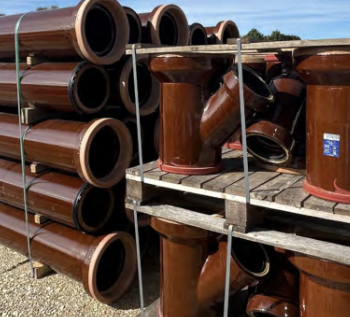
Why vitrified clay pipes are reclaiming their role in built projects.

Research by construction PR consultancy LMC published.
Roles and responsibilities of domestic clients

ACA Safety in Construction guide for domestic clients.
Fire door compliance in UK commercial buildings

Architect and manufacturer gives their low down.
Plumbing and heating for sustainability in new properties

Technical Engineer runs through changes in regulations, innovations in materials, and product systems.
Awareness of the Carbon Border Adjustment Mechanism
What CBAM is and what to do about it.
The new towns and strategic environmental assessments
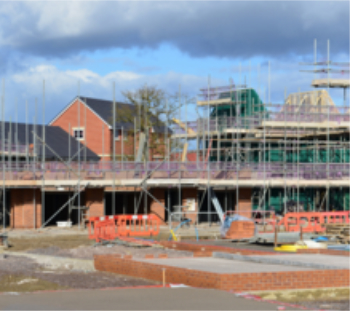
12 locations of the New Towns Taskforce reduced to 7 within the new towns draft programme and open consultation.

Buildings that changed the future of architecture. Book review.
The Sustainability Pathfinder© Handbook
Built environment agency launches free Pathfinder© tool to help businesses progress sustainability strategies.
Government outcome to the late payment consultation, ECA reacts.
IHBC 2025 Gus Astley Student Award winners

Work on the role of hewing in UK historic conservation a win for Jack Parker of Oxford Brookes University.
Future Homes Building Standards and plug-in solar
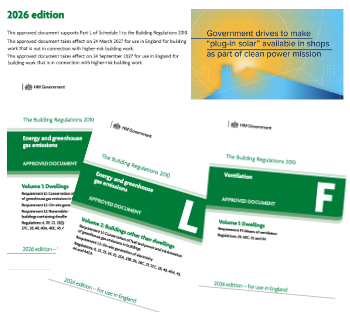
Parts F and L amendments, the availability of solar panels and industry responses.
How later living housing can help solve the housing crisis

Unlocking homes, unlocking lives.
Preparing safety case reports for HRBs under the BSA
A new practical guide to preparing structural inputs for safety cases and safety case reports published by IStructE.
Male construction workers and prostate cancer

CIOB and Prostate Cancer UK encourage awareness of prostate cancer risks, and what to do about it.