






Surface drainage
We don’t design a road through a pylon or a house through a gas main so why don’t we design surface drainage properly?
Ian Titherington, Lead Officer, Cardiff City Council calls for recognition that this most inflexible public utility, should be considered first and not last.

Contents |
[edit] Introduction
My current substantive role, as a civil engineer in local government, is to advise on all drainage matters relating to planning applications. These can range from simple house extensions to housing developments of over 7,000 homes, so it’s fair to say that the depth and detail of information supplied can vary somewhat.
However, there is an all too frequent problem that I run into, whatever the size of the application – an inability to account for surface water management at the beginning of the application.
[edit] Ignoring advice and making fundamental errors
I am not clear why such a fundamental error occurs so frequently, often being repeated despite our written and verbal advice otherwise. During such moments of (repeated, unnecessary) exasperation, I have come to the conclusion that the best way to avoid this is by treating surface water management just like any other public utility.
Just sit back for a minute and put gas, electricity, fibre optics, water supply, sewage and surface water all in the same group. Then, ask yourself which are the easiest and which is the hardest to design into a new development. Finally, ask yourself which is usually left until last. Yes, it’s rainfall run-off – the very hardest to manage.
[edit] Why do we put surface water last?
There lies the crux of the problem. The development industry often has a blind spot when it comes to surface water, which can result in increased construction costs, delays in planning and - if it goes badly wrong - the dreaded loss in housing density.
You may say that this is a very rare occurrence, but I beg to differ. I will often find myself working with an embarrassed designer, trying to retrofit drainage on a development that has yet to be built. On a sizeable development, is it really beyond the gift of developers to recognise the green/blue corridors, do a few BRE 365 tests, model exceedence flow directions and draft out flows, soakaways and attenuations? You would not stick a road through a pylon or a house on a gas main, so why do it to surface water?
[edit] Getting more SuDS happening in throughout the UK
Understanding surface water as a (forgotten) public utility can really help everyone involved in a development get the highest quality and highest value sustainable urban drainage system (SuDS) included in developments, whichever part of the UK they’re working in.
However, in Wales we may well be taking action to stop this by implementing schedule 3 of the Flood & Water Management Act. In theory, this legislation when enacted in November 2018, should not only put good SuDS practice at the heart of good site design, but also force developers to recognise that the most inflexible public utility should be considered first and not last. It is in everyone’s interests that they do so.
This article was originally published here on 26 March 2018 by ICE. It was written by Ian Titherington, Lead Officer, Cardiff City Council.
--Institution of Civil Engineers
[edit] Related articles on Designing Buildings WIki
Featured articles and news

Electrical contractors welcome crackdown on late payment and push for clean energy.
Cyber Security in the Built Environment

Protecting projects, data, and digital assets: A CIOB Academy TIS.
Managing competence in the built environment
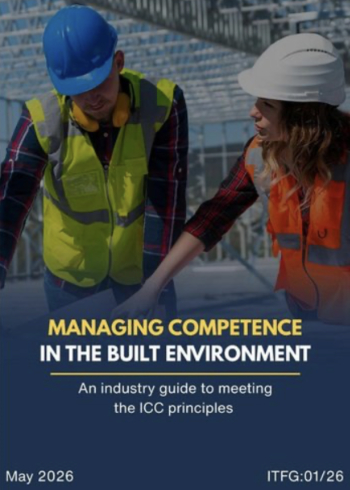
ITFG publishes new industry guide on how to meet the ICC principles.
The UK's campaign to reduce noise pollution: Mythbusting, articles and topic guides.
Setting Expectations on Competence Management
Industry Competence Committee.
New Scottish and Welsh governments
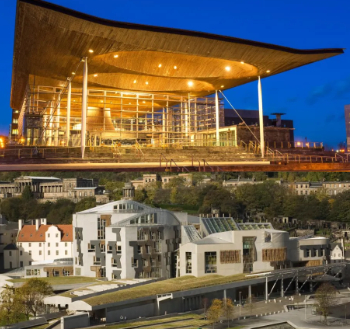
CIOB stresses importance of construction after new parliament elections.
The sad story of Derby Hippodrome
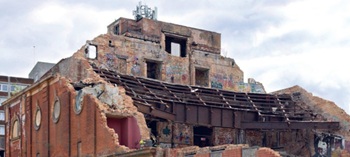
An historic building left to decay.

ECA, JIB and JTL back Fabian Society call to invest in skills for a stronger built environment workforce.
Women's Contributions to the Built Environment.
Calls for the delayed Circular Economy Strategy

Over 50 leading businesses, trade associations and professional bodies, including CIAT, and UKGBC sign open letter.
The future workforce: culture change and skill

Under the spotlight at UK Construction Week London.
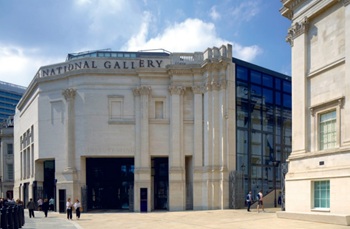
A landmark moment for postmodern heritage.
A safe energy transition – ECA launches a new Charter
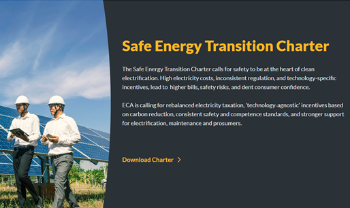
Practical policy actions to speed up low carbon adoption while maintaining installation safety and competency.
Frank Duffy: Researcher and Practitioner

Reflections on achievements and relevance to the wider research and practice communities.
The 2026 Compliance Landscape: Fire doors

Why 'Business as Usual' is a Liability.
Cutting construction carbon footprint by caring for soil
Is construction neglecting one of the planet’s most powerful carbon stores and one of our greatest natural climate allies.