





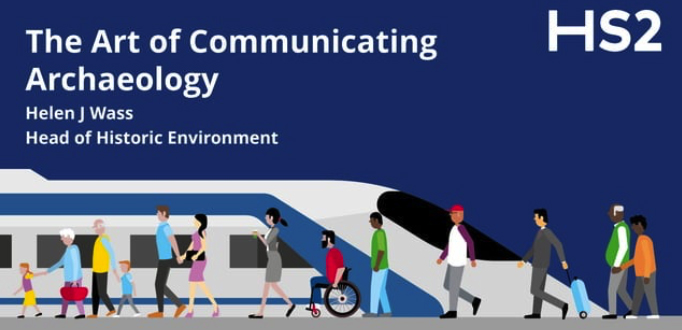
Storytelling, the art of communicating archaeology
|
| A joint The Nuclear Institute: Project Management SIG and APM’s three part Nuclear webinar series. |
Storytelling enables nuclear, transport and other large infrastructure projects to communicate their challenges, progress, and experience. What does this look like in practice?
Everyone loves a great story and in our profession, we are fortunate to have so many to tell. The challenge discussed in this webinar on Thursday 20 October, was how best to pitch that story to the audience. It’s not always a keen local society or a group of school students; sometimes it’s a hard-pressed developer or a client with competing demands. I want to share some of the ways that HS2 and its amazing supply chain has sought to communicate the nature, excitement, and challenges of our works. Helen highlighted examples of current best practice, ways to reach a wide audience and how to help celebrate the benefit that archaeological practice brings in so many ways.
Contents |
[edit] Webinar resources
Helen has very kindly allowed her presented material to be made available for viewing.
The slides on APM Slideshare and the webinar recording on YouTube is now available in our APM resources area and also embedded below for reference.
The questions submitted from attendees during the webinar are being reviewed and answered by Helen.

[edit] Speaker
Helen Wass interest in the past started early - growing up in Northumberland so many trips were to Hadrian’s Wall where as a curious child I wondered what Romans were doing there. Fast forward through volunteering on archaeological excavations, university and a post grad, I worked as a field archaeologist and researcher before joining the world of consultancy. Through various roles I ended up working on High Speed One; it was for me a career-defining role working for Rail Link Engineering, the consortium that project-managed and oversaw delivery of the archaeology programme.
I am now ten years in on High Speed 2 as Head of Heritage. I and the discipline lead and have a strategic remit setting project’s strategy and technical standards for the historic environment. With my team we monitor the supply chain delivering the work on the ground, engage and consult with a myriad of stakeholders from the local community to Historic England and our engineering colleagues. I am excited to be able to share our amazing discoveries and lessons learnt in delivering the largest ever programme of archaeology in the UK.
[edit]
Previous webinars can be viewed on the APM Slideshare and YouTube channels. Follow @APMEvents for upcoming event information. @apmwebinar @NuclearInst
This article first appeared on the APM news and blogsite as "Storytelling in major projects: The art of communicating archaeology webinar" date October 20, 2022.
--Association for Project Management
[edit] Related articles on Designing Buildings
Featured articles
Check out some of the best features and news from Designing Buildings as well as key stories from around the web.

CIOB publishes free template to help assess and manage risks.
ECA's reflections on Party Conference season

Burnham wants to be confident of winning before asking for a fresh mandate.
New Chief Construction and Scientific Adviser

Sergio Cavalaro, Professor of Infrastructure Systems at Loughborough University.
Building safety levy for England

CIAT publish estimator tool for members.

Water sector faces a growing crisis that could slow the delivery of vital infrastructure.
Undervaluing our industrial past

Heritage value changes as taste for building styles changes.
Changing expectations around competence and compliance

New information sheet from CIAT.
Grenfell investigation files passed to CPS

Angela Rayner apologises on behalf of the British state.

Electrical contractors need to understand the practical implications.

The real barrier to getting more value from digital technology.

Your guide to The Construction Reset at UKCW Birmingham.

Accommodating the Victorian and Edwardian working woman. Book review.