





Single-layer particle board
Single-layer particle board is essentially standard particle board, where the size of the particles and the density at which they are pressed and glued is the same throughout the thickness of the board. Essentially the definition of single layer particle board came about with the introduction of and to make a distinction from three-layer particle board where particles are more tightly packed and denser on the outer edges. Other related terms for similar products are chipboard and fibre board, though the detail in processing can vary.
Particleboard was originally formulated in late 19th century Germany, the produced commercially around the Second World War. The earlier board products were often made using blood albumin glue, whilst later commercial products used phenolic resins, amino formaldehyde-, urea formaldehyde-, or urea melamine-based, today there are also particle board products that use glues with lesser environmental impacts.
All particle boards comprise of a small chips and flakes of softwood of varying sizes and density that are impregnated with adhesive (usually amino formaldehyde-, urea formaldehyde-, or urea melamine-based) and subjected to high temperature (up to 220°C) and pressure (2-4MP). When cooled, the boards are cut and sanded, sold either as plain board or faced with laminate.
The density of single-layer particle boards tends to vary between around 600 kg/m3 to 800 kg/m3, the significant characterisation is that this density is the same throughout the board, unlike three-layer particle board.
Single-layer particle boards can show greater uniformity, that the natural grains of other solid timber products with more regular movement issues. Due to the use of dried wood chips it can be a more stable material than solid timber under warm conditions, though can be affected by atmospheric changes and, when damp, is likely to swell and discolour. The product can be sealed though not usually used for external applications. Single-layer particle board being consistent throughout can also be used to describe boards containing other minerals such as cement-bonded particle board, where density and make-up is constant through the board.
Normal hand or machine tools can be used for working particleboard , it usually take screws but make crack in patches if screws are over stressed, denser grades can provide greater strength and resistance to screw failure, as can three layer particle boards where the outer edges are denser than the middle core.
[edit] Related articles on Designing Buildings
- Adhesives.
- Blockboard.
- Cedar.
- Chipboard.
- Confederation of Timber Industries.
- Cross-laminated timber.
- Engineered bamboo.
- Glulam.
- Hardboard.
- Laminated veneer lumber LVL.
- Lime wood.
- Low-density fibreboard LDF.
- Medium density fibreboard - MDF.
- Modified wood.
- Oriented strand board.
- Particle board.
- Plywood.
- Softwood.
- Timber.
- Timber construction for London.
- Timber preservation.
- Timber vs wood.
- Types of timber.
Featured articles
Check out some of the best features and news from Designing Buildings as well as key stories from around the web.
Bridging the gap between clients and contractors

Concerns remain around contractor quality, capability, and delivery.
Construction Management, 10 June.

Heat pumps beat boilers in new home tests.
Building Safety Act implementation in Wales

CIAT to host industry panel on 26 June.
New and updated CLC building safety guidance.
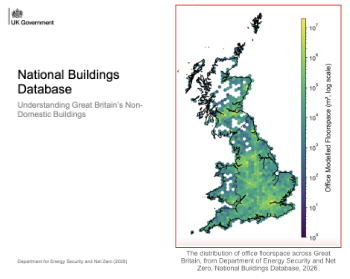
New UK National Buildings Database.
Building Safety Wiki Interviews

Chief executive of the British Woodworking Federation.
Planning condition discharge in England and Wales

A brief explanation from a building compliance expert, with further links.
Overheating guidance and tools for building designers

Guidance for dealing with element of building fabric control that have increasing importance.
Shading for housing, a design guide

From the Good Homes Alliance and British Blind and Shutter Association.
UK Standard Skills Classification (SSC)

A shared framework for describing skills needs.
Social media ban consultation comes to close

CIOB urges UK Government to consider social media’s role in careers guidance in ban debate.