





RIBA Code of Professional Conduct
Contents |
[edit] Introduction
The Institute of British Architects was founded in 1834 for ‘…the general advancement of Civil Architecture, and for promoting and facilitating the acquirement of the knowledge of the various arts and sciences connected therewith…’. It became the Royal Institute of British Architects (RIBA) in 1837 when it was awarded a Royal Charter.
The RIBA maintains a Code of Professional Conduct (sometimes referred to as the Code of Practice or the Architects Code) for its members to promote professional good conduct and best practice. It sets out the standards of professional conduct and practice that the institute requires of its members. Members are expected to be guided by its spirit as well as its precise and express terms
The Code of Professional Conduct was reviewed and overhauled during 2018 and the latest version came into effect on 1 May 2019. It comprises; three principles of professional conduct and professional values that support those principles and guidance notes which explain how the principles can be upheld:
[edit] Principle 1: Integrity
'Members shall behave with integrity and shall strive to safeguard and improve the standing, reputation and dignity of the Institute and its Members in all their professional activities. Members shall consistently promote and protect the public interest and social purpose, taking into account future generations.'
[edit] Principle 2: Competence
'Members should continuously strive to improve their professional knowledge and skill. Members should persistently seek to raise the standards of architectural education, lifelong learning, research, training, and practice for the benefit of the public interest, those commissioning services, the profession and themselves. Members should strive to protect and enhance heritage and the natural environment.'
[edit] Principle 3: Relationships
'Members shall respect and seek to uphold the relevant rights and interests of others. Members shall treat people with respect and shall strive to be inclusive, ethical, and collaborative in all they do. Members shall seek and promote social justice.'
[edit] Discipline
Any member who contravenes the Code may be liable to private caution, public reprimand, suspension or expulsion by the RIBA’s Professional Conduct Panel.
[edit] Related articles on Designing Buildings
- ARB code of conduct.
- Architect.
- Architect's fees.
- Architects Registration Council of the United Kingdom ARCUK (now reconstituted as the Architects Registration Board).
- Architectural education.
- Architects Registration Board.
- Architectural styles.
- Concept architectural design.
- Construction industry institutes and associations.
- Construction professional.
- NBS.
- Professional conduct.
- Professional indemnity insurance.
- RIBA.
- RIBA Concise Building Contract.
- RIBA Domestic Building Contract.
- RIBA plan of work.
- RIBA plan of work v project plans v OGC gateways.
- RIBA professional conduct guidance.
- The history of the architectural profession.
Featured articles
Check out some of the best features and news from Designing Buildings as well as key stories from around the web.
New and updated CLC building safety guidance.
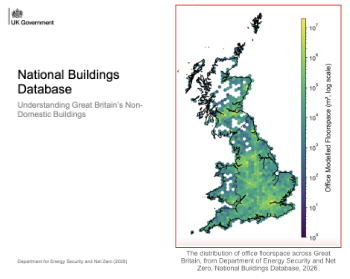
New UK National Buildings Database.
Building Safety Wiki Interviews

Chief executive of the British Woodworking Federation.
Planning condition discharge in England and Wales

A brief explanation from a building compliance expert, with further links.
Overheating guidance and tools for building designers

Guidance for dealing with element of building fabric control that have increasing importance.
Shading for housing, a design guide

From the Good Homes Alliance and British Blind and Shutter Association.
UK Standard Skills Classification (SSC)

A shared framework for describing skills needs.
Social media ban consultation comes to close

CIOB urges UK Government to consider social media’s role in careers guidance in ban debate.
The latest of eight Skills England apprenticeship units

The addition of battery manufacturing welcomed by ECA with a warning about the risks of fast-tracked apprenticeship units.
Building Control Independent Panel final report
A precis of a key report led by Dame Hackitt with full recommendations and link to the government response.
Building Safety recap April, 2026
A short and longer run-through of the month, with links to further information and sources.