





Priced bill of quantities
A bill of quantities is a document prepared by the client's cost consultant that provides measured quantities of the items of work necessary to construct a development. These items of work are described by the drawings and specifications in the tender documentation. The quantities may be measured in number, length, area, volume, weight or time.
An unpriced bill of quantities (sometimes referred to as the tender pricing document) is issued to tenderers, who will then estimate their price for each item. This priced bill of quantities constitutes the tenderer's complete offer. It is the unpriced bill of quantities, but with the tenderer’s rates, costs and totals added.
The preparation, by the client’s consultants, of an unpriced bill of quantities assists tenderers in the calculation of construction costs for their tender, and, as it means all tendering contractors will be pricing the same quantities (rather than taking-off quantities from the drawings and specifications themselves), it provides a fair and accurate system for tendering. It also makes it possible to compare both the overall price and individual items directly with other tenderers’ offers, allowing a detailed assessment of which aspects of a tender may offer good or poor value. This information can assist with tender negotiations.
The priced bill of quantities will also:
- Assist with the agreement of the contract sum with the successful tenderer.
- Provide a schedule of rates assisting with the valuation of variations.
- Provide a basis for the valuation of interim payments.
- Provide a basis for the preparation of the final account.
It is very important that bills of quantities are prepared according to a standard, widely recognised methodology. This helps avoid any ambiguities or misunderstandings and so helps avoid disputes arising through different interpretations of what has been priced. In the UK, bills of quantities for general construction works will most commonly be prepared in accordance with the Standard Method of Measurement 7th Edition (SMM7) or the New Rules of Measurement, which became operative on 1 January 2013 and replaced SMM7 on 1st July 2013.
Bills of quantities are most useful to the contractor when they are prepared in work sections that reflect likely sub-contract packages. This makes it easier for the contractor to obtain prices from sub-contractors and is more likely to result in an accurate and competitive price.
[edit] Related articles on Designing Buildings Wiki
- Bill of quantities.
- Common arrangement of work sections.
- Common mistakes in bill of quantities.
- Comparison of SMM7 with NRM2.
- New Rules of Measurement.
- Schedule of rates.
- Schedule of work.
- Standard Method of Measurement.
- Tender documentation.
- Tender pricing document.
- Types of bill of quantities.
- Unpriced bill.
Featured articles and news
Costs and insolvencies mount for SMEs, despite growth

Construction sector under insolvency and wage bill pressure in part linked to National Insurance, says report.
The place for vitrified clay pipes in modern infrastructure
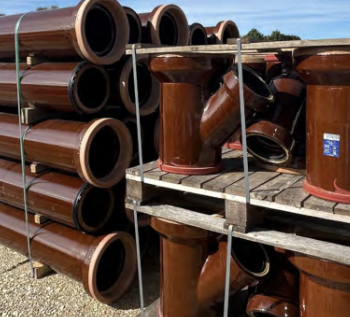
Why vitrified clay pipes are reclaiming their role in built projects.

Research by construction PR consultancy LMC published.
Roles and responsibilities of domestic clients

ACA Safety in Construction guide for domestic clients.
Fire door compliance in UK commercial buildings

Architect and manufacturer gives their low down.
Plumbing and heating for sustainability in new properties

Technical Engineer runs through changes in regulations, innovations in materials, and product systems.
Awareness of the Carbon Border Adjustment Mechanism
What CBAM is and what to do about it.
The new towns and strategic environmental assessments

12 locations of the New Towns Taskforce reduced to 7 within the new towns draft programme and open consultation.

Buildings that changed the future of architecture. Book review.
The Sustainability Pathfinder© Handbook
Built environment agency launches free Pathfinder© tool to help businesses progress sustainability strategies.

Government outcome to the late payment consultation, ECA reacts.
IHBC 2025 Gus Astley Student Award winners

Work on the role of hewing in UK historic conservation a win for Jack Parker of Oxford Brookes University.
Future Homes Building Standards and plug-in solar

Parts F and L amendments, the availability of solar panels and industry responses.
How later living housing can help solve the housing crisis

Unlocking homes, unlocking lives.
Preparing safety case reports for HRBs under the BSA
A new practical guide to preparing structural inputs for safety cases and safety case reports published by IStructE.
Male construction workers and prostate cancer

CIOB and Prostate Cancer UK encourage awareness of prostate cancer risks, and what to do about it.