





Post pandemic places report
|
Contents |
[edit] Introduction
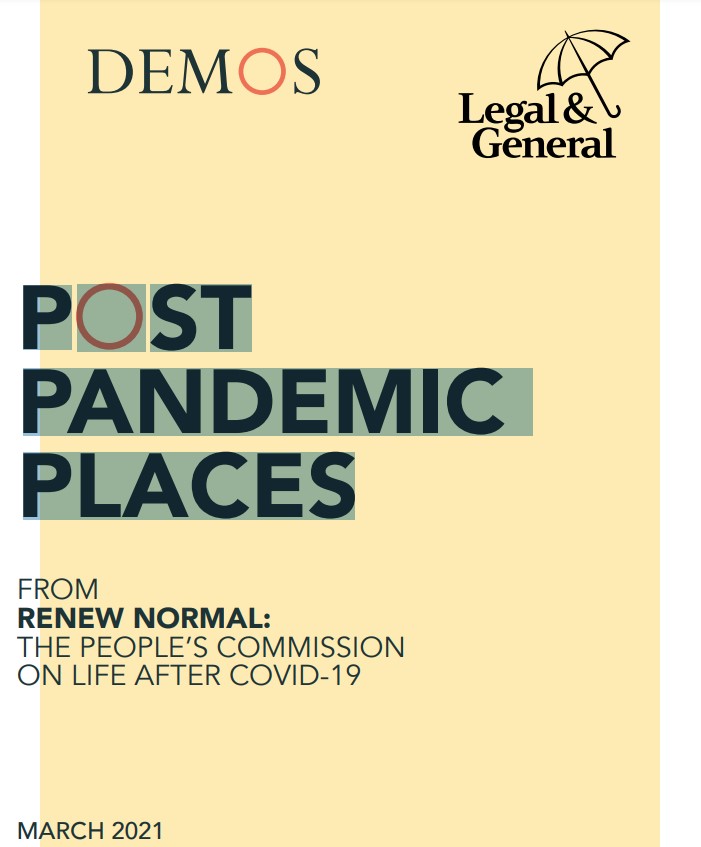
Post Pandemic Places was commissioned by Legal & General and published in March 2021. It reveals that pandemic-based home working, coupled with a desire for continued flexibility, could increase the number of people spending money in their communities and buying local. As a result of these findings, the Government is being encouraged to invest in the establishment of more local offices and hybrid-working initiatives.
[edit] Report findings
Conducted by the think tank Demos, the report found that 65% of the working population were forced to change their place of work during 2020 as a result of the pandemic. Of these, 79% want to continue to have some form of remote working in the future. However, the findings - taken from a large, nationally representative poll of 20,000 adults - indicate that a desire to work remotely is not necessarily the same as wanting to work from home all of the time.
Relatively high levels of support were recorded for ‘local desk space’, particularly among younger people, with one fifth of those in their 20s rating it as their top priority for employment premises in their locality. When asked how people were intending to spend their money once the pandemic restrictions were over, 36% plan to spend more locally than they did before the lockdowns of 2020 and 2021. Amongst those people required to work from home, this percentage rose to 47%.
The report suggests there is an opportunity for the Government and businesses to support more hybrid working and flexible local desk space, to give people the options they prefer and to progress the 'levelling up' agenda. It is also thought the move could help to spread spending power across a wider geographic area.
[edit] Farewell to corporate headquarters?
Historically, investment in landmark regional offices has been shown to drive regeneration and economic growth. This supports job creation, increases in daytime footfall and drives spending towards local high streets.
This has been demonstrated through HMRC’s Government Hubs programme, which has seen the establishment of 11 regional offices across the UK. In Cardiff, for example, the ‘Central Square’ Hub played a role in the city centre’s transformation, supporting an estimated increase in economic wealth of £1.1bn over 10 years.
Based on this model, remote working can help serve as a community regeneration tool. This could be supported by introducing employee tax incentives, such as ‘remote working vouchers’, similar to the childcare voucher scheme.
[edit] Making flex-work permanent
Throughout the pandemic, people changed the location they work, and those people have built a new relationship with their local area that is expected to remain even after pandemic restrictions have been lifted.
The Government has stated that it intends to make all jobs flexible by default. This move could be supported by the conversion of some local civic buildings to remote working spaces, which could be used by any civil servant.
[edit] Related articles on Designing Buildings
- 15 minute city.
- CEOs predict COVID-19 workplace changes will be permanent.
- City centre.
- Commons Committee report on High Street support addresses evidence submitted by IHBC.
- Converting commercial offices to residential accommodation.
- Converting office and retail to residential housing on the high street.
- Creating more socially just and diverse cities.
- Flexible working in engineering services.
- High street.
- Hub and spoke model.
- Meanwhile use of buildings.
- Pandemic migration.
- The compact sustainable city.
- The town's time has come.
- Town planner.
- Workplaces of the future.
[edit] External resources
- Legal & General, Post Pandemic Places.
Featured articles and news
Costs and insolvencies mount for SMEs, despite growth

Construction sector under insolvency and wage bill pressure in part linked to National Insurance, says report.
The place for vitrified clay pipes in modern infrastructure
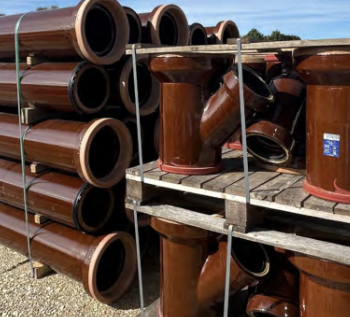
Why vitrified clay pipes are reclaiming their role in built projects.
Research by construction PR consultancy LMC published.
Roles and responsibilities of domestic clients
ACA Safety in Construction guide for domestic clients.
Fire door compliance in UK commercial buildings

Architect and manufacturer gives their low down.
Plumbing and heating for sustainability in new properties
Technical Engineer runs through changes in regulations, innovations in materials, and product systems.
Awareness of the Carbon Border Adjustment Mechanism
What CBAM is and what to do about it.
The new towns and strategic environmental assessments
12 locations of the New Towns Taskforce reduced to 7 within the new towns draft programme and open consultation.
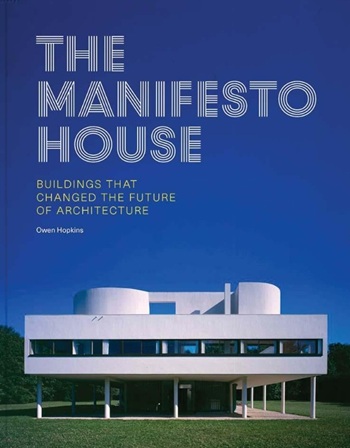
Buildings that changed the future of architecture. Book review.
The Sustainability Pathfinder© Handbook
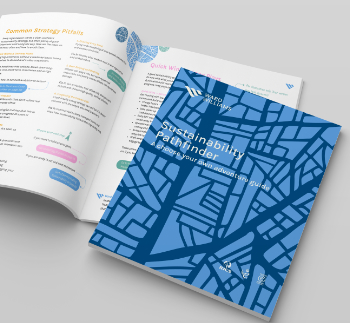
Built environment agency launches free Pathfinder© tool to help businesses progress sustainability strategies.
Government outcome to the late payment consultation, ECA reacts.
IHBC 2025 Gus Astley Student Award winners
Work on the role of hewing in UK historic conservation a win for Jack Parker of Oxford Brookes University.
Future Homes Building Standards and plug-in solar
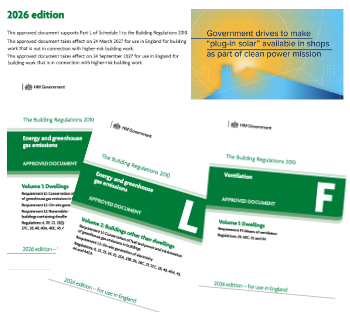
Parts F and L amendments, the availability of solar panels and industry responses.
How later living housing can help solve the housing crisis
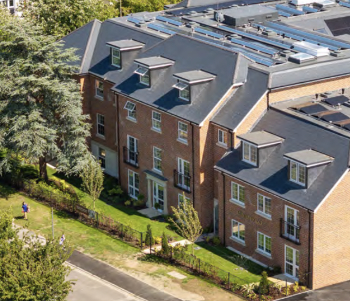
Unlocking homes, unlocking lives.
Preparing safety case reports for HRBs under the BSA
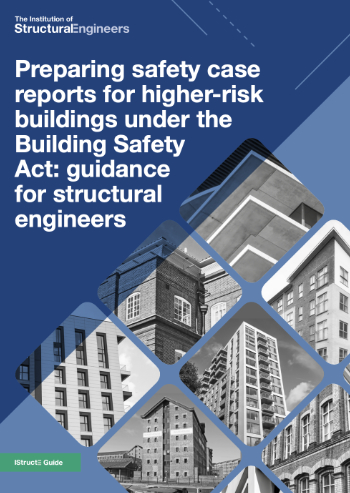
A new practical guide to preparing structural inputs for safety cases and safety case reports published by IStructE.
Male construction workers and prostate cancer
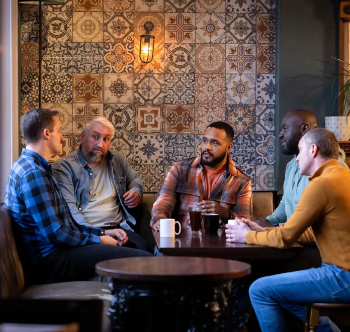
CIOB and Prostate Cancer UK encourage awareness of prostate cancer risks, and what to do about it.