





Picturesque movement

|
| Cronkhill is an example of the Italianate style associated with the picturesque movement. The country home was built by John Nash in 1802. |
Contents |
[edit] Introduction
This picturesque artistic movement was initially associated with Claude Lorrain and Gaspard Dughet (sometimes referred to as Gaspar Poussin due to his association with Nicholas Poussin, who briefly served as his teacher). These two French artists worked in the 1600s and are known for their bucolic landscape paintings that sometimes featured imagined buildings in various architectural revival styles.
Eventually the term picturesque came to be associated with a British aesthetic ideal that was represented by architecture that looked as though it had emerged from a landscape painting that had been completed by one of these two artists.
[edit] Evolution as an architectural style
William Gilpin (4 June 1724 – 5 April 1804) is considered to be one of the creators of the picturesque ideal. In 1768, Gilpin’s 'Essay on Prints' introduced the definition of picturesque as 'a term expressive of that peculiar kind of beauty, which is agreeable in a picture'.
This idea was further advanced in his 1782 book, 'Observations on the River Wye, and Several Parts of South Wales, etc. Relative Chiefly to Picturesque Beauty' which was a practical handbook of the picturesque concept. As an aesthetic, picturesque became associated with an ideal or quality that existed somewhere between ‘the sublime and the beautiful’.
Gilpin’s ideal was eventually shaped into comprehensive theories associated with landscape design and architecture. This work was realised in structures that had unconventional asymmetrical forms with varied scale and texture.
[edit] Examples of picturesque
The picturesque style was promoted as an appropriate design for rural settings, with its complex and irregular shapes and forms fitting well into the natural landscape. The Italianate country houses of the architect John Nash represent one aspect of the picturesque style. As a the leading architect of the Regency style, Nash was known for his departure from classical revival through his more fanciful interpretation of the Regency style.

|
| The octagonal Cottage Orne with overhanging eaves, in Langton by Partney. (Cottage Ornee cc-by-sa/2.0 - © Richard Croft - geograph.org.uk/p/112891) |
At the other end of the spectrum was the Cottage Orne, a rustic and modest dwelling often featuring roughly hewn wooden columns and a thatched roof. These cottages for the wealthier classes often served little purpose other than to decorate the estate, but they were sometimes used as personal retreats.
Nash built an entire village of these cottages at Blaise Hamlet. Nash worked on the project on behalf of a Bristol banker who wanted to provide homes for retired members of his staff.
[edit] Related articles on Designing Buildings Wiki
Featured articles
Check out some of the best features and news from Designing Buildings as well as key stories from around the web.
Building Safety Act implementation in Wales
CIAT to host industry panel on 26 June.

New and updated CLC building safety guidance.
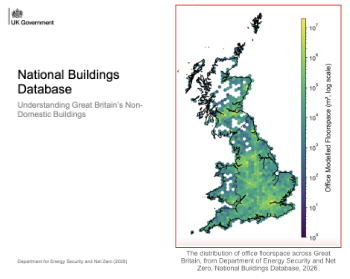
New UK National Buildings Database.
Building Safety Wiki Interviews
Chief executive of the British Woodworking Federation.
Planning condition discharge in England and Wales

A brief explanation from a building compliance expert, with further links.
Overheating guidance and tools for building designers

Guidance for dealing with element of building fabric control that have increasing importance.
Shading for housing, a design guide

From the Good Homes Alliance and British Blind and Shutter Association.
UK Standard Skills Classification (SSC)

A shared framework for describing skills needs.
Social media ban consultation comes to close

CIOB urges UK Government to consider social media’s role in careers guidance in ban debate.
The latest of eight Skills England apprenticeship units

The addition of battery manufacturing welcomed by ECA with a warning about the risks of fast-tracked apprenticeship units.
Building Control Independent Panel final report
A precis of a key report led by Dame Hackitt with full recommendations and link to the government response.
Comments
You need to look at the work of Lutyens Cleveleys Garden Village.