





Penal contractual terms
Penal contractual terms that seek to impose exorbitant or unconscionable obligations are generally not worth the paper they are written on.
In the case of Vivienne Westwood Ltd. v Conduit Street Development Ltd. (2017), the High Court found one such term unenforceable in the context of a side letter to a retail lease.
A tenant had taken a 15-year lease of shop premises at an initial rent of £110,000 a year, subject to upwards only rent reviews every five years. On the same day as the lease was executed, a side letter was signed whereby the landlord agreed to accept a reduced rent of £90,000 in the first year, rising to £100,000 in year five.
The letter also provided that the rent would be capped at £125,000 a year in the succeeding five years. The letter stated that the agreement was terminable by the landlord with immediate effect if the tenant breached any of its terms or conditions. In the event of termination, a term of the letter provided that rent would be payable in accordance with the lease as if the side agreement had never existed.
Following the first rent review, the landlord sought to increase the rent payable to £232,500 a year on the ground that rent had been paid late, which was a breach of the conditions in the side letter. The tenant launched proceedings in order to hold the landlord to the rent cap agreed in the side letter.
In upholding the tenant’s arguments, the Court found that the term relating to termination of the agreement contained therein was unenforceable as a contractual penalty.
The term sought to impose a greater obligation on the tenant than that which was contained within the lease. Termination of the agreement at any time within the first ten years of the lease would have the effect that the tenant would be obliged to pay additional rent for all the preceding years as well as in the future.
The obligation to pay increased rent on termination was a blunt instrument that could give rise to the tenant suffering substantial and disproportionate financial detriment for a minor breach of covenant that caused no harm to the landlord’s interests.
Notwithstanding the equality of bargaining power between the landlord and the tenant, the term was exorbitant and unconscionable in its potential effects. In the circumstances, the term was of no effect and the rent was capped in line with the other provisions of the side letter.
[edit] Find out more
[edit] Related articles on Designing Buildings Wiki
Featured articles and news
Costs and insolvencies mount for SMEs, despite growth

Construction sector under insolvency and wage bill pressure in part linked to National Insurance, says report.
The place for vitrified clay pipes in modern infrastructure
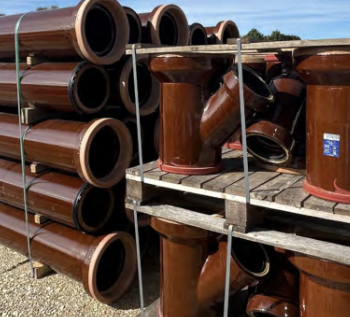
Why vitrified clay pipes are reclaiming their role in built projects.

Research by construction PR consultancy LMC published.
Roles and responsibilities of domestic clients

ACA Safety in Construction guide for domestic clients.
Fire door compliance in UK commercial buildings

Architect and manufacturer gives their low down.
Plumbing and heating for sustainability in new properties

Technical Engineer runs through changes in regulations, innovations in materials, and product systems.
Awareness of the Carbon Border Adjustment Mechanism
What CBAM is and what to do about it.
The new towns and strategic environmental assessments

12 locations of the New Towns Taskforce reduced to 7 within the new towns draft programme and open consultation.

Buildings that changed the future of architecture. Book review.
The Sustainability Pathfinder© Handbook
Built environment agency launches free Pathfinder© tool to help businesses progress sustainability strategies.
Government outcome to the late payment consultation, ECA reacts.
IHBC 2025 Gus Astley Student Award winners

Work on the role of hewing in UK historic conservation a win for Jack Parker of Oxford Brookes University.
Future Homes Building Standards and plug-in solar
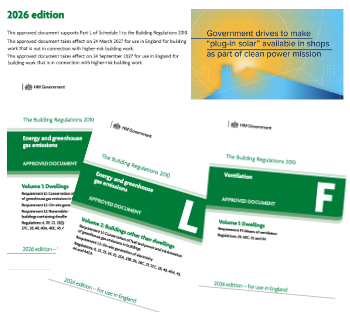
Parts F and L amendments, the availability of solar panels and industry responses.
How later living housing can help solve the housing crisis

Unlocking homes, unlocking lives.
Preparing safety case reports for HRBs under the BSA
A new practical guide to preparing structural inputs for safety cases and safety case reports published by IStructE.
Male construction workers and prostate cancer

CIOB and Prostate Cancer UK encourage awareness of prostate cancer risks, and what to do about it.