





One Thing You Need to Know Before Purchasing HVAC Software
Contents |
[edit] One thing to know before purchasing HVAC software
It is impossible to exaggerate the importance of effective software solutions in the continuously changing environment of contemporary heating, ventilation, and air conditioning (HVAC) enterprises. For operations to run more smoothly, customer service to be better, and overall corporate performance to be maximised, these tools have become crucial. However, it's imperative to retain one fundamental factor at the forefront of your decision-making process before plunging deeply into the world of HVAC software procurement: Integration Capability.
[edit] The landscape of HVAC software
There are many different solutions available as you search for the ideal HVAC software for your company. Basic scheduling tools to all-inclusive systems that handle everything from customer management to financial tracking are available in these software solutions. Regardless of the features they provide, great HVAC software solutions have one thing in common: they enable companies to work more effectively and efficiently.
[edit] Integration capability
A single element, Integration Capability, serves as the cornerstone for the seamless implementation of HVAC software among the many features and functionalities. The capacity of your chosen software to interact with other systems cannot be undervalued in a world where corporate operations are integrated and data is king.
[edit] Advantages of integration capacity
- Streamlined Operations: By integrating HVAC software with your current systems, the amount of manual data entering is minimised, as well as the possibility of errors. This system symbiosis enables automated procedures that improve efficiency all around.
- Improved consumer Experience: Integrated software creates opportunities for immediate consumer communication. Customers are constantly informed, which raises customer satisfaction levels with features like appointment monitoring and real-time service updates.
- Data-Driven Insights: Integrating systems provide a holistic perspective of your company's activities by combining data collecting and analysis. These perceptions serve as priceless instruments for making well-informed choices.
[edit] Risks of Ignoring Integration
- Siloed Information: Information might get fragmented when relying on independent systems that can't efficiently communicate. This has a negative effect on both internal coordination and the consumer experience.
- Workflow inefficiencies: Manual data duplication across many systems causes snags and confusion. The productivity of your team might be hampered and the flow of business generally disrupted by a lack of integration.
[edit] Evaluation of Integration Capability
- Check for Compatibility: Consider the software's compatibility with your current systems before making your final decision. A comprehensive examination is necessary to guarantee a smooth integration process.
- Support for APIs and Integration: Application Programming Interfaces (APIs) act as a link between several software programmes. Find out about a software's API capabilities and integration prospects.
[edit] Authentic Success Story
Take the integration-friendly HVAC company as an illustration. They obtained a comprehensive understanding of their operations by integrating the customer management, scheduling, and accounting systems. Reduced response times, increased customer happiness, and increased profitability were all results of this integration.
[edit] Conclusion
The one factor that should direct your decision-making in the constantly changing world of HVAC software is Integration Capability. This fundamental factor guarantees efficient operations, improved client experiences, and data-supported decisions. To maximise the potential of your HVAC company, give integration top priority as you consider the numerous software alternatives available.
--Edstech
[edit] Related articles on Designing Buildings
- Air handling unit.
- Building management systems.
- Dehumidification.
- Displacement ventilation.
- Ductwork.
- Efficiency through systems integration.
- Fan coil unit.
- Heating.
- Humidification.
- Integration in the construction industry.
- Integrated project team.
- Integration.
- HVACR.
- Mechanical, electrical and plumbing MEP.
- Mechanical ventilation.
- Natural ventilation.
- Plant room.
- Refrigeration.
- Supply chain integration.
- Thermal comfort.
- Ventilation.
- Vertical integration.
Featured articles and news
Costs and insolvencies mount for SMEs, despite growth

Construction sector under insolvency and wage bill pressure in part linked to National Insurance, says report.
The place for vitrified clay pipes in modern infrastructure
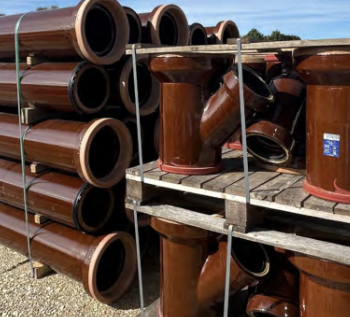
Why vitrified clay pipes are reclaiming their role in built projects.

Research by construction PR consultancy LMC published.
Roles and responsibilities of domestic clients

ACA Safety in Construction guide for domestic clients.
Fire door compliance in UK commercial buildings

Architect and manufacturer gives their low down.
Plumbing and heating for sustainability in new properties

Technical Engineer runs through changes in regulations, innovations in materials, and product systems.
Awareness of the Carbon Border Adjustment Mechanism
What CBAM is and what to do about it.
The new towns and strategic environmental assessments

12 locations of the New Towns Taskforce reduced to 7 within the new towns draft programme and open consultation.

Buildings that changed the future of architecture. Book review.
The Sustainability Pathfinder© Handbook
Built environment agency launches free Pathfinder© tool to help businesses progress sustainability strategies.

Government outcome to the late payment consultation, ECA reacts.
IHBC 2025 Gus Astley Student Award winners

Work on the role of hewing in UK historic conservation a win for Jack Parker of Oxford Brookes University.
Future Homes Building Standards and plug-in solar
Parts F and L amendments, the availability of solar panels and industry responses.
How later living housing can help solve the housing crisis

Unlocking homes, unlocking lives.
Preparing safety case reports for HRBs under the BSA

A new practical guide to preparing structural inputs for safety cases and safety case reports published by IStructE.
Male construction workers and prostate cancer

CIOB and Prostate Cancer UK encourage awareness of prostate cancer risks, and what to do about it.