





Material consideration
A material consideration in UK planning (or a material planning consideration) is an aspect which is considered relevant to the processing of making the planning decision (eg whether to grant or refuse an application for planning permission).
"The scope of what can constitute a material consideration is very wide and so the courts often do not indicate what cannot be a material consideration. However, in general they have taken the view that planning is concerned with land use in the public interest, so that the protection of purely private interests such as the impact of a development on the value of a neighbouring property or loss of private rights to light could not be material considerations."
"The law makes a clear distinction between the question of whether something is a material consideration and the weight which it is to be given. Whether a particular consideration is material will depend on the circumstances of the case and is ultimately a decision for the courts. Provided regard is had to all material considerations, it is for the decision maker to decide what weight is to be give to the material considerations in each case, and (subject to the test of reasonableness) the courts will not get involved in the question of weight." (extracts from UK Government website reference below)
A number of formal references are most likely to be considered as material considerations in any planning application these include;
- Statutory designations.
- Planning Policy Statements and Guidance Notes (PPSs and PPGs).
- Regional Spatial Strategies (RSS).
- Supplementary Planning Guidance (SPG).
- CLG Circulars and other policy deemed to be relevant.
Other potential material considerations might be
- Planning history of the site.
- Planning gain.
- Representations by Consultees (such as the Environment Agency, Highways Agency or English Heritage.)
- Representations by owners, tenants, local committees and the public.
- Environmental Impact Assessment, contaminated land, water and other environmental matters.
- Listed buildings and conservation Areas
- General and residential amenity, public safety and crime prevention.
- Highway safety and public rights of way
- Archaeology
- Design
Considerations in planning that are not generally considered as material, unless expressly made so by the Authority for specific reasons relating to the planning application are usually;
- Precedents or alternative proposals
- Distinguishing between particular occupiers
- Private interests or private rights of way
- Restrictive covenants and landowner control
- Specific outlooks from a property
- Personal circumstances or financial considerations
- Ulterior purposes or motives
- Discrimination towards an applicant or future occupier.
[edit] Related articles of Designing Buildings
- Detailed planning application.
- Development management.
- National Planning Policy Framework.
- National Planning Practice Guidance.
- Neighbourhood planning.
- Outline planning application.
- Planning.
- Planning authority.
- Planning permission.
- Precedents.
- Town and Country Planning Act.
- Town planner.
- Town planning.
[edit] External References
Paragraph: 008 Reference ID: 21b-008-20140306 and Paragraph: 009 Reference ID: 21b-009-20140306 Revision date: 06 03 2014 https://www.gov.uk/guidance/determining-a-planning-application
Featured articles and news

We're expanding our collaborative mission by launching DB Intelligence, an exclusive market research advisory panel. Built environment professionals can now get paid to share their expertise on industry trends, products and services.
Panel members receive direct financial incentives for participating in research projects like short surveys, 1-2-1 interviews and focus groups. Register today to shape the future of the construction sector.
Building Control Independent Panel final report
A precis of a key report led by Dame Hackitt with full recommendations and link to the government response.
Guide to ISO 19650 for Architecture Firms (2026)
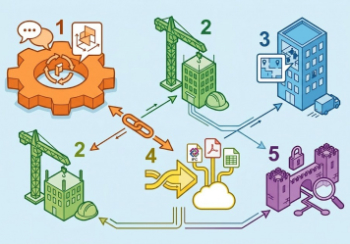
A user gives their low down.

A UK training and membership provider for mould remediation professionals.
Building Safety recap April, 2026
A short and longer run-through of the month, with links to further information and sources.
CIAT May 2026 briefing.

Independent NSI and BAFE study exploring how organisations are changing the way they buy fire safety services.

From medieval scribes to modern word art.

ECA welcomes crackdown on late payment and push for clean energy, whilst CIOB seek fixed cladding removal timeframes.
Cyber Security in the Built Environment
Protecting projects, data, and digital assets: A CIOB Academy TIS.
Managing competence in the built environment

ITFG publishes new industry guide on how to meet the ICC principles.

The UK's campaign to reduce noise pollution: Mythbusting, articles and topic guides.