





Lansink's Ladder

Lansink's ladder is said to have formed the basis of the waste hierarchy or waste management hierarchy. Conceived as a ladder of decision steps it distinguishes five forms of waste management: prevention, reuse, sorting/recycling, incineration and landfilling.
The ladder or steps were later translated to a triangle running in the same order (perhaps because of similarity with energy ratings symbols), with prevention at the top, but it may also now be seen as an inverted triangle with prevention at the top, at its widest, indicating the level of impact each approach might have, ie prevention has the highest level of impact on the overall issues. Ironically, until recently, statistics show that globally incineration and landfill in most countries continues to outweigh other forms of management in terms of what is actually done.
The Ladder of Lansink was adopted in 1979, significantly impacting Dutch waste policy, the Environmental Management Act in 1993, and the European Waste Framework Directive 2008. The Netherlands remains one of the Nations in Europe with the highest rates of recycling.
Ad Lansink worked as a Senior Lecturer in Physical Chemistry at the University of Nijmegen, as Biochemist at the Pathology Department of the UMC Radboud, becoming politically active in the Catholic People’s Party. In the 1977 he was elected to the Dutch parliament and worked on topics such as environment, energy, higher education, science policy and public health. After his parliamentary career, he became a member of the Advisory Board for the state-owned company for the storage of radioactive waste and worked as the Chairman of the Gelderland Environment Federation.
For further information visit https://www.adlansink.nl (in dutch)
[edit] Related articles on Designing Buildings
- Bin blight.
- Circular economy.
- Quantification of construction materials in existing buildings (material intensity).
- Plastic and recycling.
- Recycled waste plastic in construction.
- Recyclable construction materials.
- Recycling.
- Reduce, reuse, recycle.
- Reused construction products.
- UandI Think event with Studio SWINE.
- Waste management plan for England.
- Waste hierarchy for construction
Featured articles
Check out some of the best features and news from Designing Buildings as well as key stories from around the web.

Households living near new pylons to save on bills.

ECA warns growth must not outpace grid capacity or skills.
The role of the client and decision making

CIOB response to built environment professions call for evidence.
Construction's sustainability reporting revolution
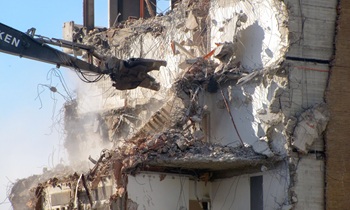
Tracking upfront embodied carbon with digital tools.
ECA welcomes procurement reforms

Public spending must back British jobs and skills.
Campaigning for Edinburgh: the Cockburn Association 1875-2049

The role of the civic voice in protecting character. Book review.

CIOB photography competition is open for entries.
ECA Edmundson apprentice of the year award
Finalists announced.
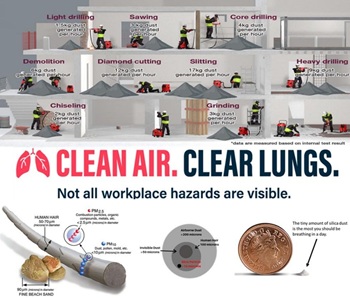
Major new study exposes serious knowledge gaps.

Generating energy from internal light as well as sunshine.

ECA welcomes plans to strengthen subcontractor quality control.

Combining mid-career qualifications with experience broadens career opportunities.