





How Steel Jacketing Extends Building Life and Safety
Contents |
[edit] Introduction
Buildings naturally deteriorate over time as a result of ageing, increased loading, environmental exposure, corrosion, seismic events and other forms of structural distress. When key structural elements such as reinforced concrete (RC) columns lose strength or no longer meet performance requirements, timely strengthening may be necessary to maintain safety and serviceability.
Steel jacketing is a well-established structural strengthening technique used in the rehabilitation and retrofitting of existing buildings. When properly designed and installed, it can improve load-bearing capacity, enhance ductility and extend the service life of structural elements.
[edit] What is Steel Jacketing?
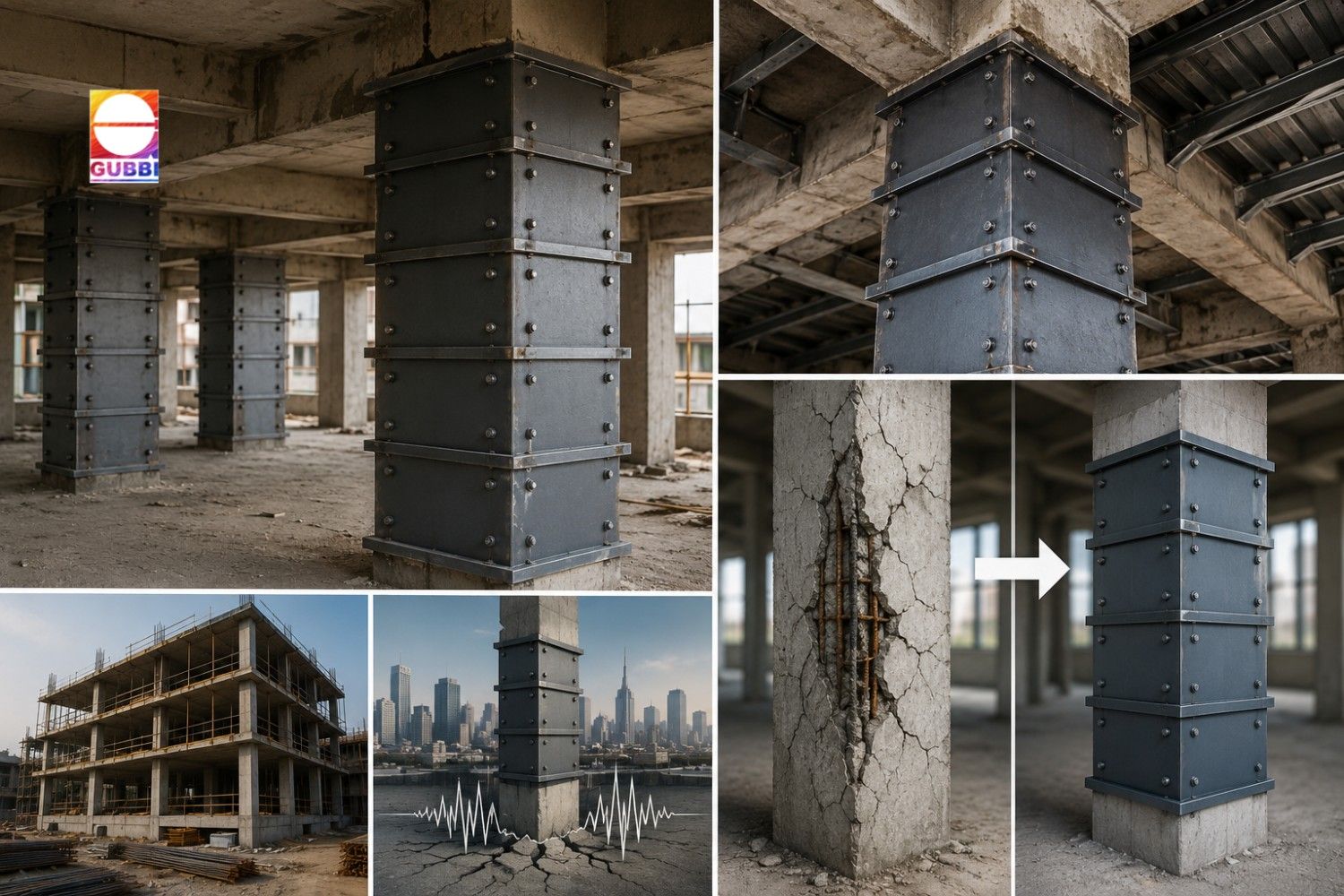
Steel jacketing is a strengthening method in which steel plates or fabricated steel sections are installed around existing reinforced concrete columns or other structural members. The steel jacket provides additional confinement and reinforcement, increasing the member's capacity to resist loads and improving its overall structural performance.
Depending on the project requirements, the gap between the existing concrete and the steel jacket may be filled with non-shrink grout or another suitable material to ensure effective load transfer.
Steel jacketing may be considered for:
- Weak or underperforming reinforced concrete columns.
- Earthquake-damaged structures.
- Older commercial, industrial and residential buildings.
- Buildings undergoing a change of use or load increase.
- Structural members affected by corrosion, cracking or other forms of deterioration.
It is one of several available strengthening techniques and should be selected following an appropriate structural assessment.
[edit] How Steel Jacketing Can Extend Building Life
[edit] Improves Structural Strength
Over time, reinforced concrete columns may weaken due to deterioration, construction defects or changing performance requirements. Steel jacketing enhances confinement and stiffness, enabling the strengthened member to resist greater loads and reducing stress concentrations within the structure.
[edit] Increases Load-Bearing Capacity
Buildings that are refurbished or extended may require structural members to support additional floors, heavier equipment or increased occupancy loads. Steel jacketing can increase the load-carrying capacity of existing columns where appropriate, subject to engineering design and verification.
[edit] Enhances Seismic Performance
In regions subject to seismic activity, inadequate column performance can increase the risk of structural damage. Steel jacketing can improve ductility and lateral load resistance, allowing structural elements to dissipate energy more effectively during earthquake loading.
[edit] Repairs and Strengthens Damaged Columns
Cracking, concrete spalling, reinforcement corrosion and other forms of deterioration can compromise the performance of reinforced concrete columns. Steel jacketing may be used as part of a repair strategy to restore or enhance structural capacity without requiring complete replacement of the affected elements.
[edit] Reduces the Risk of Progressive Failure
Failure of a primary load-bearing column can have consequences for the wider structural system. By strengthening vulnerable members, steel jacketing can improve overall robustness and reduce the likelihood of progressive structural failure where appropriately designed.
[edit] Benefits of Steel Jacketing
[edit] Improved Structural Stability
The addition of steel reinforcement around existing columns can increase stiffness and confinement, improving the stability and reliability of the structural system.
[edit] Enhanced Durability
When combined with appropriate corrosion protection measures and regular maintenance, steel jacketing can provide a durable strengthening solution with a long service life.
[edit] Cost-Effective Rehabilitation
For many existing buildings, strengthening structural elements can be more economical and less disruptive than demolition and reconstruction, while also reducing material waste.
[edit] Faster Construction
Compared with major rebuilding works, steel jacketing can often be carried out more quickly and with reduced disruption to building occupants, depending on site conditions and the extent of the strengthening programme.
[edit] Design and Installation Considerations
Successful steel jacketing requires a thorough structural assessment and careful engineering design. Factors that should be considered include:
- The condition of the existing structure.
- Current and future loading requirements.
- Connection details and load transfer mechanisms.
- Corrosion protection measures.
- Fire protection requirements where applicable.
- Construction sequencing and site constraints.
All strengthening works should be undertaken in accordance with relevant design standards, regulations and project-specific engineering requirements.
[edit] Conclusion
Steel jacketing is a widely used structural strengthening technique that can improve the performance and extend the service life of reinforced concrete buildings. By increasing load-bearing capacity, enhancing ductility and rehabilitating deteriorated structural members, it can play an important role in retrofit and refurbishment projects.
Where buildings exhibit signs of structural distress, cracking or insufficient capacity for proposed future use, an assessment by a suitably qualified structural engineer can determine whether steel jacketing or another strengthening method is appropriate.
[edit] Related articles on Designing Buildings
Featured articles
Check out some of the best features and news from Designing Buildings as well as key stories from around the web.

CIAT confirm the winners of the 2026 architectural technology awards.

Government launches a one stop shop for flood preparedness.

Sir Edwin Lutyens: Britain's greatest architect? Book review.

CIOB publishes free template to help assess and manage risks.
ECA's reflections on Party Conference season

Burnham wants to be confident of winning before asking for a fresh mandate.
New Chief Construction and Scientific Adviser

Sergio Cavalaro, Professor of Infrastructure Systems at Loughborough University.
Building safety levy for England

CIAT publish estimator tool for members.

Water sector faces a growing crisis that could slow the delivery of vital infrastructure.
Undervaluing our industrial past

Heritage value changes as taste for building styles changes.
Changing expectations around competence and compliance

New information sheet from CIAT.
Grenfell investigation files passed to CPS

Angela Rayner apologises on behalf of the British state.

Electrical contractors need to understand the practical implications.