





Floor loading
Floors must be capable of bearing loads applied to them. There are two main types of structural load that are usually considered in the design of structural floors; live loads and dead loads:
- Dead loads include the weight of the building materials themselves, and are static and permanent. The dead load value is determined by adding together the weight of all permanently installed materials.
- Live loads are imposed on the building and are temporary and dynamic, such as the weight of occupants, furniture or anything else that can be moved.
The above describes the type of loads, in effect by the length of time they are likely to apply a force upon a floor structure, ie temporarily or over longer periods. Further to this it can be important to consider how the loads are applied at any point in time, for example over a small area of floor, over a larger area or in a line, for this certain terms are used.
- Concentrated loads (or point loads) are single loads that act over a relatively small area, they can be dead loads such as columns which apply a heavy force over a relatively small area, or live loads, such as people whose full weight applies a force over the area of their feet when standing up, or a table which applies forces from the weight of a table through the small area at the bottom of the table legs.
- Distributed loads (or surface loads) are loads that are exerted over a larger surface area, they are most likely to be dead loads such as such as the weight of floors and floor boards combined and spread over the area of the entire floor. The term can also be used to reflect different types of live loads also, for example if a person lies on the floor rather than stands they are employing weight distribution, that is to say their weight is distributed over the larger surface area of the whole body than just the area of their feet, if they were standing.
- Line loads as the term suggests are loads that are applied linearly, again these are most likely to be dead loads such as such as the weight of a wall spread in a line over a floor area, but can also be live loads if linear heavy objects are installed, such as a bookshelf. These may also be referred to as linear loads but often linear load is used with reference to electrical loads.

The heavy the load the more important it is for the load to be spread over a wider surface area. It the case of a timber floor it will be made up if floor joist running between walls and most likely then have floor boards which run perpendicular to the joists. This helps to spread or distribute any floor loads evenly across all of the floor joists, whether they are live loads or dead loads. To determine the minimum design values for strength of a floor, live and dead loads are added together.
In order to resist these loads, all elements of the floor must have the requisite strength and stiffness, typically determined by the maximum allowable deflection of the floor, i.e. how much, it will 'bend' under the maximum expected load.
Determining dead loads is relatively straight forward, however as live loads are changeable structural designs can only make a reasonable allowance for what is expected.
Allowing for higher live loads increases the flexibility of a building, but also increases the cost. For example, historically, UK office buildings have been designed and marketed with live loadings of 3.5–4.0 kN/m2, however, this may be an over-provision. 2.5 kN/m2 for floors above ground floor and 3.0 kN/m2 at, or below, ground floor over may be more appropriate, with 7.5 kN/m2 over 5% of the floor area to allow for future flexibility.
See Structural systems for offices for more information.
There may be particular problems in older buildings which have been adapted for modern uses, resulting in live loads that are far higher than was allowed for by the original design. For example, historic houses converted to office use where there may be very high storage or equipment loads. In the case of older buildings it is also important to consider how the age of any structural members may have been effected by age or damage for example through dry rot and specialst advice should be sought it issues appear.
[edit] Related articles on Designing Buildings
- Bearing capacity.
- Beam and block.
- Biaxial bending.
- Braced frame.
- Concept structural design of buildings.
- Dead loads.
- Finished floor level.
- Flooring.
- Gross floor area GFA.
- Lateral loads.
- Limit state design.
- Live loads.
- Load-bearing wall.
- Point load.
- Resilient flooring.
- Structural engineer.
- Types of floor.
- Types of structural load.
- Uniformly Distributed Load.
- Wind load.
Featured articles
Check out some of the best features and news from Designing Buildings as well as key stories from around the web.
Bridging the gap between clients and contractors

Concerns remain around contractor quality, capability, and delivery.
Construction Management, 10 June.
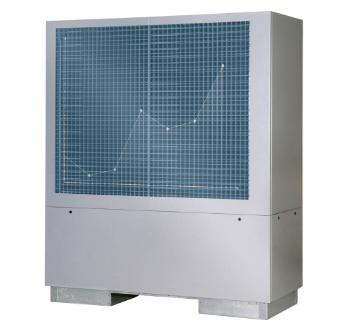
Heat pumps beat boilers in new home tests.
Building Safety Act implementation in Wales
CIAT to host industry panel on 26 June.

New and updated CLC building safety guidance.
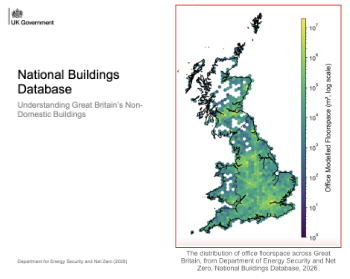
New UK National Buildings Database.
Building Safety Wiki Interviews

Chief executive of the British Woodworking Federation.
Planning condition discharge in England and Wales

A brief explanation from a building compliance expert, with further links.
Overheating guidance and tools for building designers

Guidance for dealing with element of building fabric control that have increasing importance.
Shading for housing, a design guide

From the Good Homes Alliance and British Blind and Shutter Association.
UK Standard Skills Classification (SSC)

A shared framework for describing skills needs.
Social media ban consultation comes to close

CIOB urges UK Government to consider social media’s role in careers guidance in ban debate.