





Fibre cement
Contents |
[edit] Introduction
Fibre cement is a composite building material first developed in the early-1980s as an asbestos-free cement-based construction product. It is used predominantly in roofing and façade products because of its strength and durability.
Fibre cement products are a mixture of:
- Natural and synthetic fibres.
- Portland Cement.
- Sand.
- Water.
- Small amounts of chemical additives to provide particular characteristics.
Some of the advantages of fibre cement include:
- Resistance to rust, rot and chemical attack.
- Vapour permeability, which reduces the risk of condensation.
- Durability.
- Excellent thermal and noise insulation properties.
- Good weather-proofing properties.
[edit] Fibre cement sheeting
Fibre cement corrugated sheets can be used for a wide range of situations, but are most common in:
- Industrial warehouses.
- Agricultural warehouse and farms.
- Stables.
- Domestic buildings and garages.
Marley Eternit, the UK’s largest manufacturer of fibre cement products, produces AS6 and AS3 profile sheets, differentiated by the size of the corrugation in the sheets. The AS3 profile has smaller corrugations than the AS6 profile. AS6 is designed for roofs with a pitch of 5-degrees, and for vertical cladding in both single skin and insulated constructions. AS3 is more suitable for small structures such as housing, general purpose sheds, and garages.
Correct fixing of the sheets is vital to avoid the risk of premature failure, corrosion or leaks. Sheets should be installed according as follows:
- The smooth surface should face upwards.
- Sheets should be cut using a hand saw or slow speed power saw.
- Fixing holes should be drilled not punched.
- Factors influencing the roof fixing, such as the purlin or rail type and the nature of the roof in question, should be carefully considered.
[edit] Fibre cement slates
A fibre cement slate is a lightweight roof tile, particularly suited to complex roof geometries, which can also be used for vertical hanging. The surface and square edge are designed to closely resemble natural slate, and have the advantage of being easier and faster to install. In addition, they can be installed on roof pitches as low as 15°.
[edit] Related articles on Designing Buildings Wiki
Featured articles
Check out some of the best features and news from Designing Buildings as well as key stories from around the web.
Undervaluing our industrial past

Heritage value changes as taste for building styles changes.
Changing expectations around competence and compliance

New information sheet from CIAT.
Grenfell investigation files passed to CPS

Angela Rayner apologises on behalf of the British state.

Electrical contractors need to understand the practical implications.

The real barrier to getting more value from digital technology.

Your guide to The Construction Reset at UKCW Birmingham.

Accommodating the Victorian and Edwardian working woman. Book review.
Rethinking passive fire protection in design

PFP demands the same level of design rigour as structure or services.

38% of Gen Zs feel safe when a fire door is wedged open.
Stunning images from around the world
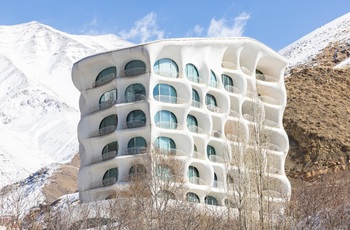
Shortlist for CIOB’s Art of Building photography competition.
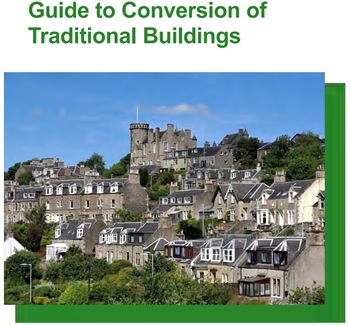
Guidance for conversion of traditional pre-1919 stone buildings.
Industrial heritage in the Ruhr
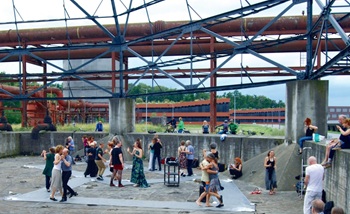
A marked difference to the fate of industrial landscapes in the UK.