






Effective ventilation in buildings

Contents |
[edit] Introduction
The World Health Organisation has published information about the airborne transmission of COVID-19. This information further emphasises the importance of having good, effective ventilation in a building.
[edit] Air change rates
Ensuring correct air change rates in an occupied space has always been an important design consideration - one perhaps perceived as only being critical in healthcare settings. Given our ‘new normal’, the emphasis on correct air change rates across all occupied settings is becoming crucial.
The air change rate (ACR) in a room is a function of the ventilation supply or extract flowrate (in l/s or m³/h) and a function of the volume of the room (m³). The resultant air change rate, normally expressed as air changes per hour (ACH) (h-1), gives us an indication of how many times per hour the ventilation system provides the room with new fresh air.
Ventilation is paramount to dilute the concentration of airborne contaminants and it is important to understand how contaminants are diluted, in order to establish procedures, i.e. time that has to pass between patients entering a room in a hospital.
[edit] Making calculations
By means of visualising the air change rate in a room, if we have an empty glass simulating our room - which is sitting under a tap acting as our ventilation system - and the tap is turned on the equivalent air change rate is a count of how many times the glass can be filled with water in a certain period of time. If some or all of the water misses the glass and goes directly down the drain, the air change rate is effectively reduced. As in the case of a ventilation system, consideration would also need to be given as to what the consequences may be if the tap water were contaminated.
If the source of contaminants is still in the room, the ventilation system will eventually provide a steady state concentration of contaminants, which is diluted if compared to the source. If there are (airborne) contaminants in the room, but the source has left (e.g. the patient has left the surgery) the ventilation system will purge the contaminants with every air change.
The decay of the concentration can be expressed by the equation:
 [Please click on the image to see the equation.]
We do have to take into account the fact that the air supplied must be fresh, i.e. not recirculated and that the ventilation must be effective; fresh air must not be short circuited into the extract and it must reach everywhere in the room, to avoid areas of high contaminant concentration (stagnation).
 [Please click on the image to see the equation.]
This means that it will take longer to purge the contaminant from the room i.e. If the ACR of an isolation room is 10 ACH, for a k value of 0.6, the effective ventilation rate would be 6 ACH.
BSRIA has studied several hospital isolation rooms with dedicated ventilation. The k factor in those rooms, which were considered well-mixed, was k= 0.8, calculated using gas tracer methodologies.
This article originally appeared on the BSRIA website under the title, "New World Health Organisation information emphasises effective ventilation in buildings." It was published July 2020.
--BSRIA
[edit] Related articles on Designing Buildings
- Air change rates.
- Air filtration and clean Indoor air quality standards.
- Air tightness in buildings.
- At a glance - Indoor air quality.
- BSRIA articles on Designing Buildings Wiki.
- Ensuring good indoor air quality in buildings.
- HVAC balancing.
- HVAC industry defines post COVID-19 changes.
- Indoor air quality.
- Indoor air velocity.
- Let us evolve our buildings from being passive structures to interactive and reactive systems.
- Mechanical ventilation's role in improving indoor air quality.
- Timber and healthy interiors.
- Ventilation.
- Ventilation and control of COVID-19 transmission.
[edit] External resources
Featured articles and news
Costs and insolvencies mount for SMEs, despite growth

Construction sector under insolvency and wage bill pressure in part linked to National Insurance, says report.
The place for vitrified clay pipes in modern infrastructure
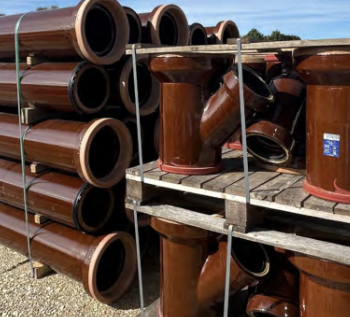
Why vitrified clay pipes are reclaiming their role in built projects.

Research by construction PR consultancy LMC published.
Roles and responsibilities of domestic clients

ACA Safety in Construction guide for domestic clients.
Fire door compliance in UK commercial buildings

Architect and manufacturer gives their low down.
Plumbing and heating for sustainability in new properties
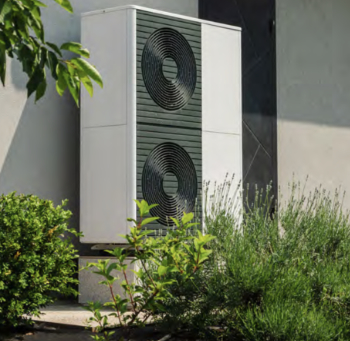
Technical Engineer runs through changes in regulations, innovations in materials, and product systems.
Awareness of the Carbon Border Adjustment Mechanism
What CBAM is and what to do about it.
The new towns and strategic environmental assessments
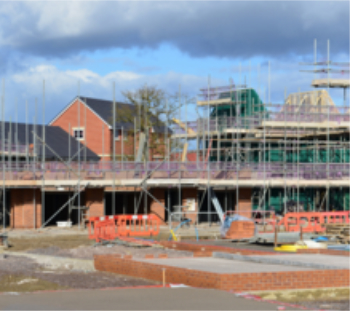
12 locations of the New Towns Taskforce reduced to 7 within the new towns draft programme and open consultation.

Buildings that changed the future of architecture. Book review.
The Sustainability Pathfinder© Handbook
Built environment agency launches free Pathfinder© tool to help businesses progress sustainability strategies.

Government outcome to the late payment consultation, ECA reacts.
IHBC 2025 Gus Astley Student Award winners

Work on the role of hewing in UK historic conservation a win for Jack Parker of Oxford Brookes University.
Future Homes Building Standards and plug-in solar
Parts F and L amendments, the availability of solar panels and industry responses.
How later living housing can help solve the housing crisis

Unlocking homes, unlocking lives.
Preparing safety case reports for HRBs under the BSA
A new practical guide to preparing structural inputs for safety cases and safety case reports published by IStructE.
Male construction workers and prostate cancer

CIOB and Prostate Cancer UK encourage awareness of prostate cancer risks, and what to do about it.